
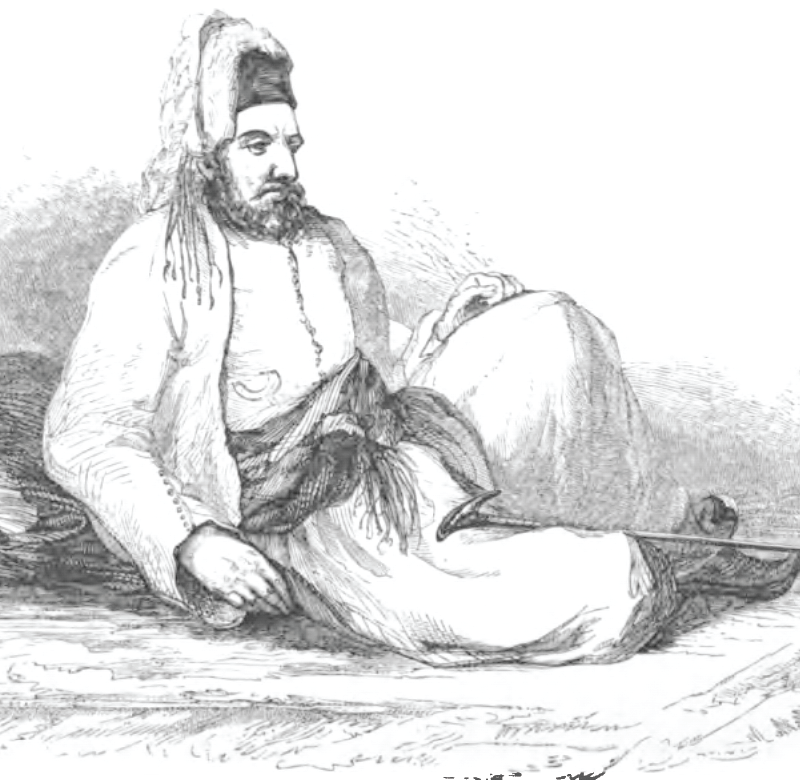
1) His Biography
ʿAbd al-Muʿīn Mallūḥī was born in Damascus in 1917 into an intellectually engaged family at a time when Syria was undergoing major political and cultural transformation. He grew up during the French Mandate period, an era that deeply influenced his political consciousness and literary sensibility. From an early age, he was exposed to classical Arabic literature as well as emerging nationalist thought, both of which shaped his later work as a poet, critic, and intellectual.
Mallūḥī pursued higher education in literature and philosophy, fields that allowed him to engage deeply with questions of culture, identity, and political responsibility. His academic background distinguished him from many of his contemporaries, giving his poetry and prose a reflective and analytical tone. He was particularly influenced by Arab Enlightenment thinkers and European philosophical traditions, which broadened his intellectual horizons.
Throughout his life, Mallūḥī was closely involved in Syria’s cultural institutions. He worked in journalism, literary criticism, and translation, becoming a well-known figure in Arab intellectual circles. His contributions extended beyond poetry, as he consistently sought to link literature with social awareness and political reform.
Politically, Mallūḥī was aligned with progressive and leftist ideas, advocating Arab unity, social justice, and resistance to imperialism. These commitments were not merely theoretical; they informed his writing and public engagement. His political stance occasionally placed him at odds with authority, reinforcing his belief in literature as a moral and civic duty.
Mallūḥī also played a significant role in promoting modern Arabic literature through editorial and institutional work. He was involved with literary journals and cultural organisations that aimed to modernise Arab thought while preserving its intellectual heritage. His efforts helped shape mid-twentieth-century Syrian literary discourse.
Despite his public prominence, Mallūḥī maintained a deeply introspective side, evident in his reflective writing. His poetry often reveals an internal struggle between idealism and disappointment, mirroring the broader tensions of his generation. This balance between public engagement and personal reflection is central to understanding his life and work.
He lived through some of the most turbulent decades of modern Syrian history, witnessing independence, political upheaval, and ideological conflict. These experiences left a lasting imprint on his intellectual outlook and literary production.
ʿAbd al-Muʿīn Mallūḥī died in 2006, leaving behind a multifaceted legacy as a poet, critic, and cultural thinker whose life was inseparable from the political and intellectual struggles of modern Syria.
2) Main Works
Human Freedom and Dignity
A central theme in Mallūḥī’s writing is the moral and philosophical importance of human freedom. He consistently explores how political oppression, social injustice, and ideological dogmatism restrict individual dignity, presenting freedom as both a personal right and a collective responsibility.
Literature as Moral Commitment
Mallūḥī strongly believed that literature must be ethically engaged. His works argue that writers and poets should respond to social realities, injustice, and historical crises, rejecting artistic detachment in favour of responsibility and conscious involvement.
National Identity and Anti-Colonial Struggle
The experience of colonial domination and the struggle for Arab independence deeply inform Mallūḥī’s poetry and criticism. He reflects on the formation of national identity, the pain of subjugation, and the hope for political and cultural renewal.
Tradition and Modernity
Mallūḥī frequently addresses the tension between inherited cultural traditions and the demands of modern life. Rather than choosing one over the other, he advocates for reinterpretation and renewal, believing that tradition must evolve to remain meaningful.
Ethical Responsibility of the Intellectual
The figure of the intellectual occupies a prominent place in his thought. Mallūḥī portrays writers and thinkers as moral agents who must challenge injustice, speak truth to power, and guide society through periods of uncertainty.
Disillusionment and Critical Reflection
Beneath his idealism lies a persistent awareness of political failure and moral compromise. His writing often reflects disappointment with unrealised revolutionary promises, encouraging critical self-examination rather than blind optimism.
Humanism and Philosophical Inquiry
Mallūḥī’s engagement with philosophy informs his broader humanist outlook. He explores questions of existence, ethics, and meaning, positioning literature as a space for philosophical reflection as well as artistic expression.
3) Main Themes
Human Freedom and Dignity
Human freedom stands at the moral centre of Mallūḥī’s intellectual and literary project. He treats freedom not merely as a political demand but as a fundamental condition for human existence. In his essays and poetry, freedom is closely linked to dignity, self-awareness, and ethical responsibility. Mallūḥī repeatedly emphasises that a society which suppresses individual liberty ultimately erodes its own moral foundations.
At the same time, Mallūḥī views freedom as inseparable from collective struggle. He rejects purely individualistic interpretations, arguing that true freedom cannot exist in isolation from social justice. His writing therefore frames liberation as both a personal awakening and a communal obligation, rooted in solidarity and moral courage.
Literature as Moral Commitment
Mallūḥī firmly believed that literature must be engaged with the realities of its time. For him, writing was never a neutral or purely aesthetic activity; it was a form of ethical action. His critical works insist that literature should confront injustice, oppression, and historical crises rather than retreat into artistic detachment or abstraction.
This sense of commitment does not lead Mallūḥī to crude propaganda. Instead, he argues for a reflective, principled engagement that preserves intellectual depth and artistic integrity. Literature, in his view, should illuminate truth, challenge complacency, and awaken social consciousness without sacrificing complexity or sincerity.
National Identity and Anti-Colonial Struggle
The experience of colonial domination and political subjugation profoundly shaped Mallūḥī’s worldview. His writings reflect a deep concern with the formation of Arab national identity in the face of foreign rule and internal fragmentation. He portrays the struggle for independence as both a political and cultural process, requiring intellectual renewal alongside resistance.
Mallūḥī also warns against reducing nationalism to slogans or empty rhetoric. He stresses that genuine national identity must be grounded in justice, cultural self-respect, and human values. Without these foundations, political liberation risks becoming hollow or authoritarian, betraying the very ideals it claims to defend.
Tradition and Modernity
Mallūḥī consistently engages with the tension between inherited tradition and the demands of modern life. Rather than rejecting tradition outright, he approaches it critically, seeking to revitalise cultural heritage through reinterpretation. He argues that tradition must remain dynamic and responsive if it is to retain relevance in a changing world.
At the same time, Mallūḥī is wary of uncritical modernisation. He cautions against importing modern ideas without considering their ethical and cultural implications. His work thus advocates a balanced synthesis, in which tradition and modernity interact creatively rather than destructively.
Ethical Responsibility of the Intellectual
The role of the intellectual occupies a central place in Mallūḥī’s thought. He views writers, scholars, and thinkers as moral agents who bear responsibility for guiding public conscience. Silence in the face of injustice, in his view, constitutes a form of complicity.
However, Mallūḥī does not idealise the intellectual as a heroic figure detached from society. Instead, he presents intellectual responsibility as a difficult and often isolating task, marked by doubt, sacrifice, and ethical tension. This sober realism gives his reflections lasting credibility and depth.
Disillusionment and Critical Reflection
Despite his idealism, Mallūḥī’s writing is marked by a strong sense of disillusionment. He confronts the failures of political movements, the betrayal of revolutionary ideals, and the persistence of injustice even after moments of hope. This disillusionment, however, does not lead to despair.
Instead, Mallūḥī transforms disappointment into critical reflection. He encourages honest self-examination and intellectual accountability, arguing that progress depends on recognising errors rather than denying them. His work thus promotes maturity and ethical seriousness over naïve optimism.
Humanism and Philosophical Inquiry
Mallūḥī’s engagement with philosophy deeply informs his literary vision. His writing reflects a humanist commitment to reason, ethical inquiry, and the intrinsic value of the human being. Literature, for him, serves as a space where philosophical questions about existence, freedom, and responsibility can be explored.
This philosophical dimension gives his work a reflective and meditative tone. Rather than offering definitive answers, Mallūḥī invites readers into a process of questioning and moral exploration. In doing so, he positions literature as a vital arena for intellectual and ethical growth within modern Arab culture.
4) Mallouhi as a Poet
ʿAbd al-Muʿīn Mallūḥī’s identity as a poet is inseparable from his role as an intellectual and cultural critic. Unlike poets whose work is driven primarily by lyricism or personal emotion, Mallūḥī approached poetry as a disciplined form of thought. His verses often resemble philosophical meditations, where ideas, ethical questions, and historical concerns take precedence over musical flourish. This intellectual orientation distinguishes him within modern Arabic poetry.
Stylistically, Mallūḥī occupies a middle ground between classical Arabic poetic conventions and the emerging modernist sensibility of the twentieth century. He retained traditional metres and rhetorical clarity while gradually loosening rigid formal constraints. Rather than radically breaking with the past, he sought to modernise poetry from within, believing that continuity with tradition could coexist with contemporary relevance.
His poetic language is marked by restraint and precision. Mallūḥī avoided excessive metaphor or emotional exaggeration, preferring a sober, controlled tone that reflected his seriousness of purpose. This stylistic economy gives his poetry a sense of moral authority, as if each line is carefully weighed before being committed to the page.
Thematically, Mallūḥī’s poetry is deeply collective in orientation. He writes less about individual passion and more about shared historical experience, national identity, and moral responsibility. The poet, in his view, is not a solitary figure removed from society but an engaged witness to its struggles and contradictions.
Political awareness permeates his poetry, yet it rarely takes the form of slogans or overt propaganda. Instead, Mallūḥī embeds political critique within reflective and often sombre verse, highlighting the ethical dimensions of oppression, resistance, and betrayal. This approach lends his poetry durability, preventing it from being tied too narrowly to specific events.
Another defining aspect of Mallūḥī’s poetry is its introspective quality. Despite his public engagement, his poems frequently reveal doubt, disappointment, and internal conflict. This tension between idealism and realism adds emotional depth to his work and reflects the broader disillusionment of his generation.
Mallūḥī’s poetic voice is therefore both rational and ethical, prioritising clarity of thought over aesthetic experimentation. While he may not be celebrated for stylistic innovation, his significance lies in his synthesis of poetry, philosophy, and moral engagement.
Mallūḥī stands as a poet who believed profoundly in responsibility — responsibility to language, to history, and to society. His poetry challenges readers not merely to admire beauty but to confront ideas and moral questions that remain deeply relevant.
5) His Legacy
ʿAbd al-Muʿīn Mallūḥī’s legacy is rooted in his vision of literature as a form of ethical and intellectual commitment. He represents a generation of Arab writers who believed that cultural production was inseparable from social responsibility. Through poetry, criticism, and public engagement, Mallūḥī helped shape a model of the writer as an active participant in historical change.
One of his most lasting contributions is his insistence on the moral role of the poet. Mallūḥī rejected the notion of art for art’s sake, arguing instead that literature must respond to injustice, colonialism, and social inequality. This perspective influenced later Arab intellectuals who sought to align literary expression with political and ethical consciousness.
His legacy is also evident in the way he bridged classical Arabic heritage with modern intellectual currents. Rather than advocating a complete rupture with tradition, Mallūḥī promoted renewal through reinterpretation. This balanced approach offered an alternative path for Arab modernism, avoiding both rigid conservatism and uncritical Western imitation.
Mallūḥī’s impact extends beyond poetry into literary criticism and cultural discourse. His essays helped frame debates about identity, modernity, and the responsibilities of intellectuals in post-colonial societies. These writings remain valuable for understanding the intellectual climate of mid-twentieth-century Syria and the wider Arab world.
Institutionally, Mallūḥī contributed to the development of Arab literary culture through his involvement in journals, publishing, and cultural organisations. By supporting platforms for debate and creative expression, he helped nurture a generation of writers and thinkers committed to cultural reform.
Although his work may not enjoy widespread popular readership today, it retains strong relevance in academic and intellectual contexts. Scholars continue to engage with his writing for its clarity, ethical seriousness, and historical insight, recognising him as a key figure in modern Arab thought.
His legacy is also one of principled persistence. Despite political setbacks and ideological disappointments, Mallūḥī maintained his belief in the transformative power of culture. This steadfast commitment gives his life and work enduring symbolic value.
In the broader history of Arabic literature, ʿAbd al-Muʿīn Mallūḥī is remembered not merely as a poet, but as a conscience-bearing intellectual. His legacy lies in reminding future generations that literature can be both intellectually rigorous and morally engaged, serving as a voice of reflection, resistance, and responsibility.