
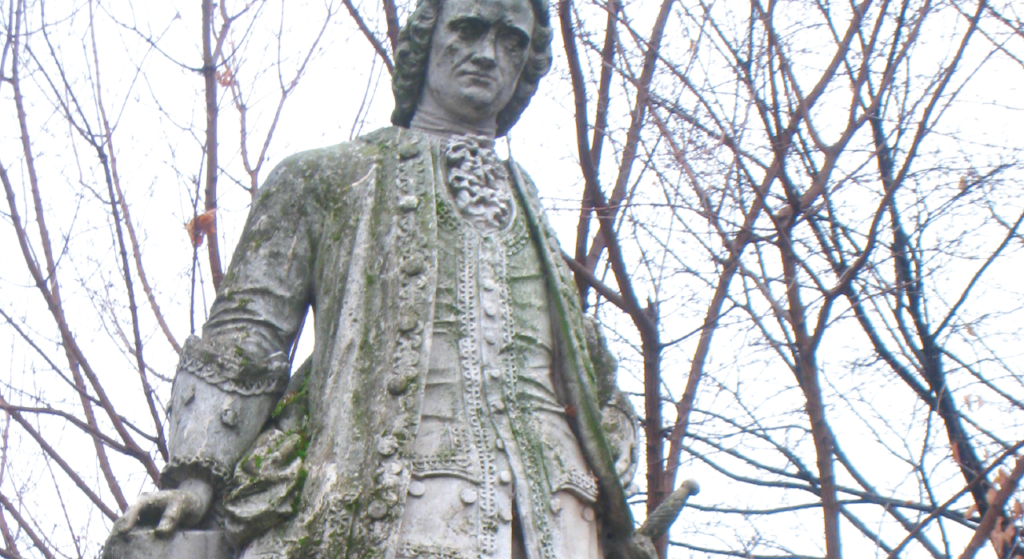
1) His Biography
José Quer y Martínez (1695–1764) was a prominent Spanish botanist and physician whose work played a pivotal role in revitalising botanical science in eighteenth-century Spain. Born in Peralta de la Sal, in the province of Huesca, Quer grew up during a time when natural history was gaining renewed importance within European intellectual circles. From an early age, he demonstrated an exceptional curiosity for plants and medicine, interests that would later merge into a career devoted to the scientific study of the natural world. His education began locally, but his talents soon drew him to the University of Cervera, where he formally studied medicine. The university, recently established by royal decree, became an intellectual hub for Enlightenment thought in Catalonia, providing Quer with both medical and natural philosophical training that shaped his later work.
After completing his studies, Quer entered the medical service of the Spanish army, a position that allowed him to travel widely throughout the Iberian Peninsula and parts of North Africa. These journeys proved formative, as they gave him the opportunity to study a vast diversity of flora under different climatic and geographical conditions. His military expeditions included postings in places such as Oran and Ceuta, where he collected plant specimens that were largely unknown in Spanish scientific literature. These early experiences awakened his determination to create a comprehensive botanical record of Spain’s native plants—an ambition that would define much of his later career.
Quer’s transition from physician to botanist was gradual but deeply interconnected. His medical background reinforced his understanding of plants not merely as elements of natural beauty but as sources of healing and practical value. Like many Enlightenment naturalists, he viewed botany as both a scientific and a utilitarian pursuit, essential for the advancement of medicine, agriculture, and industry. His dual expertise in medicine and botany gave him a holistic vision of the natural sciences, one that sought to connect human health with the natural environment. This approach aligned with the broader European Enlightenment movement, which emphasised observation, classification, and rationality in the study of nature.
Upon returning from his military service, Quer settled in Madrid, where he began to consolidate his growing collection of plant specimens and scientific notes. His reputation as a skilled botanist attracted the attention of prominent intellectuals and members of the Spanish court. In 1755, he was appointed as one of the founding professors of the newly established Royal Botanical Garden of Madrid (Real Jardín Botánico de Madrid), which was to become the epicentre of botanical research in Spain. Quer played a central role in organising the garden’s collections, designing its educational programme, and fostering the study of taxonomy and plant morphology among students. His teaching combined rigorous scientific classification with a clear emphasis on empirical fieldwork.
During his years at the Royal Botanical Garden, Quer devoted himself to the ambitious project of cataloguing and describing the plant species of Spain. This endeavour culminated in his monumental work Flora Española, a comprehensive study of the Iberian flora that was conceived as both a botanical and medicinal compendium. Though he did not live to complete it, the volumes published during his lifetime established him as one of the leading figures in Spanish botany. The Flora Española reflected his Enlightenment ideals: a combination of systematic classification, empirical accuracy, and commitment to public knowledge.
Quer’s influence extended beyond his publications. He was an active participant in the broader intellectual culture of eighteenth-century Spain, corresponding with European botanists and integrating Spanish natural history into the wider scientific networks of the Enlightenment. His contributions helped to elevate Spain’s scientific reputation at a time when the nation was seeking to reassert itself as a centre of intellectual progress after a long period of decline. Through his efforts, the study of natural history began to acquire institutional legitimacy in Spain, particularly through the development of botanical gardens and the support of royal patronage.
In his later years, Quer continued his research and teaching, despite facing health difficulties. His passion for botany never diminished, and his writings reveal a profound respect for nature’s order and utility. He died in Madrid in 1764, leaving behind a legacy that bridged scientific inquiry and national identity. His commitment to documenting Spain’s natural wealth inspired generations of botanists to continue his work, and his contributions laid the foundations for the flourishing of botanical science in Spain during the late eighteenth and early nineteenth centuries.
José Quer y Martínez remains a key figure in the history of European botany—not only for his empirical achievements but also for his embodiment of Enlightenment ideals. His life exemplified the fusion of observation, scholarship, and public service, and his influence persisted in the institutions, publications, and intellectual traditions that grew from his pioneering vision.
2) Main Works
Flora Española o Historia de las Plantas que se Crían en España (1762–1764)
José Quer y Martínez’s magnum opus, Flora Española, stands as one of the most significant botanical works of eighteenth-century Spain. Conceived as a comprehensive study of the native flora of the Iberian Peninsula, the project aimed to describe, classify, and illustrate the plants that grew naturally in Spanish territories. Only four volumes were published during Quer’s lifetime (between 1762 and 1764), though he had planned for many more. Each entry includes detailed descriptions of the plant’s morphology, habitat, and medicinal uses, combining Linnaean classification principles with practical medical applications.
Amphiteatrum Sapientiae Socraticae Joco-Seriae (1736)
One of Quer’s earliest published works, Amphiteatrum Sapientiae Socraticae Joco-Seriae (The Amphitheatre of Socratic Wisdom in Jest and Seriousness), reflects his philosophical and humanistic education prior to his full immersion in botanical research. Written in Latin, the text combines moral reflection with wit and rhetorical elegance, following the style of contemporary humanist dialogues. Although not a botanical text, it reveals Quer’s intellectual versatility and his grounding in classical philosophy, rhetoric, and ethics.
Demostración Crítica del Árbol del Té de la China (1759)
This work, published a few years before Flora Española, explores the Chinese tea plant and its growing popularity in Europe during the eighteenth century. Quer’s treatise analyses the plant’s botanical characteristics, geographical origins, and medicinal virtues, comparing it with European herbal alternatives. He critiques exaggerated claims about the health benefits of tea while acknowledging its legitimate uses in diet and medicine.
Discurso sobre las Plantas Exóticas Introducidas en España (circa 1760, manuscript form)
Though never formally published during his lifetime, this discourse circulated in manuscript form among Quer’s colleagues and students. It discusses the introduction of exotic plant species into Spain, particularly through trade with the Americas and Asia. Quer outlines both the benefits and risks of cultivating non-native species, touching upon ecological balance, agricultural improvement, and medicinal experimentation. The text highlights his awareness of global botanical exchanges and his forward-looking concern for environmental adaptation.
Observaciones sobre las Plantas Medicinales de España (unpublished notes, later referenced by successors)
Quer compiled extensive notes on the medicinal properties of Spanish plants throughout his career. These observations, though unpublished during his lifetime, formed part of the intellectual groundwork for Flora Española and were later used by subsequent botanists and physicians. His writings describe the pharmacological uses of numerous native herbs, often based on both traditional knowledge and empirical experimentation.
Memoria sobre el Establecimiento del Jardín Botánico de Madrid (1755)
This short but influential text outlines Quer’s vision for the newly established Royal Botanical Garden of Madrid (Real Jardín Botánico de Madrid). In it, he discusses the scientific, educational, and national importance of founding a botanical institution dedicated to the study and cultivation of plants. Quer proposed methods for organising the garden’s collections, promoting fieldwork, and classifying species in line with contemporary European practices.
Tablas Botánicas sobre la Distribución Natural de las Plantas (circulated notes and diagrams)
Quer produced a series of classification tables and botanical diagrams to aid his students at the Royal Botanical Garden. These visual aids, though not formally published, demonstrate his pedagogical skill and his effort to simplify the complex taxonomic systems emerging from Europe’s scientific centres, particularly those influenced by Linnaeus and Tournefort. The Tablas Botánicas arranged plants according to their natural affinities, reproductive organs, and medicinal functions.
Correspondencia Científica con Naturalistas Europeos (letters, 1740s–1760s)
Quer maintained correspondence with leading European naturalists, including contemporaries in France and Italy, to exchange information on taxonomy, nomenclature, and the classification of Mediterranean flora. These letters, preserved in part in the archives of the Royal Botanical Garden, reveal the extent of Quer’s participation in international scientific networks. Through this exchange, he contributed to the standardisation of botanical terminology and to the dissemination of Spanish flora across Europe.
3) Main Themes
The Classification and Systematisation of Spanish Flora
A central theme in José Quer y Martínez’s work is the rigorous classification and organisation of Spain’s native plant life. Influenced by both Tournefort’s and Linnaeus’s systems, Quer sought to create a scientifically coherent catalogue that would stand alongside the great European floras of his time. In Flora Española, he meticulously described plant species according to their morphology, habitat, and reproductive characteristics, reflecting the Enlightenment’s fascination with order and rationality. This drive to classify was not merely a matter of naming plants but an intellectual exercise in imposing systematic understanding on nature, mirroring the broader eighteenth-century scientific impulse to rationalise the natural world.
Quer’s emphasis on systematisation also had a national dimension. He believed that Spain’s flora was as rich and varied as that of any other European region but lacked proper documentation and recognition. Through careful taxonomy and descriptive precision, he sought to assert the intellectual parity of Spanish science within the European community. His attention to detail—covering even the most modest plants—demonstrated his conviction that every specimen had a role in the larger order of nature. Thus, classification for Quer became both a scientific method and an act of cultural affirmation.
The Medicinal and Therapeutic Uses of Plants
Another recurrent theme in Quer’s writings is the intersection between botany and medicine. Trained as a physician as well as a naturalist, he viewed plants not only as elements of biodiversity but as vital components of human health. His numerous references to the curative properties of herbs and trees reveal his commitment to reviving and updating the ancient medicinal knowledge inherited from Greco-Roman and Arab traditions. In Flora Española and his unpublished notes on medicinal plants, Quer documented the pharmacological uses of native species, seeking to provide natural remedies derived from local resources rather than imported substances.
Quer’s approach combined empirical observation with practical utility, reflecting a broader Enlightenment ethos that valued science for its capacity to improve human life. He tested herbal preparations, compared regional healing practices, and assessed the safety and efficacy of plant-based medicines. By promoting the medicinal potential of Spain’s flora, Quer contributed to the development of both botany and pharmacology as complementary disciplines. His belief in the therapeutic virtues of nature positioned him as a transitional figure between traditional herbalism and the emerging modern medical sciences.
The Integration of Spanish Botany into the European Enlightenment
Quer’s works express a strong aspiration to place Spanish botanical science within the wider intellectual framework of the European Enlightenment. He saw his research as part of an international endeavour to expand the boundaries of human knowledge through observation, experimentation, and rational discourse. His correspondence with foreign naturalists and his engagement with Linnaean taxonomy illustrate his openness to scientific exchange. Yet, Quer was equally determined to highlight Spain’s unique botanical heritage, arguing that its distinct climates and geographies produced species unknown elsewhere.
This integrationist vision also carried an ideological dimension: it reflected Spain’s desire to re-establish itself as a modern scientific nation after a period of relative isolation. By adopting Enlightenment methods while maintaining a focus on national flora, Quer effectively bridged local and universal knowledge. His work thus became an instrument of both intellectual participation and national renewal, asserting that scientific inquiry could serve as a means of cultural advancement and international dialogue.
Empiricism and Direct Observation in Scientific Inquiry
A fundamental principle underlying Quer’s scientific method was empiricism—the conviction that reliable knowledge arises from direct observation and experience. Unlike some of his predecessors who relied heavily on ancient authorities, Quer insisted on verifying descriptions through fieldwork, collecting specimens, and documenting environmental conditions. His Flora Española reflects this empirical orientation: each entry is grounded in tangible observation rather than hearsay or theoretical speculation. For Quer, seeing and recording were acts of truth-making, ensuring that science remained anchored in the visible reality of nature.
This emphasis on empirical evidence also influenced his pedagogical practice. As a teacher at the Royal Botanical Garden of Madrid, Quer encouraged his students to engage in hands-on study, dissecting plants and observing them in their natural habitats. He believed that such practice cultivated both intellectual discipline and moral integrity, aligning with Enlightenment ideals of disciplined inquiry. By grounding his science in observation, Quer helped shift Spanish natural philosophy away from scholastic speculation toward modern empirical methodology.
The Relationship between Nature and National Identity
Quer viewed the study of Spain’s flora as a patriotic duty. In his writings, the natural world appears not merely as a subject of scientific curiosity but as a reflection of Spain’s cultural and natural wealth. Flora Española was conceived as a national project—a “botanical mirror” of the Iberian Peninsula that could display the country’s abundance to Europe. Through the careful documentation of plants, Quer sought to assert the intellectual independence of Spain’s scientific community and to counter foreign perceptions of Spanish backwardness.
His national sentiment did not, however, contradict his cosmopolitan scientific outlook. Rather, Quer saw the celebration of native flora as a way to contribute distinctively to the international republic of science. By identifying, classifying, and illustrating Spain’s plants, he hoped to enrich the collective knowledge of European botany. This blending of patriotism and universalism gave his work a unique resonance, reflecting Enlightenment Spain’s complex negotiation between local pride and global participation.
The Exchange and Acclimatisation of Exotic Species
Quer was deeply interested in the introduction and adaptation of exotic plants to Spanish soil, a theme he explored in his manuscripts and lectures. The eighteenth century witnessed an unprecedented movement of plants across continents, and Quer participated in this global botanical exchange by studying species brought from the Americas and Asia. He evaluated their agricultural and medicinal potential, as well as their ecological compatibility with Iberian climates. His cautious but open-minded attitude towards exotic species reflected a forward-looking concern with sustainability and balance within natural systems.
He viewed plant acclimatisation as both a scientific challenge and an opportunity for national progress. By testing the adaptability of foreign species, Quer sought to improve Spanish agriculture and diversify local resources. His discussions on this theme reveal an early ecological sensibility—an awareness of the interconnectedness of environment, economy, and human activity. In this sense, Quer anticipated later debates about ecological adaptation and biodiversity, positioning him as an early voice in the study of environmental integration.
The Educational and Institutional Role of Botany
Quer’s career was closely tied to the institutionalisation of botanical science in Spain. He regarded botanical gardens, universities, and academies as essential for cultivating knowledge and training future scientists. His Memoria sobre el Establecimiento del Jardín Botánico de Madrid articulates this belief vividly, outlining how such institutions could serve both scientific and civic purposes. He envisioned the garden as a living classroom where observation, experimentation, and classification would unite in service of public education and national enlightenment.
Through his teaching and administrative roles, Quer helped professionalise the study of botany, transforming it from an auxiliary field of medicine into an independent science. He emphasised systematic study, empirical verification, and visual documentation—methods that would shape Spanish botanical education for generations. By linking botany to public instruction and civic virtue, Quer turned the pursuit of natural knowledge into a cornerstone of intellectual life in Enlightenment Spain.
The Union of Science, Philosophy, and Morality
Quer’s writings reveal an enduring belief in the moral and philosophical dimensions of scientific inquiry. His early Amphiteatrum Sapientiae Socraticae demonstrates his conviction that knowledge, to be truly valuable, must cultivate virtue and wisdom. This ideal persisted throughout his botanical work, where observation of nature was often accompanied by reflections on harmony, order, and divine design. For Quer, the study of plants was not only a technical endeavour but also a means of understanding the moral structure of the world.
This synthesis of science and ethics reflects the humanistic spirit of the Spanish Enlightenment. Quer saw in botany a path to intellectual refinement and moral improvement—a discipline that could elevate the mind by aligning it with nature’s rational order. His approach combined empirical precision with philosophical depth, making his work both scientifically rigorous and spiritually reflective. In this fusion of knowledge and virtue, Quer embodies the Enlightenment ideal of the naturalist as both a scientist and a moral thinker.
4) Martinez as a Botanist
José Quer y Martínez stands out as one of Spain’s pioneering botanists, whose work helped establish botany as a rigorous scientific discipline in the eighteenth century. Unlike earlier herbalists, who primarily focused on the medicinal properties of plants, Quer approached botany as an empirical science, emphasising observation, classification, and systematic documentation. His dual training as a physician and naturalist allowed him to unite practical knowledge with theoretical understanding, bridging medicine, pharmacology, and natural history. His contributions were instrumental in moving Spanish botanical study away from a largely descriptive tradition toward a more analytical, evidence-based methodology.
Quer’s most enduring contribution to botany was his monumental project Flora Española, which aimed to catalogue and describe all plants native to the Iberian Peninsula. In this work, he not only documented the morphology and habitat of each species but also classified them according to the Linnaean and Tournefortian systems, integrating European taxonomic principles with his own observations. His descriptions were precise, noting variations within species, flowering seasons, and ecological conditions, which reflected a deep commitment to empirical accuracy. This combination of field observation and systematic taxonomy positioned Quer as a bridge between traditional herbalism and modern scientific botany.
Fieldwork was central to Quer’s botanical method. His extensive travels throughout Spain, and earlier military campaigns in North Africa, allowed him to collect specimens from diverse ecosystems, ranging from Mediterranean coasts to mountainous regions. He meticulously recorded environmental conditions, geographic distribution, and plant associations, demonstrating a proto-ecological awareness unusual for his time. Quer’s emphasis on field observation also informed the training of his students at the Royal Botanical Garden of Madrid, where he encouraged hands-on study and specimen collection, laying the groundwork for a new generation of botanists.
At the Royal Botanical Garden of Madrid, Quer played a decisive role in the institutional development of botany in Spain. He organised the garden’s living collections to reflect systematic classification and educational objectives, ensuring that students could study plants both in situ and through detailed illustrations. The garden became a hub for research, teaching, and the acclimatisation of exotic species, reflecting Quer’s vision of botany as both a scientific and social enterprise. His approach combined aesthetic appreciation of plants with analytical rigor, creating a model for botanical gardens that integrated empirical study with public education.
Medicinal botany remained a key aspect of Quer’s practice, reflecting his dual identity as physician and naturalist. He documented the therapeutic properties of native plants in great detail, often testing their efficacy and comparing traditional remedies with contemporary practices. This integration of botany and pharmacology exemplified his commitment to utilitarian science, demonstrating that empirical knowledge of plants could directly serve human health. His approach influenced subsequent Spanish physicians and botanists, who increasingly regarded the study of flora as essential to both medicine and agriculture.
Quer also displayed a keen interest in exotic and economically valuable plants, such as tea, quinine, and sugarcane, which he studied for both botanical and practical purposes. He evaluated their adaptability to Spanish soil and climate, contributing to early forms of plant acclimatisation and horticultural experimentation. This global perspective reflected the broader currents of eighteenth-century European botany, in which plant exchange, cultivation, and introduction were central to economic and scientific advancement.
In addition to fieldwork and institutional leadership, Quer placed great importance on documentation and visual representation. He commissioned detailed botanical illustrations, often accompanying his descriptions with plates that accurately depicted flowers, leaves, and fruits. These images were vital for identification, classification, and teaching, and they contributed to the enduring scientific value of his works. By combining empirical observation, systematic classification, and visual clarity, Quer set a standard for botanical scholarship that influenced Spain and broader Europe.
José Quer y Martínez’s legacy as a botanist rests on his empirical rigor, methodological innovation, and institutional vision. He transformed Spanish botany from a largely descriptive and medicinally focused field into a systematic, empirical science, capable of engaging with contemporary European taxonomy and research networks. Through his fieldwork, publications, teaching, and garden leadership, Quer established the foundations for modern botanical study in Spain, leaving an indelible mark on the scientific and intellectual landscape of the Enlightenment,
5) His Legacy
The legacy of José Quer y Martínez is profound, spanning botany, medicine, and the broader intellectual landscape of eighteenth-century Spain. He is remembered primarily as the architect of modern Spanish botany, having transformed a largely descriptive and medicinally oriented tradition into a systematic and empirical science. Through his meticulous fieldwork, classification efforts, and integration of European taxonomic principles, Quer established standards of observation, documentation, and botanical illustration that would influence generations of naturalists. His work ensured that Spain’s rich and diverse flora received recognition within the broader European scientific community, bridging local knowledge with international Enlightenment networks.
Quer’s Flora Española stands as the cornerstone of his scientific legacy. Though incomplete at his death, the volumes published during his lifetime provided an authoritative catalogue of Iberian plants, combining morphological description, habitat information, medicinal properties, and visual illustrations. The work was not only a botanical reference but also a symbol of national scientific achievement, demonstrating that Spain could produce rigorous, empirical science comparable to that of France, Italy, or England. By codifying the flora of the Iberian Peninsula, Quer created a foundation for subsequent research in taxonomy, pharmacology, and ecology, ensuring his influence extended well beyond his own era.
Institutionally, Quer’s impact was equally significant. His role in the establishment and development of the Royal Botanical Garden of Madrid (Real Jardín Botánico de Madrid) helped professionalise botanical research in Spain. He designed its layout, curated its collections, and implemented an educational programme that emphasised observation, classification, and hands-on study. The garden became a centre for scientific training, attracting students and scholars from across Spain and abroad. Through this work, Quer contributed to the institutionalisation of botany as a discipline and established a model for scientific gardens that combined research, education, and public engagement.
Quer’s legacy also encompasses his contributions to medicinal botany. As a physician, he demonstrated the practical applications of botanical knowledge, documenting the therapeutic properties of native plants and evaluating exotic species for medical and economic potential. This integration of science and utility exemplified the Enlightenment ideal of knowledge serving society, influencing subsequent generations of Spanish physicians and naturalists. His emphasis on empirical verification of remedies foreshadowed later developments in pharmacology and experimental medicine.
Beyond the scientific and institutional realms, Quer played a key role in elevating Spain’s intellectual reputation in Europe. Through correspondence with European botanists and participation in international scientific networks, he ensured that Spanish flora and botanical scholarship were recognised abroad. His engagement in the global exchange of plants and ideas positioned Spain as an active participant in the broader scientific Enlightenment. By connecting local study with international discourse, Quer helped integrate Spanish science into the European intellectual mainstream.
Quer’s influence extended to pedagogy and the dissemination of knowledge. He was a dedicated educator who encouraged empirical observation, field study, and meticulous record-keeping among his students. By emphasising both theoretical understanding and practical skill, he fostered a generation of botanists capable of carrying forward systematic and experimental approaches. His pedagogical philosophy reflected a broader Enlightenment commitment to rational, evidence-based learning and the cultivation of intellectual virtue.
José Quer y Martínez’s legacy is inseparable from the Enlightenment ideals of observation, rationality, and public service. He embodied the belief that scientific inquiry should serve both knowledge and society, combining rigorous methodology with moral and civic responsibility. His work laid the foundation for modern botanical science in Spain, influenced European natural history, and exemplified the integration of empirical research, education, and national pride. Through his writings, teaching, and institutional leadership, Quer left an enduring mark on the study of nature and the scientific culture of his time, making him one of the most important figures in Spanish Enlightenment science.