
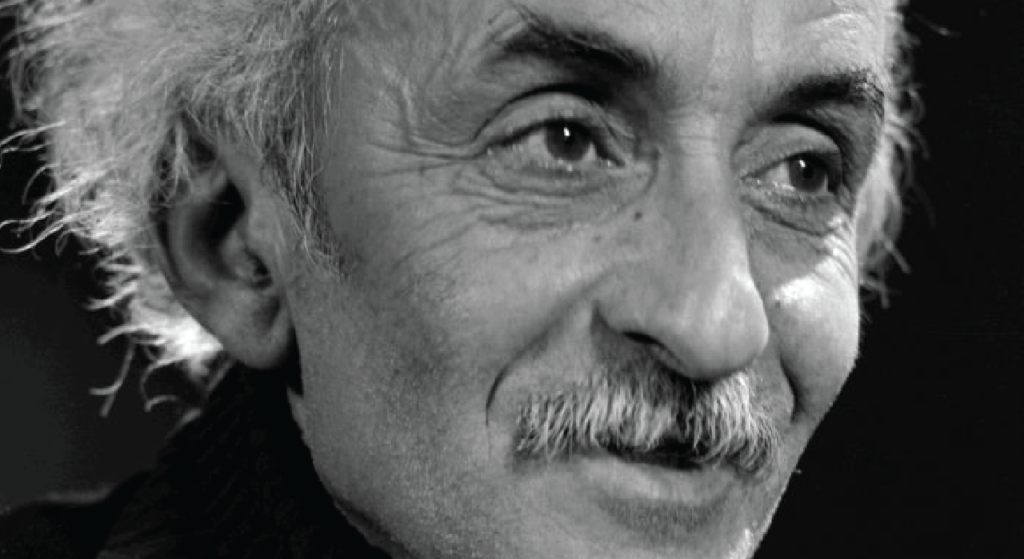
1) His Biography
Nima Yushij, widely regarded as the father of modern Persian poetry, was born on 12 November 1896 in the village of Yush in the mountainous Mazandaran region of northern Iran. His birth name was Ali Esfandiari, and he later adopted the pen name “Nima Yushij” to reflect his attachment to his birthplace and cultural roots. Growing up in a rural environment shaped by nature, folklore, and local traditions, he developed a deep sensitivity to landscape and ordinary life, elements that would later become central to his poetic vision.
His early education took place in traditional village settings before he moved to Tehran to attend the prestigious Saint Louis School, where he encountered modern European literature and intellectual thought. Exposure to French Romanticism and Symbolism played a crucial role in shaping his literary outlook, encouraging him to question classical Persian poetic forms. These formative influences awakened in him a desire to create a new poetic language capable of expressing contemporary realities.
Nima’s literary awakening coincided with a period of political and social transformation in Iran, marked by the Constitutional Revolution and growing debates about identity, modernity, and reform. These changes deeply influenced his intellectual development and reinforced his belief that poetry must evolve to reflect new experiences. Unlike traditional poets who adhered strictly to classical metre and rhyme, Nima began experimenting with form, rhythm, and imagery to capture the complexities of modern life.
His breakthrough came with the publication of Afsaneh in 1921, a long narrative poem that challenged conventional Persian poetic structure. The work introduced flexible metre, conversational tone, and psychological depth, signalling a decisive shift away from classical conventions. Although initially met with resistance and criticism, Afsaneh laid the foundation for what later became known as “Nimaic poetry,” a revolutionary approach that redefined Persian verse.
Throughout his life, Nima faced significant opposition from traditionalists who viewed his innovations as a threat to literary heritage. Despite this hostility, he remained committed to his vision, producing poems that explored social injustice, rural hardship, loneliness, and existential reflection. His perseverance gradually earned him recognition among younger poets who saw in his work a path towards artistic freedom and authenticity.
Nima’s personal life was marked by financial hardship, isolation, and emotional struggle, yet these challenges enriched his poetic sensitivity. He lived modestly, often withdrawing from literary circles to focus on creative experimentation. His marriage and family life provided emotional grounding, but he remained largely misunderstood during his lifetime, experiencing limited public acclaim compared to his posthumous reputation.
Nima Yushij died on 6 January 1960, leaving behind a body of work that transformed Persian literature. After his death, his influence expanded rapidly, inspiring generations of poets who embraced free verse and modern themes. Today, he is remembered not only as a poet but as a visionary reformer whose courage and originality reshaped the course of Persian poetry forever.
2) Main Works
Afsaneh (1921)
Afsaneh is Nima Yushij’s most influential and groundbreaking poem, often regarded as the manifesto of modern Persian poetry. Written as a long narrative dialogue, it abandons rigid classical metre in favour of flexible rhythm and conversational tone. The poem explores themes of love, alienation, and inner conflict, symbolising the poet’s struggle between tradition and modernity. Its publication marked a decisive turning point in Persian literary history.
The Phoenix (Qoqnus)
In The Phoenix, Nima employs mythological symbolism to express themes of suffering, sacrifice, and rebirth. The phoenix becomes a metaphor for the poet and the modern individual, destroyed by fire yet reborn through pain. The poem demonstrates Nima’s mastery of symbolic imagery and his ability to merge myth with contemporary social and existential concerns.
The Night (Shab)
This poem reflects Nima’s deep engagement with social darkness, loneliness, and uncertainty. Night functions as both a literal and symbolic space, representing oppression, ignorance, and existential anxiety. Through evocative imagery and innovative structure, Nima captures the emotional atmosphere of a society in transition.
The Crow (Kolah-e Ghaaz)
In this satirical and symbolic poem, Nima critiques social hypocrisy and moral decay. The crow, traditionally associated with darkness and misfortune, becomes a symbol of corruption and opportunism. The poem highlights Nima’s ability to blend social criticism with poetic innovation.
The Shepherd (Chupaan)
The Shepherd reflects Nima’s attachment to rural life and marginalised voices. Drawing on his experiences in northern Iran, the poem portrays the hardships and dignity of village existence. It exemplifies his commitment to bringing ordinary people and local realities into Persian poetry, breaking away from elite and courtly themes.
Collected Poems (Divan-e Nima Yushij)
Nima’s collected poems, published posthumously, offer a comprehensive view of his artistic development. They reveal his continuous experimentation with form, rhythm, and imagery, as well as his evolving social and philosophical concerns. This body of work stands as the cornerstone of modern Persian poetic tradition and continues to influence contemporary poets.
3) Main Themes
Tradition versus Modernity
A central theme in Nima Yushij’s poetry is the tension between inherited tradition and the demands of modern life. He challenged the rigidity of classical Persian poetry, arguing that old forms could no longer adequately express contemporary experiences. His poems frequently dramatise the struggle of individuals caught between past conventions and present realities, reflecting Iran’s broader cultural and intellectual transition during the early twentieth century.
This theme is not merely formal but deeply philosophical. Nima viewed poetic innovation as a moral necessity, believing that literature must evolve alongside society. By reworking metre, rhyme, and narrative voice, he embodied the very conflict he described, transforming poetry into a site of cultural renewal rather than static preservation.
Social Injustice and Marginalised Voices
Nima’s poetry gives sustained attention to the lives of the poor, rural communities, and socially marginalised individuals. Drawing on his upbringing in northern Iran, he portrayed villagers, shepherds, and labourers with empathy and realism. His poems expose economic hardship, inequality, and neglect, challenging the elitism of classical Persian literature.
Rather than idealising suffering, Nima presents it as a consequence of social structures and moral failure. His commitment to representing ordinary lives expanded the scope of Persian poetry, making it more socially responsive and ethically engaged. Through this focus, he positioned poetry as a tool for awareness and reform.
Loneliness, Alienation, and Inner Conflict
Feelings of isolation and inner struggle recur throughout Nima’s work, often reflecting his own experience as a misunderstood innovator. Many of his poems depict solitary figures navigating darkness, silence, or hostile environments. These images convey both personal anguish and a broader sense of modern alienation.
At the same time, this loneliness is productive rather than paralysing. It becomes the space from which creativity and renewal emerge. By transforming inner conflict into poetic expression, Nima articulates a modern sensibility in which uncertainty and fragmentation are intrinsic to human experience.
Nature as Symbol and Living Reality
Nature plays a vital role in Nima’s poetry, serving both as a literal setting and a symbolic framework. Mountains, forests, animals, and seasonal change reflect emotional states and social conditions. Unlike classical poetry, where nature often functions as ornament, Nima presents it as an active, dynamic presence intertwined with human life.
Nature also enables Nima to connect the personal with the universal. Through natural imagery, he explores themes of endurance, transformation, and continuity. This approach not only grounds his poetry in lived experience but also reinforces his belief that literature must remain connected to the rhythms of real life.
4) Yushij as a Poet
Nima Yushij is universally recognised as the pioneer of modern Persian poetry, having fundamentally transformed its form, language, and purpose. As a poet, he rejected the rigid structures of classical verse, arguing that fixed metre and rhyme constrained authentic expression. His introduction of flexible rhythm and variable line length allowed poetry to reflect natural speech and emotional nuance, making it more responsive to modern experience.
One of Nima’s most significant contributions was his redefinition of poetic subject matter. He shifted attention away from idealised love, courtly praise, and abstract mysticism towards everyday life and social reality. Villagers, labourers, and marginalised individuals became central figures in his poems, giving Persian poetry a new ethical and social dimension. This focus marked a decisive break from elitist literary traditions.
Nima’s poetic voice is often characterised by tension and struggle, reflecting both personal isolation and broader cultural conflict. His poems frequently convey uncertainty, doubt, and emotional complexity, capturing the fragmented consciousness of the modern individual. Rather than offering resolution or harmony, he embraced ambiguity as a truthful representation of lived experience.
Symbolism plays a crucial role in Nima’s poetry. Drawing on natural elements, mythological figures, and rural imagery, he created layered meanings that invite interpretation rather than dictate it. Symbols such as night, birds, and fire recur throughout his work, functioning as vehicles for social critique and existential reflection. This symbolic richness aligns his poetry with international modernist movements.
Despite his innovations, Nima maintained a deep respect for Persian literary heritage. He did not seek to destroy tradition but to revitalise it by adapting its spirit to contemporary conditions. His work preserves the emotional depth and musicality of classical poetry while freeing it from formal constraints. This balance between continuity and change underpins the enduring power of his verse.
Nima’s role as a theorist further distinguishes him as a poet. Through essays, letters, and critical writings, he articulated his poetic philosophy, offering guidance to younger writers and defending artistic experimentation. His intellectual engagement ensured that modern Persian poetry developed as a coherent movement rather than isolated innovation.
Nima Yushij as a poet represents courage, persistence, and creative integrity. He endured criticism and neglect to remain faithful to his vision, reshaping Persian poetry from within. His work established the foundations upon which later poets built, making him not only a major literary figure but a transformative force in Iranian cultural history.
5) His Legacy
Nima Yushij’s legacy is inseparable from the birth and evolution of modern Persian poetry. By dismantling the rigid formalism of classical verse, he created a new poetic framework capable of expressing contemporary realities. His innovations laid the structural and conceptual foundations upon which later generations of poets could experiment freely, making him the single most influential figure in twentieth-century Persian literature.
One of Nima’s most enduring contributions is the establishment of what came to be known as “Nimaic poetry.” This approach redefined metre, rhyme, and imagery, allowing poets to shape form according to emotional and thematic needs rather than inherited rules. Poets such as Ahmad Shamlu, Forough Farrokhzad, and Sohrab Sepehri built upon his reforms, each extending his vision in distinct directions while remaining indebted to his pioneering work.
Nima’s legacy also lies in his expansion of poetic subject matter. By bringing rural life, social injustice, and psychological struggle into Persian poetry, he shifted literature away from abstraction and elitism. His emphasis on lived experience encouraged poets to engage more directly with society, contributing to the development of socially conscious and ethically grounded literature in Iran.
Beyond technique and theme, Nima transformed the very role of the poet. He positioned the poet as a witness to change and a mediator between tradition and modernity. This reconceptualisation inspired later writers to view poetry as a dynamic, evolving practice rather than a fixed inheritance. His insistence on responsibility and awareness gave Persian poetry a renewed sense of purpose.
Despite facing resistance during his lifetime, Nima’s reputation grew steadily after his death. His poems and theoretical writings became central texts in literary education, criticism, and debate. Today, his influence is institutionalised in the study of Persian literature, where his work marks the decisive dividing line between classical and modern poetic eras.
Nima’s legacy also extends beyond Iran through translations that have introduced international audiences to modern Persian poetry. His engagement with universal themes such as alienation, transformation, and human dignity allows his work to resonate across cultural boundaries. In this way, he occupies a place not only in national literature but in world literary modernism.
Nima Yushij’s legacy is that of a revolutionary artist who reshaped poetic consciousness. Through perseverance, innovation, and intellectual courage, he reimagined what Persian poetry could be and whom it could speak for. His influence remains vital, ensuring that his vision of poetry as a living, responsive art continues to guide future generations.