
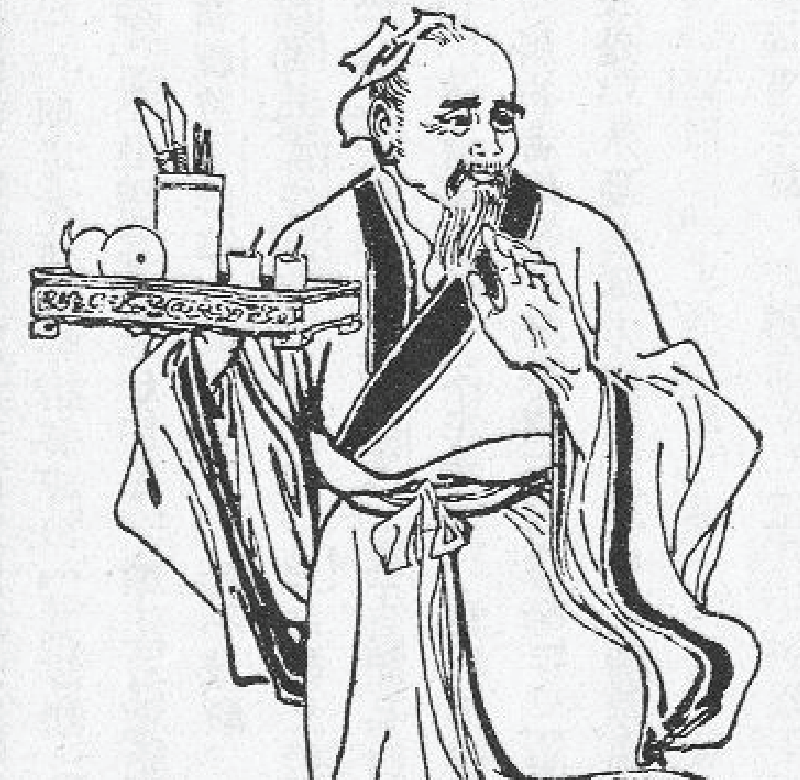
1) His Biography
Hua Tuo (c. 140–208 CE) was one of the most celebrated physicians of the late Eastern Han dynasty. Living during a time of political fragmentation and social unrest, he gained renown for exceptional clinical skill and innovative therapeutic methods. His life unfolded during the turbulent years preceding the Three Kingdoms period.
Born in present-day Anhui province, Hua Tuo was educated in the Confucian classics but chose not to pursue an official bureaucratic career. Instead, he devoted himself to medical study and practice. This decision marked him as part of a tradition of scholar-physicians who prioritised healing over political advancement.
He travelled extensively, treating patients from different social strata. His reputation spread widely, and he became known for treating complex illnesses that others could not cure. Unlike many physicians tied to court service, Hua Tuo maintained relative independence.
Historical accounts portray him as reserved and principled. He declined several offers of official appointment, preferring a life dedicated to medicine. His independence later brought him into tension with powerful political figures.
He is famously associated with the warlord Cao Cao, whom he treated for chronic headaches. According to tradition, Hua Tuo proposed a surgical intervention requiring anesthesia, which Cao Cao suspected as a plot. This suspicion ultimately led to Hua Tuo’s imprisonment.
While incarcerated, he is said to have written a medical text summarising his knowledge. The manuscript was allegedly destroyed after his execution around 208 CE, resulting in the loss of much of his direct medical writing.
Despite the scarcity of surviving primary texts, later historical compilations preserved anecdotes of his surgical skill and therapeutic innovation. These narratives secured his place in the medical imagination of China.
Hua Tuo’s biography blends documented history with legend, presenting him as a brilliant but tragically misunderstood healer whose talents were cut short by political suspicion.
2) Main Works
Qing Nang Shu (Book of the Blue Bag)
Traditionally attributed to Hua Tuo, this lost medical text reportedly summarised his clinical insights and therapeutic techniques. It was said to contain knowledge of internal medicine, surgery, and herbal prescriptions. Although no complete copy survives, later references describe it as a comprehensive manual reflecting his practical experience and diagnostic philosophy.
Ma Fei San (Anesthetic Formula)
Hua Tuo is credited with developing an herbal anesthetic known as “Ma Fei San.” This preparation allegedly rendered patients unconscious during surgical procedures. The formula’s precise composition is unknown, but its attribution reflects early experimentation with pain management and surgical sedation.
Wu Qin Xi (Five Animal Frolics)
Hua Tuo is traditionally associated with a set of therapeutic exercises imitating the movements of the tiger, deer, bear, monkey, and crane. These exercises were designed to promote circulation, flexibility, and internal balance, combining physical movement with preventative health philosophy.
Clinical Case Traditions
Though not formal works, numerous case narratives preserved in historical texts describe his treatment of trauma, digestive disorders, and systemic illness. These stories highlight his surgical techniques, herbal prescriptions, and diagnostic precision.
3) Main Themes
Surgical Innovation and Intervention
One of the most striking themes associated with Hua Tuo is his reputation for surgical boldness. At a time when most medical practice emphasised herbal pharmacology, acupuncture, and moxibustion, narratives portray him performing invasive procedures to remove diseased tissue. Accounts describe opening the abdomen, cleansing internal organs, and suturing the body—stories that, whether literal or embellished, reveal an image of exceptional anatomical confidence.
This tradition suggests a conceptual openness within early Chinese medicine to physical intervention when conservative therapies proved insufficient. Even if later storytellers amplified his achievements, the association of Hua Tuo with surgery reflects recognition that healing sometimes required decisive mechanical action. His legend thus broadens our understanding of the therapeutic scope imagined in late Han medicine.
Anesthesia and Pain Management
The attribution of Ma Fei San, an herbal anesthetic, represents another remarkable theme. According to historical tradition, Hua Tuo administered this preparation to render patients unconscious before performing surgery. Such accounts reveal an early concern not only with curing disease but also with managing suffering during treatment.
Whether the formula achieved full anesthesia or functioned as a powerful sedative, its symbolic importance is profound. It reflects awareness that pain control enhances surgical possibility and patient trust. In this sense, Hua Tuo’s legend positions him as a compassionate innovator who recognised that technical skill must be accompanied by humane care.
Preventative Health through Movement
Hua Tuo is traditionally credited with creating the Wu Qin Xi (Five Animal Frolics), exercises modelled on the movements of animals such as the tiger and crane. These practices were intended to stimulate circulation, strengthen the body, and maintain internal harmony. Rather than waiting for illness to appear, this approach emphasised daily cultivation of vitality.
The exercises embody the classical Chinese principle that health depends upon balanced flow—of breath, blood, and vital energy. By linking physical activity with medical theory, Hua Tuo’s legacy integrates therapeutic intervention with lifestyle discipline. This preventative orientation complements his more dramatic surgical reputation, revealing a physician attentive to both crisis and maintenance.
Holistic Diagnosis
Hua Tuo’s clinical identity includes a commitment to comprehensive assessment. Stories describe him observing complexion, listening to the voice, feeling the pulse, and questioning patients in detail. This method reflects the classical diagnostic framework that integrates multiple sensory inputs to form a unified interpretation.
Rather than isolating a single symptom, he is portrayed as identifying patterns of imbalance across the entire organism. Such holistic reasoning aligns with broader Chinese medical cosmology, in which organs, emotions, and environmental influences interact dynamically. His example reinforced the importance of pattern-based diagnosis in later medical traditions.
Medical Independence and Ethical Integrity
A further theme is his principled independence. Hua Tuo declined permanent service at court despite invitations from powerful figures. This choice reflects an ethical commitment to professional autonomy rather than political convenience.
His eventual execution under suspicion illustrates the precarious position of intellectuals in turbulent times. Yet within medical memory, this narrative transforms him into a symbol of integrity—one who prioritised medical judgement over submission to authority. The theme underscores that healing involves not only technical competence but moral courage.
Integration of Herbal and Procedural Medicine
Hua Tuo’s attributed practice combined multiple therapeutic modalities. He prescribed herbal formulas, applied acupuncture, recommended exercises, and—according to legend—performed surgery. This breadth reflects the non-compartmentalised nature of classical Chinese medicine.
Rather than viewing therapies as mutually exclusive, his example suggests a pragmatic integration of methods suited to the patient’s condition. Such flexibility became a hallmark of later medical practice, reinforcing the idea that effective healing requires adaptive reasoning and diversified skill.
4) Hua Tuo as a Physician
As a physician, Hua Tuo occupies a singular position in the imagination of Chinese medical history. He is remembered not merely for technical skill but for expanding the perceived boundaries of what a physician could accomplish. His clinical persona integrates diagnostic subtlety with procedural audacity.
His reported surgical interventions distinguish him from many contemporaries. While surgery was not absent in ancient China, it did not dominate mainstream therapeutic practice. Hua Tuo’s association with complex operative procedures thus marks him as exceptional—either as a true pioneer or as a symbolic representation of medical daring.
Equally significant is his reputed development of anesthesia. Even if partially legendary, the idea that he prioritised patient comfort demonstrates an ethical dimension to his technical achievements. Pain management was framed not only as a practical necessity but as an expression of humane care.
Beyond dramatic interventions, he maintained a preventative orientation. The Five Animal Frolics illustrate his belief that disciplined movement preserves vitality and reduces vulnerability to disease. This dual focus—intervention and prevention—reflects a balanced therapeutic philosophy.
His diagnostic reputation was grounded in attentiveness. Narratives portray him identifying illnesses quickly and accurately, often after brief examination. This image reinforces the classical ideal of the perceptive physician whose cultivated sensitivity allows rapid comprehension of complex conditions.
Hua Tuo’s relationship with political authority further defines his professional identity. His refusal to remain indefinitely at Cao Cao’s court suggests a physician who valued independence and mobility. Yet this stance also exposed him to danger in a politically volatile environment.
The destruction of his alleged medical manuscript deepened the aura surrounding his life. The notion that invaluable knowledge perished with him enhances his status as a tragic genius whose full brilliance can only be imagined.
Ultimately, Hua Tuo as a physician represents the synthesis of innovation, compassion, versatility, and integrity—qualities that shaped the archetype of the master healer in later Chinese tradition.
5) His Legacy
Hua Tuo’s legacy extends beyond documented history into the cultural and symbolic foundations of Chinese medicine. Even in the absence of surviving primary texts, his attributed innovations influenced how later generations conceptualised medical excellence.
He became the emblem of surgical capability within a medical culture often associated primarily with herbal and acupuncture therapies. By embodying operative courage, he expanded the imaginative scope of Chinese medical possibility.
The tradition of Ma Fei San contributed to narratives of early anesthetic experimentation in China. Whether pharmacologically precise or idealised, the story elevated awareness of pain management as a legitimate medical concern centuries before modern anesthesia emerged.
The Five Animal Frolics endured as a practical legacy. Variations of these exercises continue to appear in qigong and therapeutic movement systems, linking Hua Tuo’s name to living traditions of preventative care.
His tragic execution also shaped his posthumous identity. The destruction of his medical writings became emblematic of lost wisdom, reinforcing the fragility of knowledge in times of political turmoil. This motif strengthened his legendary stature.
In literature, theatre, and folklore, he appears as a virtuous healer confronting suspicion and injustice. Such portrayals elevate him from historical practitioner to moral exemplar.
Modern scholarship recognises that while many details of his life are difficult to verify, the persistence of his legend reflects genuine admiration for medical innovation during the Han period.
In enduring memory, Hua Tuo represents the bold and compassionate physician—one who integrates science, skill, preventative wisdom, and ethical steadfastness. His legacy remains a powerful symbol of creative possibility within the healing arts.