
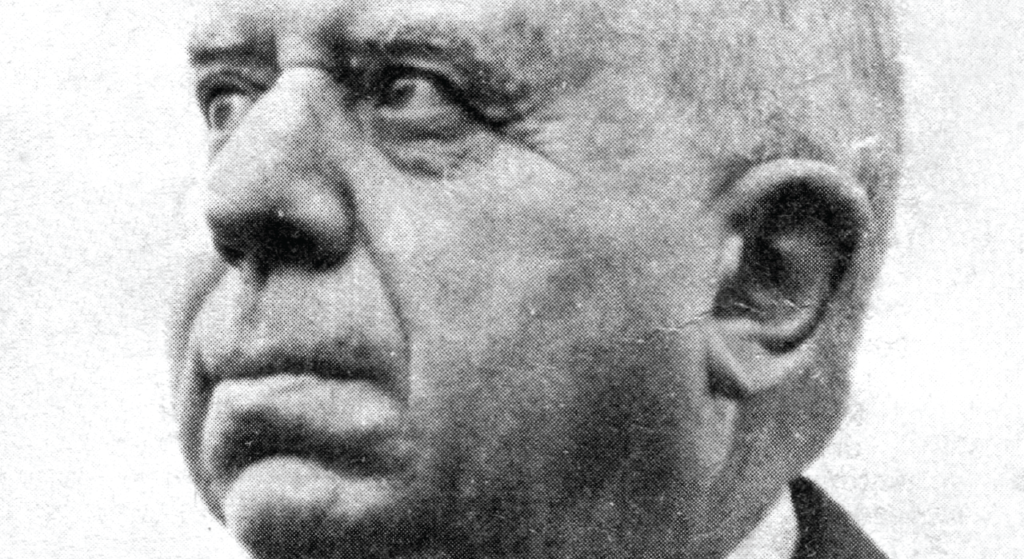
1) His Biography
Eugenio Montale, one of Italy’s most distinguished poets of the 20th century, was born on October 12, 1896, in Genoa, Italy. His upbringing in Liguria, a coastal region of northern Italy, profoundly influenced his poetic sensibilities. Montale’s early life was marked by the tumultuous years of World War I, during which he served in the Italian army. This period of upheaval left an indelible imprint on his work, shaping his views on life, love, and the human condition.
Following the war, Montale pursued studies in classical literature at the University of Genoa. His academic pursuits ignited a passion for poetry, and he immersed himself in the works of Italian and European masters, drawing inspiration from Dante, Petrarch, and Leopardi, among others. Montale’s early poetic endeavours were met with modest success, but it was not until later in life that he would achieve widespread acclaim.
In 1927, Montale moved to Florence, where he worked as a literary editor and correspondent for various publications. It was during this period that he began to establish himself within Italy’s literary circles, forging friendships with luminaries such as Carlo Emilio Gadda and Giuseppe Ungaretti. Despite his burgeoning reputation, Montale remained somewhat aloof from the literary scene, preferring the solitude of his studies and the introspection it afforded him.
The outbreak of World War II saw Montale relocate to Milan, where he endured the hardships of the conflict and the subsequent Nazi occupation of Italy. Despite the turmoil of the times, Montale continued to write, finding solace in his poetry amidst the chaos of war. It was during this period that he produced some of his most celebrated works, including the seminal collection “Ossi di Seppia” (Cuttlefish Bones), which would earn him the prestigious Viareggio Prize in 1925.
Following the war, Montale returned to Florence, where he dedicated himself wholeheartedly to his craft. He published numerous collections of poetry, including “Le Occasioni” (The Occasions) and “La Bufera e Altro” (The Storm and Other Things), cementing his reputation as one of Italy’s foremost literary figures. Montale’s poetry is characterised by its lyrical intensity, philosophical depth, and profound engagement with the complexities of existence.
In 1975, Montale was awarded the Nobel Prize in Literature, in recognition of his exceptional contribution to the world of letters. The prize served as a crowning achievement for Montale, affirming his status as a poet of international renown. Despite his fame, Montale remained a modest and reclusive figure, eschewing the trappings of celebrity in favour of a life dedicated to the pursuit of artistic truth.
Eugenio Montale passed away on September 12, 1981, leaving behind a rich and enduring legacy. His poetry continues to resonate with readers around the world, transcending the boundaries of time and language to speak to the universal human experience. In the words of Montale himself, “Poetry is the true magic, the only one that doesn’t deceive.” And indeed, his poetic magic endures, a testament to the enduring power of the written word.
2) Main Works
Ossi di Seppia (Cuttlefish Bones):
This seminal collection, published in 1925, marked Montale’s debut as a poet of considerable talent. “Ossi di Seppia” is celebrated for its innovative use of language and imagery, exploring themes of alienation, disillusionment, and the search for meaning in a world fraught with uncertainty. The poems in this collection reflect Montale’s keen observation of the natural world and his profound engagement with the human condition.
Le Occasioni (The Occasions):
Published in 1939, “Le Occasioni” represents a significant milestone in Montale’s poetic evolution. The collection is characterised by its lyrical intensity and existential depth, delving into themes of loss, memory, and the passage of time. Montale’s exquisite use of language and metaphor imbues these poems with a haunting beauty, inviting readers to contemplate the fleeting nature of existence and the elusive nature of truth.
La Bufera e Altro (The Storm and Other Things):
Released in 1956, “La Bufera e Altro” is regarded as one of Montale’s most accomplished works. The collection showcases the poet’s mastery of form and expression, as he grapples with themes of mortality, transience, and the impermanence of human endeavour. Montale’s profound insights into the human condition are rendered with exquisite precision, offering readers a poignant meditation on the fragility of life and the enduring power of art.
Satura:
Published in 1971, “Satura” represents a departure from Montale’s earlier poetic style, embracing a more experimental approach to form and structure. The collection is characterised by its fragmented narrative and kaleidoscopic imagery, reflecting Montale’s fascination with the complexities of modern existence. Through a series of interconnected poems, Montale explores themes of identity, language, and the nature of reality, inviting readers on a journey of discovery and self-reflection.
Xenia:
Released posthumously in 1986, “Xenia” comprises a series of aphoristic poems inspired by Montale’s reflections on life, love, and the human condition. Drawing on his vast reservoir of literary and philosophical knowledge, Montale crafts a collection that is both profound and enigmatic, inviting readers to ponder the mysteries of existence and the interconnectedness of all things. “Xenia” serves as a fitting testament to Montale’s enduring legacy as one of Italy’s most visionary poets.
3) Main Themes
Nature and the Natural World:
Montale’s poetry is deeply rooted in his observations of nature and the natural world. Through vivid imagery and evocative language, he captures the beauty and complexity of the landscape, from the rugged coastline of Liguria to the rolling hills of Tuscany. Montale’s portrayal of nature is marked by a sense of reverence and awe, as he explores the interconnectedness of all living things and the rhythms of the natural world.
Montale’s approach to nature reflects his existentialist sensibilities, as he grapples with the fleeting nature of existence and the impermanence of human endeavour. In this regard, his work bears similarities to the existentialist philosophy of Jean-Paul Sartre and Albert Camus, who also explored themes of alienation, absurdity, and the search for meaning in a seemingly indifferent universe.
Moreover, Montale’s depiction of nature is often infused with symbolic significance, serving as a metaphor for the human condition and the passage of time. His use of natural imagery to convey complex emotional states and existential truths distinguishes his poetry and underscores his mastery of the craft.
Love and Relationships:
Love and relationships are recurring motifs in Montale’s poetry, serving as a lens through which he explores the complexities of human emotion and desire. His depiction of love is nuanced and multifaceted, encompassing both the ecstasy of passion and the anguish of loss.
Montale’s treatment of love is distinguished by its introspective depth and psychological acuity, as he delves into the inner workings of the human heart and mind. His exploration of love’s contradictions and ambiguities finds resonance with the existentialist philosophy of Friedrich Nietzsche, who argued that love is a source of both joy and suffering, binding individuals in a perpetual struggle for self-realisation.
Furthermore, Montale’s portrayal of relationships is marked by a sense of longing and yearning, as characters navigate the complexities of intimacy and connection in a world marked by impermanence and uncertainty. His depiction of love as a transformative force echoes the Romantic tradition, with its emphasis on the transcendent power of passion and desire.
Memory and Nostalgia:
Memory and nostalgia occupy a central place in Montale’s poetry, serving as portals to the past and repositories of personal and collective experience. His evocative use of memory as a thematic motif invites readers to reflect on the passage of time and the fleeting nature of human existence.
Montale’s exploration of memory is deeply influenced by the philosophical concept of time, as articulated by thinkers such as Henri Bergson and Martin Heidegger. Like Bergson, Montale views memory as a dynamic process that shapes our perception of reality, imbuing the present moment with echoes of the past.
Moreover, Montale’s treatment of nostalgia reflects his keen awareness of the passage of time and the inevitability of loss. His nostalgic evocations of childhood innocence and lost love evoke the poignancy of human experience, inviting readers to confront the bittersweet complexities of memory and longing.
In this sense, Montale’s poetry resonates with the existentialist notion of temporality, as articulated by Heidegger, who argued that human existence is defined by its temporal finitude. By exploring the interplay between memory, nostalgia, and the passage of time, Montale invites readers to confront the existential dimensions of human experience and the quest for meaning in a world marked by transience and flux.
Existential Angst and Alienation:
Eugenio Montale’s poetry frequently delves into the existential angst and alienation experienced by individuals grappling with the complexities of modern life. His works reflect the existentialist concern with the absurdity of human existence and the pervasive sense of alienation in an increasingly fragmented world.
Montale’s portrayal of existential angst is reminiscent of the writings of existentialist philosophers such as Jean-Paul Sartre and Friedrich Nietzsche. Like Sartre, Montale explores the existential notion of freedom and the anguish that accompanies the burden of individual responsibility. His characters often find themselves adrift in a world devoid of inherent meaning, struggling to find purpose and direction amidst the chaos of existence.
Moreover, Montale’s depiction of alienation speaks to the disconnection and estrangement experienced by individuals in modern society. His characters inhabit a world marked by anonymity and isolation, where human relationships are fraught with ambiguity and misunderstanding. Montale’s exploration of alienation resonates with the existentialist critique of modernity, which highlights the fragmentation of the self and the erosion of authentic human connection in an increasingly atomised world.
Through his poetry, Montale confronts the existential dimensions of human experience, inviting readers to confront the profound questions of existence and the elusive nature of truth in a world marked by uncertainty and flux.
Critique of Modernity and Technological Progress:
Another prominent theme in Eugenio Montale’s poetry is his critique of modernity and the relentless march of technological progress. Montale’s works reflect a deep ambivalence towards the rapid changes and upheavals brought about by industrialisation and urbanisation.
Montale’s critique of modernity echoes the concerns of Romantic poets such as William Wordsworth and Samuel Taylor Coleridge, who lamented the alienating effects of industrialisation on the human spirit. Like the Romantics, Montale is sceptical of the dehumanising impact of technological progress, which he sees as eroding the bonds of community and estranging individuals from nature and themselves.
Moreover, Montale’s poetry reflects a profound sense of nostalgia for a vanishing world, characterised by simplicity, authenticity, and connection to the land. His evocative descriptions of rural landscapes and traditional ways of life stand in stark contrast to the sterile urban environments and soulless consumer culture of the modern world.
Through his critique of modernity, Montale invites readers to reflect on the ethical and existential implications of technological progress and to consider the enduring value of human connection, tradition, and the natural world in an age of rapid change and uncertainty.
4) Montale, the Nobel Laureate
Eugenio Montale’s Nobel Prize in Literature, awarded in 1975, represents a recognition of his profound contributions to the world of letters and his enduring impact on the literary landscape. Montale’s poetry is characterised by its lyrical intensity, philosophical depth, and profound engagement with the complexities of existence. His works, which explore themes of nature, love, memory, and existential angst, have resonated with readers around the world, transcending the boundaries of time and language to speak to the universal human experience.
One of the key reasons Montale was awarded the Nobel Prize lies in the remarkable originality and innovation of his poetic voice. His mastery of language and form, combined with his keen insight into the human condition, set him apart as a poet of exceptional talent and vision. Montale’s poetry is marked by its richness of imagery, its musicality, and its ability to evoke deep emotional resonance in readers.
Moreover, Montale’s Nobel Prize also reflects his profound influence on the development of modern Italian literature. Through his groundbreaking works, Montale revitalised Italian poetry, ushering in a new era of experimentation and introspection. His rejection of traditional poetic conventions and his willingness to explore new modes of expression paved the way for future generations of poets to chart their own creative paths.
Furthermore, Montale’s Nobel Prize acknowledges his role as a cultural ambassador, whose works have helped to foster understanding and appreciation of Italian literature and culture on the global stage. His poetry transcends linguistic and cultural boundaries, inviting readers from diverse backgrounds to engage with the timeless themes and universal truths that permeate his work.
In awarding Montale the Nobel Prize, the Swedish Academy recognised not only the exceptional quality of his poetry but also the profound moral and intellectual integrity that underpins his artistic vision. Montale’s unwavering commitment to truth, beauty, and the power of the written word serves as a beacon of inspiration for writers and readers alike, reminding us of the enduring importance of literature as a means of exploring the human experience and illuminating the depths of the human soul.
5) His Legacy
Eugenio Montale’s legacy is one of enduring significance and profound influence within the realm of Italian and world literature. As a poet of exceptional talent and vision, Montale’s works have left an indelible mark on subsequent generations of writers and readers alike.
One of the most enduring aspects of Montale’s legacy is his role in revitalising Italian poetry in the 20th century. Through his groundbreaking works, Montale challenged traditional poetic conventions and ushered in a new era of experimentation and introspection. His innovative use of language, rich symbolism, and profound philosophical insights set a new standard for poetic expression and helped to redefine the boundaries of Italian literary tradition.
Moreover, Montale’s poetry is celebrated for its universal themes and timeless relevance. His exploration of the human condition, with its joys and sorrows, its triumphs and tragedies, speaks to readers across cultures and generations. Montale’s ability to capture the essence of the human experience with clarity and depth has ensured the enduring popularity of his works and cemented his status as a literary icon.
Furthermore, Montale’s legacy extends beyond the realm of poetry to encompass his broader cultural and intellectual contributions. As a keen observer of society and politics, Montale engaged with the pressing issues of his time and used his platform as a writer to advocate for social justice and human rights. His unwavering commitment to truth and justice serves as a powerful example for future generations of writers and activists.
In addition, Montale’s influence can be felt in the works of numerous poets and writers who have been inspired by his example. From his innovative use of language to his profound exploration of existential themes, Montale’s legacy continues to shape the landscape of contemporary literature and inspire artists around the world.
6) Some Verses
“Ma il tempo, il tempo / non esiste” – (from “La casa dei doganieri”, Eugenio Montale)
“E un pianto di gabbiani / tagliava il cielo, tagliava il cuore” – (from “La bufera”, Eugenio Montale)
“Tra folla e folla / là tra i popoli estranei” – (from “Meriggiare pallido e assorto”, Eugenio Montale)
“Tu, che consolavi / il nulla a poco a poco” – (from “Mottetto”, Eugenio Montale)
“Eppure spesso / un riflesso / d’infanzia, come un fischio / di rondine / stanca” – (from “Non chiederci la parola”, Eugenio Montale)