
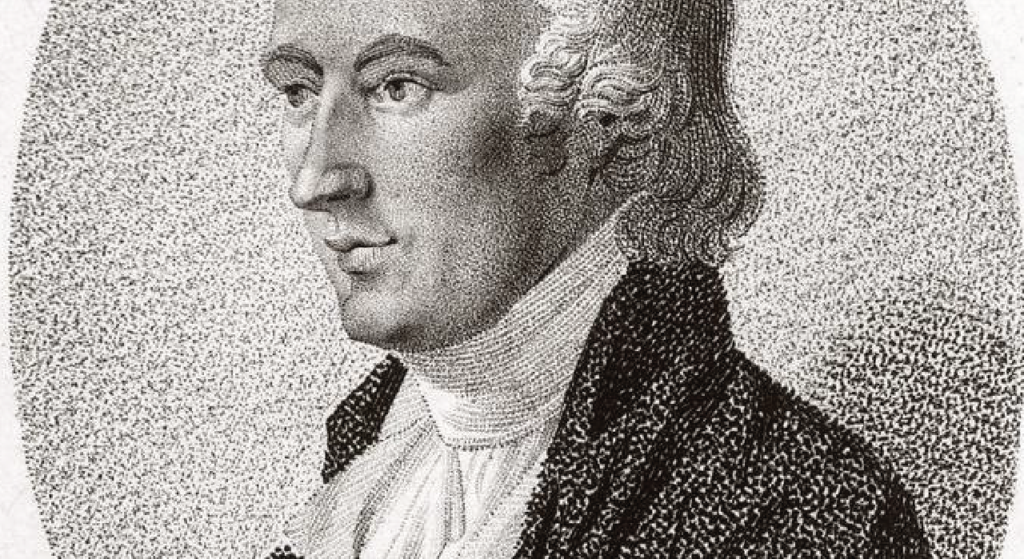
1) His Biography
Carl Ludwig Willdenow was born on 22 August 1765 in Berlin, at a time when botany was emerging as a crucial field within the natural sciences. Coming from a well-educated middle-class family, he showed an early fascination with plants, collecting and classifying local flora during his youth. His father, a pharmacist, encouraged this curiosity by granting him access to a wide variety of herbs and medicinal substances, which shaped his early understanding of plant anatomy and chemistry. Willdenow’s initial interest in medicine soon evolved into a deeper dedication to botany, particularly in understanding the diversity of plant life and the principles of plant classification that were rapidly developing during the late eighteenth century.
He pursued formal studies in medicine and botany at the University of Halle and later at the University of Berlin, where his intellectual engagement with the works of Carl Linnaeus profoundly influenced his scientific outlook. Linnaeus’s system of classification provided Willdenow with a framework to organise the complexity of the plant world, though he would later refine and expand upon these principles. In 1789, he earned his Doctor of Medicine degree, but his academic pursuits remained anchored in botany rather than clinical practice. His early writings demonstrated a remarkable grasp of plant morphology and taxonomy, establishing him as one of Germany’s most promising botanists by the close of the eighteenth century.
Upon returning to Berlin, Willdenow combined his scientific endeavours with the practical aspects of pharmacy, inheriting his father’s apothecary business. This dual engagement gave him a unique vantage point to study plants not only as biological specimens but also as sources of medicinal and economic value. His growing collection of plants and seeds, many of which were exchanged with naturalists from other parts of Europe and beyond, soon made his private herbarium one of the most extensive in the region. His passion for teaching also began to flourish during this period, as he mentored young naturalists and inspired a new generation of German botanists.
Willdenow’s academic career reached new heights when he was appointed Professor of Botany at the Berlin Medical-Surgical College. His lectures were known for their clarity, precision, and enthusiasm, blending theoretical understanding with practical botanical observation. In 1801, he became the director of the Berlin Botanical Garden, which he transformed from a modest collection into one of the most respected botanical institutions in Europe. Under his guidance, the garden became both a centre for scientific research and a living archive of global plant diversity, housing thousands of species from distant continents.
Throughout his career, Willdenow maintained a keen interest in the geographical distribution of plants, a topic that would later profoundly influence Alexander von Humboldt, one of his most famous students. He was among the first botanists to argue that climate and geography significantly determine the composition of plant communities. This insight laid the groundwork for the field of phytogeography, positioning Willdenow as one of its early pioneers. His correspondence with other leading scientists of the era reveals his intellectual openness and collaborative spirit, as he exchanged specimens, data, and ideas across national boundaries.
Despite his scientific success, Willdenow’s career was not without challenges. The political upheavals of the Napoleonic era disrupted academic life and travel across Europe, affecting both his teaching and his ability to correspond with other botanists. Yet he continued to work tirelessly, often devoting long hours to cataloguing species and refining plant descriptions for his monumental works. His health began to decline in his later years, but he remained committed to expanding the Berlin Botanical Garden and to guiding his students in the principles of systematic botany.
Carl Ludwig Willdenow passed away on 10 July 1812, at the age of forty-six. Though his life was relatively short, his influence was immense, both through his scholarly works and through his mentorship of figures like Humboldt, who would carry his ideas into a broader naturalist framework. Willdenow’s legacy endures in the classification systems he refined, the institutions he strengthened, and the scientific curiosity he instilled in those who followed him. His contributions helped to elevate botany from a descriptive discipline into a more analytical and geographical science, leaving a lasting mark on nineteenth-century natural history.
2) Main Works
Species Plantarum (1797–1830)
Willdenow’s expanded and annotated edition of Linnaeus’s Species Plantarum was one of his greatest achievements. It introduced thousands of new species and refined the Linnaean classification system. His careful descriptions and corrections made the work a global reference for botanists. It reflected the vast botanical exchanges taking place during his era. The multi-volume work solidified Willdenow’s reputation as a leading taxonomist.
Grundriss der Kräuterkunde (1792)
This textbook outlined the fundamentals of plant anatomy, classification, and physiology in clear, systematic language. Designed for students and pharmacists, it became a cornerstone of botanical education in Germany. Willdenow emphasised both theoretical and practical aspects of plant science. Its structured format made it widely adopted across universities. The book also reflected his belief in teaching through direct observation of nature.
Historia Amaranthorum (1790)
A detailed monograph on the amaranth family, this work documented their taxonomy, morphology, and geographic range. Willdenow combined precise descriptions with fine botanical illustrations. It was among the earliest specialised studies of a single plant family. The work helped refine classification standards within flowering plants. Its rigour established his credibility among contemporary European botanists.
Enumeratio Plantarum Horti Regii Botanici Berolinensis (1809)
This catalogue listed every species cultivated in the Berlin Botanical Garden under Willdenow’s direction. It reflected years of collecting, classifying, and curating plants from around the world. The publication offered insight into early nineteenth-century botanical exchange networks. Many rare tropical and exotic specimens were described here for the first time. It remains an important record of early global plant diversity.
Beyträge zur Botanik (1798)
A compilation of essays, this volume presented Willdenow’s reflections on taxonomy, nomenclature, and natural plant relationships. He explored the idea of plant distribution being influenced by climate and geography. The collection revealed his growing interest in ecological patterns among species. It contributed to the emerging field of phytogeography. His analytical tone marked a shift towards a more scientific study of plant environments.
Commentatio de Aëre, Aqua et Solo Patriae (1792)
In this concise treatise, Willdenow examined how air, water, and soil conditions shape plant growth. It represented one of his earliest forays into environmental and geographical botany. The work bridged natural philosophy and empirical observation. He proposed that local environments determine vegetation types. This idea later became central to modern ecological and biogeographical studies.
3) Main Themes
Plant Classification and Taxonomy
A central theme throughout Willdenow’s writings was the systematic classification of plants. Deeply influenced by Linnaeus, he nonetheless sought to refine and expand the Linnaean system, incorporating a greater emphasis on natural relationships between species. Willdenow believed that accurate taxonomy should be grounded in detailed observation of plant morphology, reproductive structures, and developmental patterns. His meticulous approach led to more precise species definitions, which in turn advanced the organisation of botanical knowledge. He treated classification not merely as a practical exercise but as a way to reveal the inherent order and logic of nature itself.
Beyond the technical work of naming and describing plants, Willdenow viewed taxonomy as a philosophical endeavour aimed at understanding the unity and diversity of life. He regarded each species as part of a larger natural hierarchy governed by identifiable patterns. This view bridged empirical study and natural philosophy, elevating botany from a descriptive art to a systematic science. His contributions to Species Plantarum exemplified this intellectual balance, establishing taxonomic precision as the foundation of modern botany.
Phytogeography and the Distribution of Plants
Willdenow was one of the earliest botanists to study how plants are distributed across different regions of the world. He proposed that climate, soil composition, and geographical location play determining roles in shaping plant communities. This marked a departure from purely morphological classifications, introducing environmental context into botanical understanding. His observations suggested that similar environmental conditions could produce analogous plant forms, even in distant continents. This insight anticipated later theories of plant ecology and biogeography.
In his correspondence and teaching, Willdenow encouraged naturalists to view plant distribution as dynamic and interrelated with broader environmental forces. His student Alexander von Humboldt would later expand this idea into a full scientific framework, but its conceptual roots lie in Willdenow’s pioneering work. By linking plants to geography, he shifted botany toward a global and comparative discipline. This integration of environmental and systematic thinking marked one of his most lasting intellectual contributions.
The Relationship Between Climate and Vegetation
Another recurring theme in Willdenow’s thought was the influence of climate on the structure and distribution of vegetation. He observed that temperature, humidity, and seasonal variation directly affect the growth patterns and adaptability of plant species. In this sense, Willdenow viewed climate not as a static background but as an active agent shaping the evolution of flora. His recognition of these environmental constraints laid early groundwork for the study of plant adaptation.
He also speculated on how climatic zones could explain similarities between flora in distant parts of the world. This comparative approach helped to identify the existence of ecological parallels across continents, foreshadowing modern concepts of biomes. Willdenow’s writings thus positioned climate as a key variable in both taxonomy and ecology, reinforcing his belief that plant life is inseparable from its environment.
Medicinal and Economic Uses of Plants
Given his background as a pharmacist, Willdenow devoted considerable attention to the practical and medicinal properties of plants. He maintained that the study of botany should not only serve academic curiosity but also contribute to public health and the economy. His early works, especially Grundriss der Kräuterkunde, include extensive discussions on the preparation, preservation, and application of medicinal plants. This pragmatic orientation made his writings valuable to both scientists and practitioners.
Willdenow’s emphasis on applied botany reflected Enlightenment ideals of utility and progress. He believed that understanding plant diversity could improve agriculture, medicine, and commerce. In cataloguing the medicinal flora of Europe and beyond, he demonstrated how scientific classification could serve human needs. His integration of empirical observation with practical application helped to bridge the gap between pharmacy and botanical science.
Natural Order and the Unity of Nature
Willdenow’s philosophy of nature was deeply rooted in the belief that all living forms are connected through a universal natural order. He saw the diversity of plant species as expressions of underlying regularities and laws. In his teaching and writing, he emphasised the harmony between structure, function, and environment, arguing that the study of plants reveals the rational design of the natural world. This notion mirrored broader intellectual currents in German natural philosophy at the turn of the nineteenth century.
By highlighting the unity of natural systems, Willdenow helped to integrate botany within the broader framework of the natural sciences. His holistic approach inspired students to perceive nature as an interconnected whole rather than a collection of isolated phenomena. This vision influenced figures like Humboldt, who expanded it into a comprehensive view of the Earth as a living, interrelated organism. Willdenow’s reflections on natural order thus stand as an early articulation of ecological thinking.
Pedagogy and the Advancement of Botanical Education
Education was a consistent concern in Willdenow’s career, and his works reveal a strong commitment to improving the teaching of botany. He believed that scientific training should combine theory with direct observation, using living plants as essential teaching tools. His textbooks and lecture materials were written in clear, systematic language, intended to make complex botanical ideas accessible to students and practitioners alike. This pedagogical clarity distinguished him from many of his contemporaries.
In his role as professor and director of the Berlin Botanical Garden, Willdenow transformed the institution into a living classroom. He integrated fieldwork, specimen collection, and laboratory analysis into the curriculum, setting a new standard for botanical instruction. His educational philosophy not only trained future botanists but also reinforced the importance of empirical study in the natural sciences. Through teaching, he ensured that his scientific ideas would influence generations beyond his own lifetime.
Scientific Collaboration and Global Exchange
Willdenow placed great value on collaboration and correspondence with other naturalists across Europe and beyond. His works reflect a spirit of scientific exchange, as he incorporated specimens, observations, and ideas from an international network of scholars. This collaborative ethos allowed him to compile one of the most diverse botanical collections of his time. The Berlin Botanical Garden, under his care, became a hub for global plant knowledge.
Through correspondence with explorers, travellers, and colonial botanists, Willdenow participated in the global circulation of natural specimens. This exchange of information not only enriched European science but also broadened understanding of plant diversity and distribution. His collaborative approach prefigured the modern model of scientific research as a shared, international endeavour. By integrating global data into his taxonomy, Willdenow contributed to the emergence of botany as a truly worldwide discipline.
4) Willdenow as a Botanist
Carl Ludwig Willdenow stands as one of the foremost figures in the transformation of botany from a descriptive art into a structured scientific discipline. His approach to plant study combined rigorous empirical observation with a strong theoretical framework, allowing him to bridge the gap between Linnaean taxonomy and the emerging field of natural history. Unlike many of his contemporaries who focused solely on plant morphology, Willdenow sought to understand plants within the broader contexts of geography, climate, and ecology. This perspective made him one of the pioneers of phytogeography—the study of the geographical distribution of plants—which would later become a cornerstone of modern ecology. His ability to link plant life to environmental and climatic factors gave his work a depth that influenced not only botanists but also natural philosophers across Europe.
As a taxonomist, Willdenow’s precision and breadth of knowledge were unmatched in his generation. His contributions to the expanded edition of Species Plantarum demonstrated an extraordinary capacity to synthesise vast amounts of botanical data. He described and classified thousands of species, some of which were new to science, basing his assessments on meticulous examination of specimens collected from all over the world. His systematic rigor ensured that plant classification became more reliable and consistent, helping to standardise botanical nomenclature internationally. The precision and clarity of his taxonomic methods reflected his belief that order and logic were inherent features of the natural world waiting to be uncovered through disciplined study.
Willdenow was also instrumental in establishing the Berlin Botanical Garden as a centre of botanical research and education. Under his direction, the garden evolved from a modest collection into one of Europe’s most respected botanical institutions. He reorganised its layout according to natural plant families and introduced species from diverse climates and regions. This transformation turned the garden into a living laboratory for the study of plant diversity and adaptation. It also became a meeting point for scholars and travellers who contributed to the expanding network of global botanical knowledge. His stewardship of the garden laid the institutional foundations for systematic research and teaching that continued long after his death.
A hallmark of Willdenow’s botanical philosophy was his insistence on direct observation and empirical verification. He maintained that true understanding of plant life could not be achieved solely through books or drawings, but required the study of living specimens in their natural environment. This insistence on fieldwork and specimen-based research shaped the methods of his students and successors. It also reflected his conviction that nature should be understood as an interdependent system rather than a static collection of objects. His integration of observation, classification, and geographical analysis positioned him at the forefront of the scientific naturalism emerging in early nineteenth-century Europe.
One of Willdenow’s most lasting contributions was his influence on Alexander von Humboldt, his student and later close collaborator. Through his teaching, Willdenow imparted the idea that plant life is profoundly shaped by environmental conditions—a concept Humboldt expanded into his comprehensive theory of the unity of nature. Willdenow’s influence thus extended beyond pure botany into the wider realms of ecological and geographical thought. In this sense, he served as a critical intellectual bridge between classical taxonomy and the ecological sciences that would define later centuries. His emphasis on the interrelation between life forms and their surroundings made him a foundational figure in the evolution of environmental science.
Willdenow’s scientific curiosity was not limited to academic study; he was equally interested in the practical and economic applications of botanical knowledge. His background in pharmacy informed his understanding of plants as sources of medicine and sustenance. He viewed botany as a science with tangible benefits to society, capable of improving agriculture, medicine, and industry. This pragmatic outlook aligned with Enlightenment ideals of progress and utility, ensuring that his research found resonance both within scholarly circles and among practitioners. His ability to combine theoretical insight with practical relevance made his work influential across disciplines.
In his later years, Willdenow’s focus increasingly turned to the philosophical dimensions of plant science. He viewed the diversity of flora not as random variation but as a manifestation of natural laws. His reflections on the harmony between form, function, and environment revealed an early ecological sensibility. He saw each plant as part of a greater system of balance, governed by factors such as climate, soil, and geography. This holistic understanding of the natural world helped lay the conceptual groundwork for future ecological theories. His integration of scientific observation with natural philosophy positioned him as both a meticulous scientist and a profound thinker on the unity of life.
Willdenow’s legacy as a botanist rests on his synthesis of systematic precision, environmental insight, and philosophical depth. His contributions reshaped the way plants were studied, classified, and understood in relation to the Earth’s diverse environments. He bridged the empirical traditions of eighteenth-century natural history with the emerging scientific frameworks of the nineteenth century. Through his works, teachings, and institutional leadership, Willdenow established a model of botanical inquiry that valued both accuracy and breadth. His name remains inseparable from the early development of plant geography, systematic botany, and the enduring quest to understand nature as an interconnected whole.
5) His Legacy
Carl Ludwig Willdenow’s legacy in the history of botany is both profound and enduring, marking a key transitional moment between eighteenth-century classification and nineteenth-century ecological thought. His meticulous approach to plant taxonomy helped to establish rigorous scientific standards that influenced generations of botanists. The expanded edition of Species Plantarum that he supervised became a foundational text in systematic botany, ensuring that species descriptions were consistent and globally recognisable. This monumental achievement not only advanced taxonomy but also reinforced the importance of precision and uniformity in scientific nomenclature. Willdenow’s work in this field was instrumental in consolidating the Linnaean tradition while simultaneously modernising it for a new scientific era.
Perhaps one of the most significant aspects of Willdenow’s legacy lies in his pioneering role in phytogeography—the study of the geographical distribution of plants. His recognition that plant communities are shaped by environmental factors such as climate, soil, and altitude introduced a spatial and ecological dimension to botanical study. This was a revolutionary departure from the static classification systems that had dominated earlier natural history. His ideas directly inspired Alexander von Humboldt, whose later explorations and writings expanded Willdenow’s insights into a comprehensive vision of the natural world’s interconnectedness. Through Humboldt, Willdenow’s influence extended far beyond botany into the broader development of ecology, geography, and environmental science.
In institutional terms, Willdenow’s tenure as director of the Berlin Botanical Garden transformed it into a world-renowned centre for scientific research and education. Under his guidance, the garden’s collection expanded dramatically, incorporating plants from Europe, Africa, Asia, and the Americas. It became both a repository of global biodiversity and a training ground for young scientists. His systematic organisation of plant collections according to natural families set a precedent for later botanical gardens and herbaria across Europe. The Berlin Botanical Garden, enriched by his scientific vision, remains a living testament to his dedication to both empirical research and public education.
Willdenow’s teaching and mentorship also played a critical role in shaping the course of nineteenth-century botany. His students carried his ideas into diverse scientific domains, ensuring that his methods and principles endured long after his death. His most famous pupil, Alexander von Humboldt, publicly credited Willdenow for awakening his interest in the geographical relationships of plants. Through his mentorship, Willdenow’s intellectual influence extended far beyond his own writings, becoming embedded in the very foundations of modern natural science. His emphasis on empirical observation, comparative analysis, and the relationship between plants and their environments became guiding principles for future researchers.
The philosophical dimensions of Willdenow’s thought also left an enduring mark on the scientific worldview of his time. He conceived of nature as a unified system governed by discernible laws—a vision that harmonised scientific investigation with natural philosophy. This holistic perspective anticipated later ecological thinking, in which the interdependence of organisms and their surroundings became a central tenet. His blending of rational inquiry with an almost aesthetic appreciation of natural order helped to humanise science, making it not only a pursuit of knowledge but also a contemplation of the harmony inherent in the living world.
In the broader intellectual context of German science, Willdenow bridged the Enlightenment’s empirical precision and Romanticism’s fascination with nature’s unity. His writings and teachings encouraged a new sensibility that viewed plants not merely as specimens to be catalogued, but as elements of an interwoven ecological fabric. This shift laid the groundwork for later naturalists and ecologists who would approach the study of life from a systems-oriented perspective. His influence thus extended beyond the boundaries of botany, touching the fields of geography, philosophy, and environmental thought.
Even two centuries after his death, Willdenow’s name remains closely associated with systematic and geographical botany. The numerous plant species bearing the epithet “willdenowii” testify to the high regard in which he was held by fellow scientists. His herbarium, preserved in Berlin, continues to serve as a valuable historical and scientific resource. Modern botanical classification, ecological mapping, and conservation efforts still reflect many of the principles he articulated—those of careful observation, environmental awareness, and global collaboration. His life’s work stands as a testament to the enduring power of disciplined curiosity and intellectual openness.
Carl Ludwig Willdenow’s legacy is that of a scientist who expanded the horizons of botany both in scope and in depth. He redefined plant science as an interconnected study of form, environment, and geography, setting the stage for modern ecology and environmental biology. Through his writings, mentorship, and institutional reforms, he transformed botany from a static discipline into a dynamic exploration of life’s diversity. His intellectual lineage runs through Humboldt and into the broader tradition of scientific naturalism that shaped the nineteenth century. Willdenow remains a central figure in the history of botanical thought—a scholar whose vision continues to shape how humanity understands and studies the living world.