
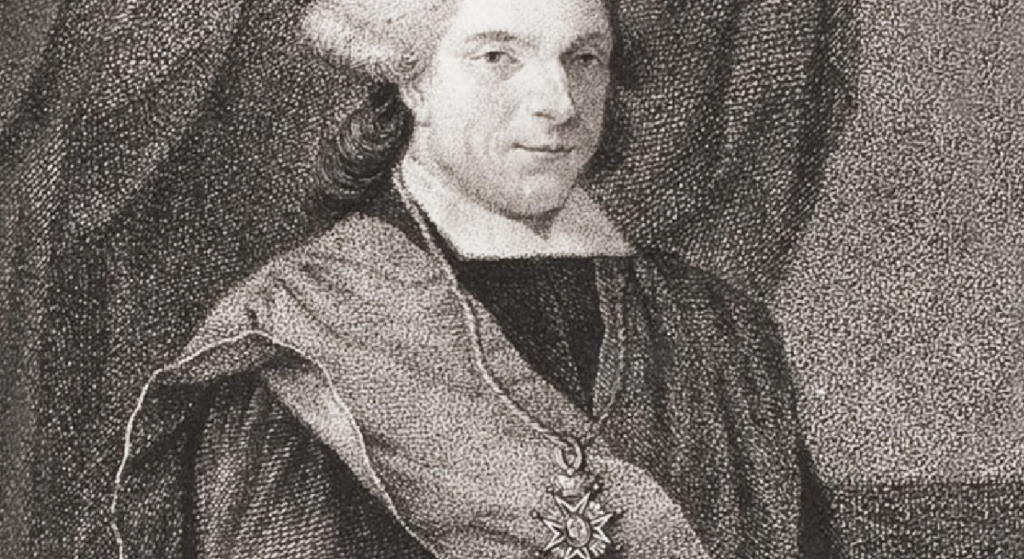
1) His Biography
Pedro de Montengón y Paret was born in 1745 in Alicante, Spain, during a period when the intellectual climate of Europe was increasingly influenced by Enlightenment thought. His early life unfolded in a society experiencing cultural change as ideas about education, philosophy, and social organisation were being reconsidered. Growing up in this environment, Montengón developed an interest in learning and literature that later shaped his career as a novelist and thinker.
During his youth he entered the Society of Jesus, becoming part of a religious order known for its emphasis on scholarship and education. Jesuit training provided him with a strong grounding in classical literature, philosophy, and theology. This education introduced him to both ancient authors and contemporary intellectual debates, which would later influence the themes and narrative style of his literary works.
Montengón’s early years as a Jesuit coincided with a turbulent political moment in Spanish history. In 1767 the Spanish Crown ordered the expulsion of the Jesuits from its territories. This decision forced many members of the order, including Montengón, to leave Spain and settle elsewhere in Europe. The sudden displacement had a profound impact on his life, separating him from his homeland and altering the course of his intellectual development.
Following the expulsion, Montengón settled in Italy, where many exiled Jesuits established new scholarly and literary communities. Living in cities such as Ferrara and other Italian centres of learning, he continued to pursue intellectual work. The Italian environment exposed him to broader European literary currents, particularly those associated with Enlightenment philosophy and the emerging sentimental novel.
While in exile, Montengón began to devote himself more seriously to literary composition. Freed from some of the institutional duties that had previously occupied him, he focused on writing novels that explored moral, educational, and philosophical questions. His works often reflected the intellectual concerns of the Enlightenment, particularly ideas about virtue, social harmony, and the moral development of individuals.
Montengón’s novels gained attention among Spanish readers despite the difficulties of publishing from exile. Copies of his works circulated in Spain and among intellectual circles interested in reformist literature. His writing combined narrative storytelling with philosophical reflection, allowing him to explore social issues through fictional characters and situations.
Throughout his life, Montengón remained intellectually engaged with the cultural debates of his era. He followed developments in European thought and incorporated elements of these discussions into his writing. Although he had been forced to leave Spain, his works continued to address Spanish society and the broader moral questions facing eighteenth-century Europe.
Pedro de Montengón y Paret died in 1824 after spending many years outside his native country. Despite the challenges of exile, he succeeded in establishing himself as a notable novelist associated with the Spanish Enlightenment. His life illustrates the experiences of many Jesuit intellectuals of the eighteenth century whose displacement led them to contribute to literature and scholarship beyond the borders of Spain.
2) Main Works
Eusebio (1786–1788)
This is Montengón’s most famous and ambitious novel, published in several volumes. The story follows the life and moral development of a young man named Eusebio, whose experiences are shaped by careful education and philosophical reflection. The novel explores themes of virtue, reason, and personal growth, presenting the protagonist as an example of enlightened moral formation. Through Eusebio’s journey, Montengón reflects on the importance of education in shaping responsible and ethical individuals.
Antenor (1788)
This novel centres on the character Antenor, whose life story is used to examine questions of social responsibility, honour, and ethical decision-making. The narrative presents a series of challenges faced by the protagonist, each requiring careful judgement and moral integrity. Montengón uses the story to discuss the role of virtue in maintaining social harmony and individual dignity.
El Mirtilo o los pastores trashumantes (1795)
This pastoral novel depicts the lives of shepherds and rural communities, drawing inspiration from the classical pastoral tradition. The story portrays an idealised vision of rural life, emphasising harmony with nature and simple moral values. Through the pastoral setting, Montengón explores themes of friendship, loyalty, and the peaceful coexistence of individuals within a community.
El Rodrigo (1793)
This historical novel draws on Spanish history and legend to tell the story of a heroic figure named Rodrigo. Montengón uses the historical setting to examine issues of leadership, courage, and national identity. By combining historical elements with narrative fiction, the novel reflects on the moral responsibilities associated with political power and heroic action.
Educational and Moral Essays
In addition to his novels, Montengón wrote essays concerned with education and moral instruction. These works emphasise the importance of rational thinking, ethical development, and intellectual discipline. They reveal his interest in Enlightenment ideas about the improvement of society through education.
Letters and Reflective Writings
Montengón also produced letters and shorter reflective texts during his years in exile. These writings address cultural and philosophical questions, providing insight into the intellectual environment in which he lived. They demonstrate his continued engagement with literary and social debates of the eighteenth century.
3) Main Themes
Moral Education and the Formation of Character
A central theme in Montengón’s works is the importance of moral education in shaping individuals. His novels frequently depict young protagonists who undergo a process of intellectual and ethical development. Through various experiences, mentors, and moral challenges, these characters gradually learn the principles that guide virtuous living.
Montengón presents education not simply as the acquisition of knowledge but as the cultivation of judgement and character. His narratives emphasise that proper instruction should encourage reason, self-discipline, and compassion. By portraying the gradual formation of moral character, he highlights the role education plays in creating responsible members of society.
Virtue as the Basis of Social Harmony
Another recurring theme is the idea that social stability depends on the moral integrity of individuals. Montengón believed that societies function best when their members act with honesty, fairness, and respect toward one another. His characters often face situations in which personal ambition conflicts with ethical responsibility.
Through these narrative conflicts, Montengón illustrates how virtuous behaviour can resolve tensions and restore harmony. His stories suggest that justice, loyalty, and compassion are essential for maintaining trust within communities. In this way, his fiction presents morality as a practical force that sustains social order.
Enlightenment Ideals of Reason and Progress
Montengón’s writing reflects the influence of Enlightenment thought, particularly the belief that human reason can guide moral and social improvement. Many of his characters rely on rational reflection when confronting difficult decisions. The narratives often portray thoughtful analysis as a means of overcoming ignorance or prejudice.
This theme also appears in his emphasis on education and intellectual curiosity. Montengón portrays learning as a pathway toward personal development and collective progress. His works suggest that societies advance when individuals cultivate knowledge, question harmful traditions, and pursue truth through rational inquiry.
The Value of Simplicity and Rural Life
Several of Montengón’s works portray rural settings and pastoral communities. In these narratives, the countryside represents a place where life is guided by natural rhythms and simple moral values. Characters living in such environments are often depicted as more sincere and harmonious than those influenced by the complexities of urban society.
The pastoral setting allows Montengón to contrast the simplicity of rural existence with the ambitions and rivalries of more complex social environments. Through these contrasts, he suggests that closeness to nature and modest living can encourage honesty, friendship, and inner tranquillity.
The Role of Friendship and Human Solidarity
Friendship is another important theme that appears throughout Montengón’s fiction. His narratives often highlight the importance of loyal relationships between individuals who support one another during periods of difficulty or moral uncertainty. These friendships help characters navigate challenges and strengthen their commitment to ethical behaviour.
By portraying supportive social bonds, Montengón emphasises the importance of cooperation and empathy within human communities. His works suggest that strong relationships contribute to both personal happiness and social stability. Friendship thus becomes a moral force that reinforces virtue and mutual understanding.
Personal Responsibility and Ethical Choice
Montengón’s characters frequently encounter situations requiring difficult moral decisions. These moments reveal the importance he places on personal responsibility. Rather than presenting morality as a rigid set of rules, he shows individuals actively choosing between different courses of action.
Through these narrative choices, Montengón illustrates the consequences of both virtuous and misguided decisions. His stories encourage readers to reflect on their own moral responsibilities and the long-term impact of their actions. In this way, his fiction becomes a medium for ethical reflection as well as literary storytelling.
4) Pedro as a Novelist
Pedro de Montengón y Paret is regarded as one of the notable prose writers associated with the Spanish Enlightenment. As a novelist, he used fiction as a means of exploring philosophical and educational ideas rather than focusing solely on dramatic storytelling. His works often combine narrative structure with reflective passages that examine the ethical development of individuals and the principles that guide social life.
Montengón’s novelistic approach was strongly influenced by Enlightenment ideals. During the eighteenth century many European writers believed literature could serve as a tool for intellectual and moral improvement. Montengón embraced this idea by constructing stories in which characters undergo moral education through experience, dialogue, and reflection. His novels therefore function as both narratives and vehicles for philosophical instruction.
One of the defining features of his work as a novelist is the emphasis on didactic storytelling. Rather than presenting purely adventurous plots, he structured his narratives around the gradual formation of character. Protagonists are placed in situations that test their judgement, forcing them to consider questions of virtue, duty, and responsibility. Through these experiences, the narrative demonstrates the consequences of ethical choices.
Montengón also made use of different literary forms within his novels. His writing often includes philosophical discussions, letters, dialogues, and descriptive passages that slow the pace of the narrative while deepening its intellectual content. This mixture of storytelling and reflection gives his works a distinctive structure, blending elements of the philosophical novel with the moral tale.
Another important aspect of Montengón’s novelistic style is his interest in idealised characters. Many of his protagonists represent models of rational behaviour and moral integrity. Although such characters may appear idealised, they serve an educational purpose by demonstrating the qualities that Montengón believed should guide individuals within society. The narrative thus becomes a means of illustrating ethical ideals through fictional examples.
His novels also reveal an interest in the relationship between individual development and the wider social environment. Montengón frequently places his characters in communities where their actions influence others. Through these interactions, he shows how personal virtues such as honesty, loyalty, and compassion contribute to the stability and well-being of society as a whole.
The influence of classical and pastoral traditions can also be seen in his narrative style. Montengón often drew inspiration from earlier European literary models, particularly those that emphasised harmony with nature and the cultivation of virtue. By integrating these influences with Enlightenment philosophy, he produced novels that reflected both classical ideals and contemporary intellectual concerns.
Montengón’s role as a novelist lies in his effort to merge literature with moral philosophy. His works illustrate how storytelling can serve as a means of examining ethical questions and promoting intellectual reflection. Through this combination of narrative and philosophical inquiry, Pedro de Montengón y Paret established himself as a distinctive voice in the literary culture of eighteenth-century Spain.
5) His Legacy
The legacy of Pedro de Montengón y Paret is closely connected with the intellectual and literary transformations of the late eighteenth century. His works represent an attempt to adapt the Spanish novel to the philosophical concerns of the Enlightenment. By combining narrative storytelling with ethical reflection, Montengón contributed to the development of prose fiction that addressed moral and educational questions relevant to his era.
One important aspect of his legacy lies in his role in promoting the philosophical novel within Spanish literature. During his lifetime, many writers across Europe were experimenting with fiction that incorporated moral instruction and intellectual discussion. Montengón participated in this movement by crafting narratives that encouraged readers to reflect on virtue, rationality, and the responsibilities of citizenship. His novels thus became part of a broader European tradition of Enlightenment literature.
Montengón’s works also influenced the way literature could be used as a tool for education. His stories frequently illustrate the consequences of ethical behaviour and the importance of thoughtful judgement. Readers encountered characters whose experiences demonstrated the value of honesty, discipline, and rational thinking. In this way, his novels served not only as entertainment but also as a form of moral instruction.
Another dimension of his legacy is linked to the historical circumstances of his life. As a Jesuit expelled from Spain, Montengón belonged to a generation of intellectuals whose displacement reshaped the cultural exchange between Spain and the rest of Europe. His writings, produced while living abroad, illustrate how exile could create new opportunities for literary production and engagement with international ideas.
Montengón’s work also provides modern readers with insight into the cultural and philosophical debates of the eighteenth century. Through his narratives, one can observe the influence of Enlightenment thought on Spanish writers and the ways in which literature responded to questions of social reform and intellectual progress. His novels therefore remain valuable sources for understanding the intellectual history of the period.
Although he is not always as widely known as some later Spanish novelists, scholars recognise Montengón as an important figure in the transition toward modern Spanish prose fiction. His blending of storytelling with philosophical reflection helped broaden the possibilities of the novel as a literary form. This contribution places him among the writers who shaped the development of Enlightenment literature in Spain.
Montengón’s literary efforts also reflect a continuing interest in the moral improvement of society. By presenting characters who strive to act according to reason and virtue, he sought to inspire readers to consider their own conduct and responsibilities. His novels therefore express a belief that literature can contribute to the cultivation of ethical awareness and civic responsibility.
Today, Pedro de Montengón y Paret is remembered as a writer whose work reflects the ideals and tensions of the Enlightenment period. His novels remain significant for their philosophical content, narrative experimentation, and historical context. Through these contributions, he secured a modest yet meaningful place in the history of Spanish literature.