
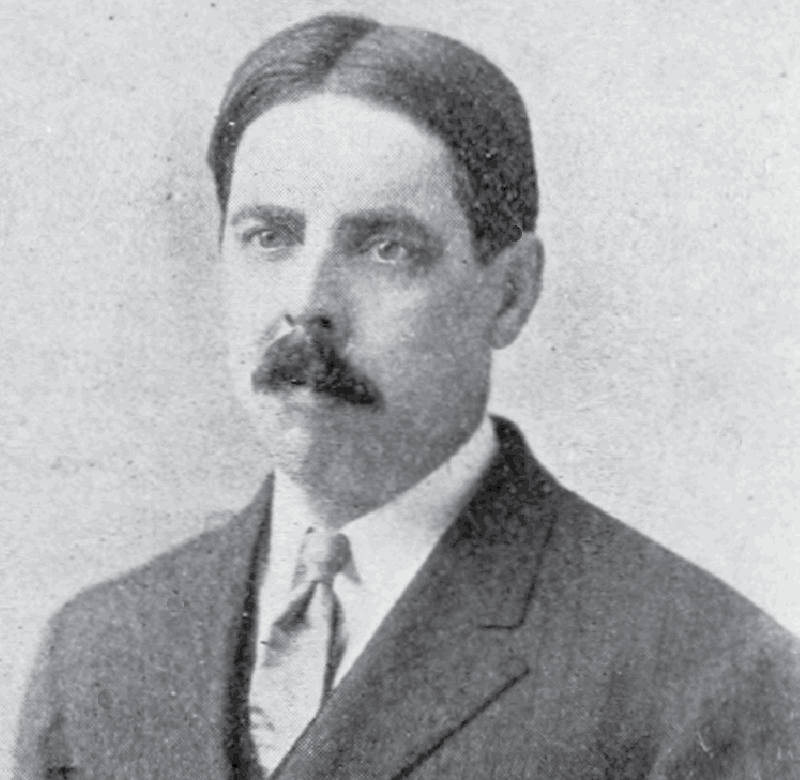
1) His Biography
Edward Lee Thorndike, a pioneering figure in the field of psychology, was born on August 31, 1874, in Williamsburg, Massachusetts, USA. His upbringing laid the foundation for his illustrious career as a psychologist, educator, and researcher. Thorndike’s early education began in Massachusetts, where he attended public schools before progressing to Wesleyan University, where he studied under James McKeen Cattell, an influential psychologist of the time. It was during his time at Wesleyan that Thorndike developed a keen interest in psychology, which would shape the trajectory of his future endeavours.
After completing his undergraduate studies, Thorndike embarked on a journey of academic pursuit, earning his PhD in psychology from Columbia University in 1898. His doctoral research focused on animal intelligence, a topic that would become central to his work in the years to come. Following the completion of his PhD, Thorndike delved into the realm of educational psychology, a field in its infancy at the turn of the 20th century.
Thorndike’s contributions to psychology are vast and enduring. He is perhaps best known for his work on learning theory and the development of connectionism. His seminal work, “Animal Intelligence,” published in 1911, presented the results of his extensive experiments on animal learning. Through his experiments with cats, dogs, and other animals, Thorndike formulated the Law of Effect, which states that behaviours followed by satisfying consequences are more likely to be repeated, while those followed by discomforting consequences are less likely to recur.
In addition to his groundbreaking research on animal intelligence, Thorndike made significant contributions to the field of educational psychology. He developed the concept of “transfer of learning,” which posits that skills and knowledge acquired in one context can be applied to new situations. This concept revolutionised educational practices and laid the groundwork for modern theories of instruction and curriculum design.
Throughout his career, Thorndike held prominent academic positions at leading institutions, including Columbia University and Teachers College, Columbia University. He also served as president of the American Psychological Association (APA) in 1912, further cementing his status as a preeminent figure in the field of psychology. Thorndike’s legacy extends far beyond the realm of academia; his work continues to shape our understanding of learning, behaviour, and cognition.
Thorndike’s impact on psychology extends beyond his theoretical contributions; he was also instrumental in the development of standardized testing. His efforts to quantify intelligence and measure aptitude laid the groundwork for the modern testing practices that are prevalent in educational and psychological assessment today.
In recognition of his extraordinary contributions to the field of psychology, Thorndike received numerous accolades and honours throughout his lifetime, including the prestigious APA Award for Distinguished Scientific Contributions. His influence on the field of psychology is undeniable, and his work continues to inspire generations of researchers, educators, and practitioners around the world. Edward Lee Thorndike passed away on August 9, 1949, leaving behind a legacy that remains unparalleled in the annals of psychological history.
2) Main Works
Animal Intelligence (1898):
In this seminal work, Edward Lee Thorndike presents the findings of his groundbreaking experiments on animal learning. Through meticulous observation and experimentation with cats, dogs, and other animals, Thorndike formulated the Law of Effect, which asserts that behaviours followed by satisfying consequences are more likely to be repeated, while those followed by discomforting consequences are less likely to recur. “Animal Intelligence” established Thorndike as a leading figure in the field of comparative psychology and laid the foundation for his subsequent research on learning and behaviour.
The Principles of Teaching (1906):
In this influential work, Thorndike applies principles of psychology to the realm of education, offering practical insights into effective teaching methods and instructional design. Drawing on his research in educational psychology, Thorndike emphasises the importance of active learning, individual differences, and the role of reinforcement in shaping behaviour. “The Principles of Teaching” remains a seminal text in the field of education and continues to inform pedagogical practices to this day.
Educational Psychology (1913):
In this comprehensive volume, Thorndike synthesises key concepts and theories from psychology and applies them to the practice of teaching and learning. Through systematic analysis and empirical research, Thorndike explores topics such as memory, motivation, and problem-solving, offering educators valuable insights into the psychological processes underlying learning. “Educational Psychology” represents a landmark contribution to the field and remains a cornerstone text in the study of educational theory and practice.
The Measurement of Intelligence (1927):
In this seminal work, Thorndike explores the concept of intelligence and proposes methods for its measurement and assessment. Drawing on his extensive research in psychometrics, Thorndike introduces innovative techniques for the quantification of intelligence, including the development of intelligence tests and the formulation of intelligence quotients (IQ). “The Measurement of Intelligence” revolutionised the field of psychological assessment and laid the groundwork for the development of standardized testing practices.
Human Learning (1931):
In this influential text, Thorndike synthesises current research and theoretical perspectives on human learning, offering a comprehensive overview of the mechanisms and processes involved in acquiring new knowledge and skills. Drawing on principles of behaviourism and connectionism, Thorndike examines factors such as reinforcement, practice, and transfer of learning, providing valuable insights into the nature of learning and memory. “Human Learning” remains a foundational text in the study of cognitive psychology and continues to shape our understanding of human cognition and behaviour.
3) Main Themes
Learning Theory:
Thorndike’s Law of Effect, proposed in his seminal work “Animal Intelligence” (1898), states that behaviours followed by satisfying consequences are more likely to be repeated, while those followed by discomforting consequences are less likely to recur. This principle revolutionised the understanding of behavioural reinforcement and laid the groundwork for subsequent theories of operant conditioning. In comparison to other psychologists of his time, such as Ivan Pavlov and John B. Watson, Thorndike’s emphasis on the role of consequences in shaping behaviour distinguished his work and contributed to the development of behaviourism as a dominant paradigm in psychology.
Thorndike’s theory of connectionism, outlined in works like “The Fundamentals of Learning” (1932), posits that learning occurs through the establishment of associations or connections between stimuli and responses. Through his research on trial-and-error learning with animals, Thorndike demonstrated that behaviour is influenced by the consequences that follow, leading to the formation of neural connections that strengthen or weaken over time. This concept of connectionism laid the foundation for subsequent theories of associative learning and cognitive psychology, influencing thinkers such as B.F. Skinner and Albert Bandura.
Another central theme in Thorndike’s work is the concept of transfer of learning, as discussed in “Educational Psychology” (1913). Thorndike proposed that skills and knowledge acquired in one context can be applied to new situations, facilitating the process of learning and problem-solving. His research highlighted the importance of meaningful learning experiences and the role of generalisation in educational settings. While Thorndike’s emphasis on transfer of learning has been widely acknowledged, scholars such as Jean Piaget and Lev Vygotsky have expanded on this concept, exploring its implications for cognitive development and educational practice.
Educational Psychology:
In “The Principles of Teaching” (1906) and “Educational Psychology” (1913), Thorndike emphasised the importance of recognising and accommodating individual differences among learners. He advocated for adaptive teaching strategies that cater to diverse learning styles, abilities, and backgrounds. Thorndike’s focus on individual differences paved the way for personalised instruction and differentiated learning experiences, a concept that continues to resonate in contemporary educational theory and practice.
Thorndike’s work laid the groundwork for the development of behavioural objectives in education, as outlined in “The Principles of Teaching” (1906). He argued that instructional goals should be clearly defined in terms of observable behaviours, allowing educators to assess student progress and performance objectively. Thorndike’s emphasis on behavioural objectives influenced later educational theorists such as Benjamin Bloom, who proposed a taxonomy of educational objectives based on cognitive, affective, and psychomotor domains.
Building on his Law of Effect, Thorndike introduced principles of reinforcement theory in “Educational Psychology” (1913), highlighting the role of rewards and punishments in shaping behaviour. He advocated for the use of positive reinforcement to strengthen desired behaviours and negative reinforcement to eliminate undesirable behaviours. Thorndike’s reinforcement theory provided a theoretical framework for behaviour modification techniques in education, influencing thinkers such as B.F. Skinner and shaping contemporary approaches to classroom management and behaviour intervention.
Psychometrics:
In “The Measurement of Intelligence” (1927), Thorndike pioneered the development of intelligence tests and psychometric methods for assessing cognitive abilities. He proposed innovative techniques for measuring intelligence, including the use of standardised tests and the calculation of intelligence quotients (IQ). Thorndike’s work laid the foundation for the modern practice of intelligence testing and influenced subsequent theorists such as Lewis Terman and David Wechsler.
Thorndike’s research on test construction and validation methodologies, as discussed in “Educational Measurement” (1943), emphasised the importance of reliability, validity, and fairness in assessment practices. He advocated for the use of standardised procedures for test development, administration, and scoring, aiming to ensure the accuracy and integrity of test results. Thorndike’s guidelines for test construction have informed the development of psychometric instruments across various domains, including education, clinical psychology, and personnel selection.
Thorndike’s work laid the groundwork for the development of item response theory (IRT), a statistical framework for analysing test item characteristics and estimating examinee abilities. While Thorndike did not explicitly formulate IRT, his contributions to test theory and measurement provided the conceptual basis for later advancements in psychometric modelling. Scholars such as Frederic M. Lord and Georg Rasch expanded on Thorndike’s ideas, refining the mathematical models and statistical techniques used in item response theory and contributing to its widespread application in educational and psychological assessment.
Cognitive Psychology:
In his research on animal intelligence and human learning, Thorndike explored the cognitive processes involved in problem-solving and decision-making. Through experiments with animals and humans, he investigated how individuals perceive, represent, and manipulate information to achieve desired outcomes. Thorndike’s work laid the foundation for subsequent theories of problem-solving, influencing thinkers such as Gestalt psychologists Max Wertheimer and Wolfgang Köhler, who emphasised the role of insight and restructuring in problem-solving processes.
Thorndike’s investigations into memory and retention mechanisms shed light on the processes underlying learning and recall. In “Human Learning” (1931), he proposed that learning involves the formation of associative connections between stimuli and responses, which are strengthened through repetition and reinforcement. Thorndike’s research on memory span and retention curves provided empirical evidence for the principles of encoding, storage, and retrieval, informing subsequent theories of memory consolidation and retrieval strategies. His work contributed to the emergence of cognitive approaches to memory, complementing behavioural and physiological perspectives on information processing.
Behaviour Modification:
Building on his Law of Effect, Thorndike’s principles of operant conditioning formed the basis for behaviour modification strategies. He proposed that behaviour is influenced by its consequences, with reinforcement and punishment serving to strengthen or weaken behavioural responses. Thorndike’s research provided empirical support for the principles of operant conditioning, which were further elaborated by B.F. Skinner in his theory of radical behaviourism. Skinner’s operant conditioning paradigm, which emphasises the role of reinforcement schedules and behavioural contingencies, expanded on Thorndike’s initial formulations and became foundational to the field of behaviour modification.
Thorndike’s principles of behaviour modification have been applied in various settings, including education, clinical psychology, and organisational behaviour. Applied behaviour analysis (ABA), an evidence-based approach to behaviour change, draws on the principles of operant conditioning to design interventions that target specific behaviours and functional skills. By systematically analysing the antecedents and consequences of behaviour, ABA practitioners aim to modify environmental contingencies and promote adaptive behaviours. Thorndike’s contributions to behaviour modification laid the groundwork for the development of ABA methodologies, which have been widely used to address behavioural challenges in individuals with autism spectrum disorders, developmental disabilities, and other behavioural disorders.
4) Thorndike, Father of Educational Psychology
Edward Lee Thorndike is widely regarded as the “Father of Educational Psychology” due to his pioneering contributions to the field, which revolutionised theories of learning and instruction. Thorndike’s seminal works, including “The Principles of Teaching” (1906) and “Educational Psychology” (1913), laid the theoretical foundations for modern educational practice and pedagogy.
One of Thorndike’s most enduring legacies is his emphasis on the scientific study of education. Prior to his work, educational practices were largely based on intuition and tradition. Thorndike introduced a systematic and empirical approach to the study of teaching and learning, advocating for the application of psychological principles to educational settings. By conducting rigorous experiments and observations, Thorndike sought to identify the fundamental laws governing human learning and behaviour, paving the way for evidence-based instructional methods and educational interventions.
Central to Thorndike’s conception of educational psychology is the recognition of individual differences among learners. In “The Principles of Teaching” and other writings, Thorndike underscored the importance of adapting instruction to accommodate diverse learning styles, abilities, and interests. He advocated for the use of diagnostic assessments to identify students’ strengths and weaknesses, enabling educators to tailor instructional strategies to meet the unique needs of each learner. Thorndike’s emphasis on individualisation transformed traditional notions of teaching, shifting the focus from uniform instruction to personalised learning experiences.
Thorndike’s work also contributed to the development of behavioural objectives in education. In “The Principles of Teaching,” he proposed that instructional goals should be clearly defined in terms of observable behaviours, allowing educators to assess student progress and performance objectively. Thorndike’s concept of behavioural objectives laid the groundwork for later educational theorists, such as Benjamin Bloom, who expanded on his ideas to develop taxonomies of educational objectives based on cognitive, affective, and psychomotor domains. By delineating specific learning outcomes, Thorndike provided educators with a framework for designing curriculum and evaluating instructional effectiveness.
Moreover, Thorndike’s theories of reinforcement and motivation revolutionised approaches to classroom management and behaviour modification. Drawing on his Law of Effect, Thorndike argued that behaviour is influenced by its consequences, with positive outcomes reinforcing desired behaviours and negative outcomes inhibiting unwanted behaviours. His research laid the groundwork for the development of behaviour modification techniques, which aim to promote adaptive behaviours and reduce maladaptive behaviours through systematic interventions. Thorndike’s principles of reinforcement and motivation continue to inform modern strategies for classroom management, discipline, and student motivation, underscoring his enduring influence on educational practice.
5) His Legacy
One of Thorndike’s most enduring legacies is his pioneering work in the study of learning and behaviour. Through his experiments with animals and humans, Thorndike elucidated fundamental principles of associative learning, reinforcement, and motivation. His formulation of the Law of Effect laid the groundwork for behaviourism and operant conditioning, revolutionising theories of behavioural change and intervention. Thorndike’s insights into the mechanisms of learning continue to inform contemporary approaches to education, cognitive psychology, and behavioural therapy.
Thorndike’s impact on educational psychology is equally significant. As the “Father of Educational Psychology,” he introduced a scientific approach to the study of teaching and learning, advocating for evidence-based practices and instructional methods. His emphasis on individual differences, behavioural objectives, and personalised learning experiences transformed the landscape of education, fostering a greater understanding of diverse learners and their needs. Thorndike’s theories and principles continue to shape educational theory and practice, influencing curriculum design, assessment strategies, and classroom management techniques.
Furthermore, Thorndike’s legacy extends to the field of psychometrics and measurement. His pioneering efforts in intelligence testing and assessment methodologies laid the foundation for modern psychometric theory and practice. By developing standardised tests and refining measurement techniques, Thorndike advanced the field of psychological assessment, enabling researchers and practitioners to quantify cognitive abilities, personality traits, and educational achievement. His contributions to psychometrics have had a profound impact on educational and clinical settings, facilitating the diagnosis, evaluation, and treatment of psychological disorders and learning disabilities.
Beyond his theoretical contributions, Thorndike’s legacy is evident in his enduring influence on psychology as a profession. As a prolific writer, researcher, and educator, Thorndike inspired countless scholars and practitioners to pursue careers in psychology and education. His work fostered a spirit of scientific inquiry and critical thinking, shaping the intellectual landscape of psychology and influencing interdisciplinary fields such as cognitive science, educational technology, and organisational behaviour.
In recognition of his extraordinary contributions, Edward Lee Thorndike received numerous honours and accolades throughout his lifetime, including the prestigious APA Award for Distinguished Scientific Contributions. His impact on the field of psychology and education continues to be celebrated and commemorated, with institutions, conferences, and scholarly societies honouring his memory and legacy. Edward Lee Thorndike’s enduring influence serves as a testament to the power of innovation, scholarship, and dedication in advancing human understanding and improving the lives of individuals worldwide.