
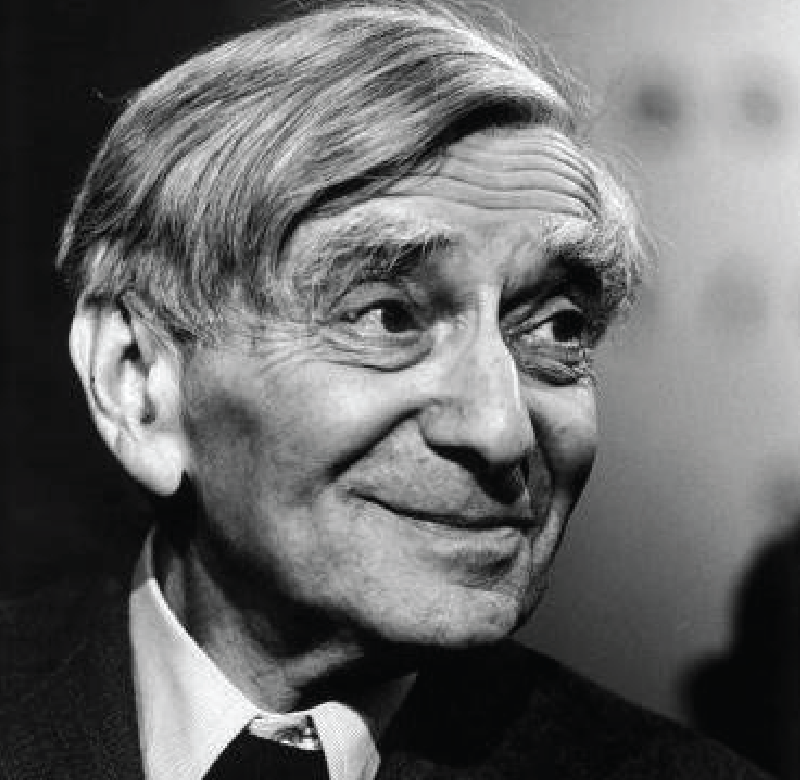
1) His Biography:
Vladimir Jankelevitch, a prominent French philosopher and musicologist, was born on August 31, 1903, in Bourges, France. His early life was marked by a strong academic inclination, and he pursued studies in philosophy at the Sorbonne, where he engaged with influential thinkers of his time. Jankelevitch’s intellectual journey took shape amidst the rich cultural and philosophical milieu of 20th-century France. Following his academic pursuits, he went on to become a professor of moral philosophy at the University of Paris, solidifying his place in the academic realm.
Jankelevitch’s life unfolded against the backdrop of significant historical events, including the two World Wars. His experiences during these tumultuous times profoundly influenced his philosophical outlook. The Nazi occupation of France during World War II prompted Jankelevitch to engage with questions of ethics, morality, and the human condition. These themes would become central to his philosophical contributions.
Despite the challenges posed by the era’s political turmoil, Jankelevitch continued to cultivate his intellectual interests. His dedication to philosophy and the arts led him to explore diverse subjects, contributing to his multidimensional scholarly identity. The biography of Vladimir Jankelevitch is not merely a chronological sequence of events but a narrative of a mind deeply engaged with the philosophical and cultural currents of his time.
Jankelevitch’s life story serves as a testament to his enduring commitment to intellectual pursuits and his resilience in the face of adversity. His contributions to philosophy and musicology have left an indelible mark on the intellectual landscape, making his biography a fascinating exploration of the life and mind of a distinguished thinker.
2) Main Works:
“La Mort” (Death):
One of Vladimir Jankelevitch’s seminal works, “La Mort,” explores the profound philosophical and ethical dimensions of death. In this influential treatise, Jankelevitch delves into the existential aspects of mortality, examining its impact on human consciousness and morality.
“Le Pardon” (Forgiveness):
Another significant contribution to Jankelevitch’s body of work is “Le Pardon,” where he delves into the complex and nuanced concept of forgiveness. Addressing moral and existential questions, Jankelevitch examines the nature of forgiveness and its role in human relationships and ethical dilemmas.
“La Musique et l’Ineffable” (Music and the Ineffable):
As a distinguished musicologist, Jankelevitch explored the profound connection between music and the ineffable in this notable work. Examining the transcendent qualities of music, he sought to articulate the elusive and indescribable elements that make music a unique and powerful form of expression.
“L’Irréversible et la Nostalgie” (The Irreversible and Nostalgia):
This work reflects Jankelevitch’s exploration of the concepts of irreversibility and nostalgia. Through philosophical reflections, he engages with the irreversible nature of time and the nostalgic sentiments that arise from it, offering profound insights into human experiences of temporality.
“Traité des Vertus” (Treatise on Virtues):
Jankelevitch’s interest in ethics is evident in his “Traité des Vertus,” a comprehensive exploration of virtues and their significance in shaping moral character. This work contributes to the broader discourse on ethics, drawing on Jankelevitch’s philosophical expertise.
“Henri Bergson”:
Jankelevitch’s engagement with the philosophy of Henri Bergson is encapsulated in this work, where he critically examines and interprets Bergson’s ideas. This reflects his commitment to exploring and building upon the philosophical foundations laid by influential thinkers.
“Les Deux Sources de la Morale et de la Religion de Bergson” (Bergson’s Two Sources of Morality and Religion):
Jankelevitch’s scholarship extends to a comprehensive study of Henri Bergson’s work on morality and religion. In this work, he provides a nuanced analysis and interpretation of Bergson’s influential ideas in these domains.
3) Main Themes:
Existentialism and Human Condition:
At the core of Jankelevitch’s philosophical exploration is a deep engagement with existentialism and the human condition. His works often grapple with fundamental questions about existence, mortality, and the intricate aspects of being human in a complex world.
Ethics and Morality:
Jankelevitch made significant contributions to the field of ethics, examining the complexities of moral choices, forgiveness, and virtues. His writings delve into the nuances of ethical decision-making and the intricacies of human conduct, offering profound reflections on morality.
Philosophy of Music:
A distinguished musicologist, Jankelevitch’s interest in the philosophy of music is a recurring theme in his works. He explores the ineffable and transcendent qualities of music, delving into its capacity to evoke emotions, communicate beyond words, and resonate with the human soul.
Time and Temporality:
The concept of time, its irreversibility, and the associated feelings of nostalgia are recurring themes in Jankelevitch’s philosophical inquiries. He contemplates the irreversible nature of time and the profound impact it has on human experiences, contributing to the broader discourse on temporality.
Bergsonian Philosophy:
Jankelevitch engages deeply with the philosophy of Henri Bergson, building upon and critically examining Bergson’s ideas. Themes such as duration, intuition, and the nature of reality, as presented by Bergson, play a significant role in shaping Jankelevitch’s own philosophical perspectives.
Transcendence and the Ineffable:
The exploration of transcendence, particularly through the ineffable qualities of experiences, is a thread that runs through Jankelevitch’s writings. Whether contemplating the mysteries of death, the ethereal nature of music, or the elusive aspects of certain emotions, he seeks to articulate the inexpressible.
Reflections on Forgiveness:
Jankelevitch’s dedicated exploration of forgiveness as a theme in his works reflects a nuanced understanding of human relationships and morality. He investigates the complexities of forgiveness, considering its moral implications and the profound impact it can have on individuals and societies.
Critical Engagement with Contemporary Thought:
Throughout his career, Jankelevitch critically engaged with the philosophical currents of his time. His works are characterized by a dialogue with contemporaneous thinkers, contributing to ongoing discussions in the broader intellectual landscape.
4) His Contribution to Philosophy:
Vladimir Jankelevitch’s contributions to philosophy are marked by a unique blend of existential inquiry, ethical reflection, and a profound engagement with the human experience. Central to his philosophical legacy is his exploration of existentialism and the human condition. Jankelevitch delved into the complexities of existence, grappling with questions surrounding mortality, freedom, and the inherent challenges of being human. His writings, notably “La Mort” and “L’Irréversible et la Nostalgie,” provide deep insights into the existential dimensions of life, offering a philosophical lens through which to understand the intricacies of our existence.
Ethics and morality represent another significant pillar of Jankelevitch’s philosophical contributions. Through works like “Le Pardon” and “Traité des Vertus,” he examined the moral fabric that underlies human actions. Jankelevitch’s nuanced exploration of forgiveness, virtues, and ethical decision-making reflects a commitment to understanding the complexities of human conduct. His insights into the moral landscape contribute to the broader discourse on ethics, offering perspectives that resonate with the intricacies of lived experiences.
A distinctive aspect of Jankelevitch’s philosophical legacy lies in his profound engagement with the philosophy of music. As a notable musicologist, he explored the transcendental qualities of music and its capacity to convey the ineffable. “La Musique et l’Ineffable” stands as a testament to his dedication to understanding the metaphysical and emotional dimensions of musical experiences. Jankelevitch’s exploration of music as a form of expression that goes beyond words enriches the philosophical understanding of aesthetics and the role of art in human life.
Moreover, Jankelevitch’s critical engagement with the philosophy of Henri Bergson underscores his commitment to intellectual dialogue and the evolution of philosophical thought. Through works like “Henri Bergson” and “Les Deux Sources de la Morale et de la Religion de Bergson,” he offered insightful interpretations and critiques of Bergson’s ideas, contributing to the ongoing development of philosophical discourse.
In essence, Vladimir Jankelevitch’s contribution to philosophy lies in his multifaceted exploration of existentialism, ethics, music, and his dialogue with contemporary thought. His writings continue to influence scholars across disciplines, inviting reflection on the complexities of the human experience and the enduring questions that define our existence.
5) His Contribution to Musicology:
Vladimir Jankelevitch’s impact on musicology is profound, marked by a unique integration of philosophical insight and a deep appreciation for the aesthetic dimensions of music. His contributions to this field have enriched our understanding of the emotional, metaphysical, and transcendent aspects of musical experiences.
Jankelevitch’s notable work, “La Musique et l’Ineffable” (Music and the Ineffable), stands as a testament to his distinctive approach to musicology. In this work, he delves into the elusive qualities of music that surpass linguistic expression, exploring the ineffable and transcendent nature of musical experiences. Jankelevitch goes beyond the technical aspects of music to unravel its profound impact on human emotions and consciousness.
One of his key contributions is the exploration of how music serves as a unique mode of expression that communicates the inexpressible. Jankelevitch contemplates the ability of music to evoke emotions, convey meanings that elude verbal articulation, and tap into the depths of human subjectivity. By intertwining philosophy with musicology, he provides a holistic understanding of the role music plays in shaping individual and collective experiences.
Jankelevitch’s emphasis on the phenomenology of music distinguishes his work in musicology. Rather than focusing solely on compositional techniques or historical context, he turns his attention to the lived experience of music. This approach aligns with his broader philosophical interests, as he seeks to understand the existential and emotional dimensions of various aspects of human life.
Furthermore, Jankelevitch’s writings contribute to the ongoing discourse on the relationship between music and time. In exploring the temporal aspects of musical compositions, he offers insights into how music shapes our perception of time and contributes to our understanding of temporality as a whole. This dimension adds depth to his contributions, bridging the gap between philosophy and the study of music.
6) His Legacy:
Vladimir Jankelevitch’s legacy is multifaceted, encompassing his profound impact on philosophy, musicology, and intellectual discourse. His contributions continue to resonate across disciplines, leaving an enduring imprint on the understanding of existentialism, ethics, and the aesthetics of music.
In the realm of philosophy, Jankelevitch’s legacy lies in his nuanced exploration of existential themes. His reflections on mortality, freedom, and the human condition have become foundational to existentialist thought. Scholars and philosophers continue to engage with his works, finding inspiration in his intellectual rigour and deep insights into the complexities of existence. Jankelevitch’s legacy extends beyond his individual ideas to shape broader discussions on ethics, morality, and the philosophical exploration of human experiences.
As a musicologist, Jankelevitch’s legacy is equally influential. His integration of philosophy and musicology has paved the way for a more holistic understanding of the emotional and transcendent dimensions of music. The concept of the ineffable in music, as explored in “La Musique et l’Ineffable,” remains a pivotal aspect of discussions on the philosophy of music. Scholars and musicians continue to draw from his ideas, contributing to the ongoing discourse on the profound impact of music on the human psyche.
Moreover, Jankelevitch’s critical engagement with the philosophy of Henri Bergson adds a layer of complexity to his legacy. By interpreting and critiquing Bergson’s ideas, he has contributed to the evolution of philosophical thought and influenced subsequent generations of scholars engaged in the study of Bergsonian philosophy.
Beyond his written works, Jankelevitch’s legacy endures through the intellectual communities he influenced. His commitment to rigorous philosophical inquiry and his ability to traverse diverse subjects have inspired scholars to approach interdisciplinary studies with depth and intellectual curiosity. Jankelevitch’s legacy, therefore, extends beyond the boundaries of his specific contributions, influencing the broader landscape of philosophy and the humanities.