
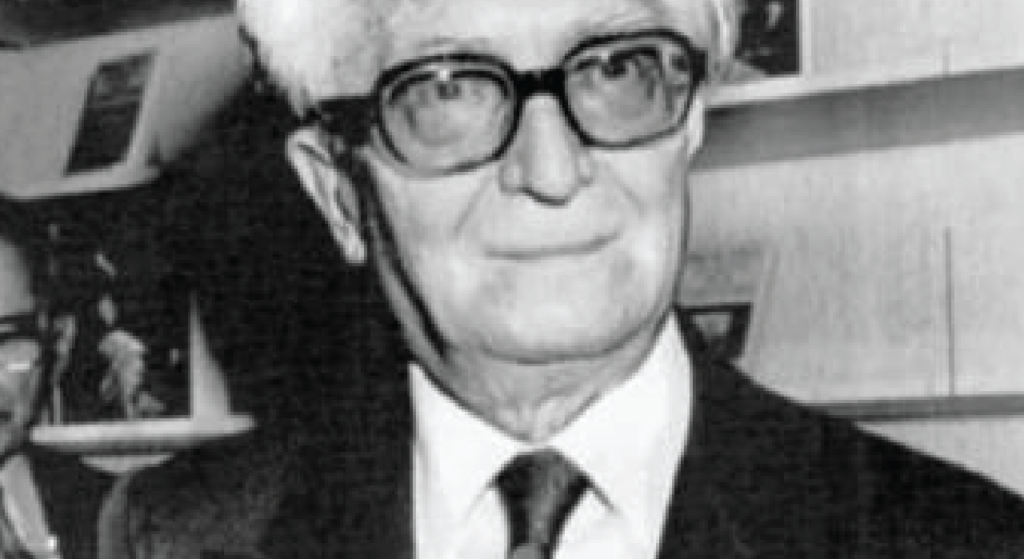
1) His Biography:
Fernand Braudel, a distinguished French historian, was born on August 24, 1902, in Lumeville-en-Ornois, France. He would go on to become one of the most influential figures in the field of historical studies in the 20th century. Braudel’s academic journey was shaped by a deep fascination with history from a young age. He studied at the prestigious École Normale Supérieure and later became a teacher at the Lycée de Montpellier.
However, Braudel’s early career was interrupted by World War II, during which he served as a soldier and was subsequently captured and held as a prisoner of war. It was during this period of captivity that he began working on his seminal work, “The Mediterranean and the Mediterranean World in the Age of Philip II” (1949). This monumental work would mark a turning point in the study of history, as it introduced the concept of “total history” and examined the interplay of geographical, economic, and social factors in shaping historical events.
After the war, Braudel pursued an academic career and became a professor at the University of São Paulo in Brazil. His time in South America allowed him to broaden his perspective and develop his ideas further. In 1955, he returned to France and assumed the directorship of the VIth section of the École Pratique des Hautes Études, which would later become the EHESS (École des Hautes Études en Sciences Sociales).
Braudel’s intellectual contributions extended beyond his groundbreaking work on the Mediterranean. He introduced the concept of “historical time” and “geographical time,” which encouraged historians to consider the long-term and structural factors in their analyses. He also played a significant role in promoting interdisciplinary approaches to history, encouraging scholars to incorporate geography, economics, and sociology into their research.
Throughout his career, Braudel published numerous influential works, including “Civilization and Capitalism, 15th-18th Century” (1979) and “The Identity of France: History and Environment” (1986). His work challenged traditional historical narratives by focusing on the broader forces that shape societies over extended periods. Fernand Braudel passed away on November 27, 1985, but his innovative ideas and methodological contributions continue to influence the practice of history and the broader social sciences, leaving an enduring legacy in the world of scholarship.
2) Main Works:
The Mediterranean and the Mediterranean World in the Age of Philip II (1949):
This monumental work is often considered Braudel’s magnum opus. It explores the Mediterranean region during the 16th century and introduces the concept of “total history,” which integrates geography, economics, and social structures into historical analysis.
Civilization and Capitalism, 15th-18th Century (1979):
In this three-volume series, Braudel examines the development of capitalism in Europe. He investigates the long-term economic structures and processes that influenced the rise of capitalism over centuries, challenging conventional historical narratives.
The Identity of France: History and Environment (1986):
Braudel’s exploration of France’s historical and geographical identity explores how the country’s landscape and environment have shaped its history. He argues that the physical characteristics of a region play a crucial role in its historical development.
The Wheels of Commerce (1982):
This volume is part of Braudel’s “Civilization and Capitalism” series. It delves into the economic aspects of the early modern world, with a particular focus on trade, finance, and commerce during the 15th to 18th centuries.
On History (1980):
In this collection of essays, Braudel reflects on the practice of history and his methodological approaches. He discusses the importance of historical time, geographical factors, and interdisciplinary perspectives in historical research.
The Mediterranean in the Ancient World (2001):
Posthumously published, this work is a continuation of Braudel’s exploration of the Mediterranean region. It examines the ancient history of the Mediterranean, further reinforcing his ideas about the role of geography in shaping historical events.
A History of Civilizations (1995):
In this work, Braudel offers a broad overview of human history, emphasising the role of geography and long-term structures in the development of civilizations.
3) Main Themes:
Total History:
Braudel’s concept of “total history” challenged traditional historical narratives by advocating for a comprehensive approach. He encouraged historians to consider the broader forces of geography, economics, and social structures when analysing historical events, transcending conventional chronicles and diving deeper into the long-term structural aspects of history.
Geographical Determinism:
Geography plays a central role in Braudel’s work. He believed that geography was not merely a backdrop to history but a dynamic force that shaped the course of human events. His emphasis on the influence of physical landscapes, climate, and topography on societies is a recurring theme throughout his writings.
Historical Time and Durée:
Braudel introduced the concept of “historical time” and “durée,” urging historians to examine history on multiple temporal scales. He argued for the consideration of the short term (événementiel), medium term (conjoncture), and long term (structures) to understand the complexity of historical processes fully.
Longue Durée:
One of Braudel’s key themes is the “longue durée,” which pertains to the examination of historical developments over extended periods, often spanning centuries or even millennia. He believed that true historical understanding required an analysis of long-term structural patterns.
Economic Structures and Capitalism:
Braudel’s exploration of the development of capitalism is a recurring theme in his work. He examined the economic structures and processes that underpinned the rise of capitalism over centuries, challenging conventional narratives about the origins of capitalism.
Interdisciplinary Approach:
Braudel advocated for an interdisciplinary approach to historical research. He believed that historians should collaborate with scholars from other disciplines, such as geography, economics, and sociology, to gain a more comprehensive understanding of historical phenomena.
Spatial History:
Spatial analysis is a central theme in Braudel’s work. He encouraged historians to consider the spatial distribution of events and the impact of geography on historical outcomes. His emphasis on the role of regions and physical landscapes in shaping history remains influential.
Environmental History:
Braudel’s exploration of the environmental factors that influence history underscores his commitment to understanding how nature and human societies interact. He believed that landscapes and environments play a significant role in historical development.
Cultural Exchange and Interaction:
In his studies of the Mediterranean and other regions, Braudel highlighted the importance of cultural exchange and interaction between different societies. He examined the flow of ideas, goods, and people across geographical boundaries.
4) His Contribution to History:
Fernand Braudel’s contribution to the field of history is profound and far-reaching, reshaping the way historians approach their craft and the understanding of the past. His most significant contribution lies in his conceptualisation of “total history,” which encouraged historians to move beyond traditional narratives and explore the deeper structures of historical events. By incorporating geography, economics, and social structures into historical analysis, Braudel elevated history from a chronicle of events to an interdisciplinary study that encompassed the entirety of human experience.
Braudel’s emphasis on the role of geography in shaping historical events challenged the conventional view of history as a series of isolated occurrences. He believed that geographical factors, such as climate, topography, and the physical environment, exerted a profound influence on societies and the course of history. This perspective broadened the historian’s toolkit, enabling a more comprehensive understanding of the interconnectedness of human societies and their environments.
Furthermore, Braudel introduced the concept of “historical time” and “durée,” encouraging historians to examine history on multiple temporal scales. By analysing the short term, medium term, and long term, historians could discern the intricate interplay of events, conjunctures, and structural forces that shaped historical processes. This holistic approach provided a more nuanced and profound understanding of historical developments.
Braudel’s exploration of the “longue durée” was a fundamental shift in historical scholarship. He encouraged historians to extend their analyses across centuries or even millennia, acknowledging that true historical understanding required an examination of long-term structural patterns. This perspective challenged the limitations of traditional historical narratives and encouraged historians to consider the enduring legacies of past eras.
Moreover, Braudel’s commitment to interdisciplinary collaboration revolutionised historical research. He advocated for historians to work alongside scholars from other disciplines, such as geography, economics, and sociology, to gain a more comprehensive perspective on historical phenomena. This approach enriched historical scholarship by drawing upon diverse methodologies and insights.
5) His Legacy:
Fernand Braudel’s legacy in the realm of historical scholarship is one of profound and lasting influence. His innovative ideas and methodological contributions have left an indelible mark on the practice of history, shaping the way historians approach their craft and interpret the past. Perhaps most notably, Braudel’s introduction of the concept of “total history” transformed the discipline, encouraging historians to move beyond traditional narratives and explore the deeper structures that underpin historical events. This paradigm shift expanded the horizons of historical analysis, emphasising the interconnectedness of geography, economics, and social structures in shaping human history.
Braudel’s emphasis on the role of geography as a dynamic force in history challenged conventional views and highlighted the profound impact of physical landscapes, climate, and topography on societies. This spatial perspective not only enriched historical understanding but also laid the foundation for the field of historical geography.
Furthermore, his exploration of “historical time” and “durée” encouraged historians to examine history on multiple temporal scales, allowing for a more nuanced and comprehensive analysis of historical processes. This approach challenged the limitations of traditional chronicles by uncovering the underlying rhythms and structures that shape human societies over extended periods.
The concept of the “longue durée,” which focused on the examination of historical developments spanning centuries or even millennia, revolutionised historical scholarship. It underscored the enduring legacies of past eras and encouraged historians to consider the profound and lasting impact of historical structures.
Braudel’s commitment to interdisciplinary collaboration enriched historical research, encouraging historians to work alongside scholars from diverse fields, such as geography, economics, and sociology. This collaborative spirit fostered a more holistic understanding of historical phenomena and expanded the boundaries of historical methodology.