
1) What is Cognitive Warfare?
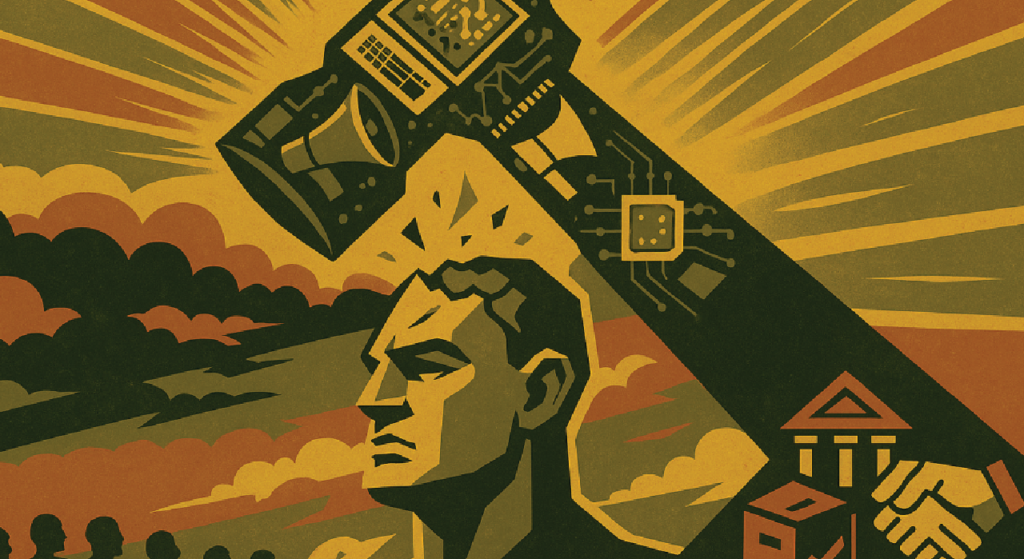
Cognitive warfare refers to a mode of conflict in which the primary battleground is the human mind rather than physical territory or conventional military assets. It encompasses deliberate efforts to influence perception, shape reasoning, and ultimately alter decision-making processes at both individual and collective levels. Unlike traditional warfare, which targets infrastructure or armed forces, cognitive warfare seeks to control how reality is interpreted, thereby preconditioning actions without overt coercion.
The concept has emerged prominently in the context of rapid technological change, particularly the proliferation of digital communication platforms and algorithmically curated information environments. These systems enable actors—state and non-state alike—to intervene directly in the cognitive ecosystems of populations. By manipulating the flow, framing, and repetition of information, adversaries can subtly recalibrate beliefs and attitudes over time, often without the target’s conscious awareness.
At its core, cognitive warfare operates through the strategic exploitation of information. However, it differs from earlier forms of propaganda in its precision and adaptability. Contemporary techniques leverage data analytics, behavioural insights, and artificial intelligence to tailor messages to specific audiences. This allows for highly personalised interventions that resonate with existing predispositions, making them more difficult to detect and resist.
Another defining characteristic is its persistence. Cognitive warfare is not confined to periods of declared conflict but unfolds continuously, blurring the boundaries between war and peace. It thrives in what is often described as the “grey zone,” where actions remain below the threshold of conventional military response. This persistent engagement enables gradual shifts in perception that accumulate into significant strategic advantages over time.
Importantly, cognitive warfare targets not only opinions but also the underlying processes of cognition itself. This includes attention, memory, and emotional response. By overwhelming individuals with information, creating ambiguity, or fostering distrust in authoritative sources, adversaries can degrade the capacity for critical thinking. The objective is not merely to persuade but to destabilise the cognitive frameworks through which individuals interpret the world.
The scope of cognitive warfare extends beyond individuals to encompass entire societies. Collective beliefs, social cohesion, and institutional trust become key targets. By polarising public discourse or amplifying existing divisions, cognitive operations can weaken the internal stability of a state. In this sense, cognitive warfare functions as a force multiplier, enabling relatively low-cost interventions to yield disproportionate strategic effects.
Military and strategic communities have increasingly recognised cognitive warfare as a distinct domain of operations, alongside land, sea, air, space, and cyber. Organisations such as NATO have begun to conceptualise it as a critical frontier in modern conflict. This recognition reflects an understanding that future wars may be won not by destroying an opponent’s forces, but by shaping their perceptions and decisions before conflict even begins.
Cognitive warfare represents a shift in the logic of power. It privileges influence over force and perception over material capability. In doing so, it challenges traditional assumptions about security and defence, requiring new frameworks that account for the vulnerability of the human mind as both a target and a terrain of conflict.
2) Weaponization of Cognitive Biases and Heuristics
A central mechanism of cognitive warfare lies in the deliberate exploitation of cognitive biases and heuristics—those mental shortcuts that enable individuals to process information efficiently but imperfectly. These biases, while evolutionarily adaptive, introduce systematic distortions in judgement that can be predictably manipulated. Cognitive warfare transforms these vulnerabilities into strategic tools, allowing adversaries to guide perception and behaviour without the need for overt persuasion.
Heuristics such as availability, representativeness, and anchoring play a critical role in how individuals interpret complex information. In a cognitive warfare context, actors curate information environments to ensure that certain narratives are more visible, emotionally salient, or repeatedly encountered. By doing so, they increase the likelihood that these narratives will be perceived as credible or representative of reality, regardless of their factual accuracy.
Confirmation bias is particularly valuable in this domain. Individuals tend to favour information that aligns with their pre-existing beliefs while dismissing contradictory evidence. Cognitive warfare exploits this tendency by segmenting audiences and delivering tailored content that reinforces existing worldviews. This creates echo chambers in which beliefs are continuously validated, making them more resistant to correction and more deeply entrenched over time.
Another frequently weaponised bias is the negativity bias, whereby individuals give greater weight to negative information than to positive or neutral content. By amplifying threats, crises, or grievances—whether real or fabricated—cognitive operators can provoke heightened emotional responses such as fear, anger, or anxiety. These emotions, in turn, impair rational deliberation and make individuals more susceptible to simplistic or polarising narratives.
The bandwagon effect also serves as a potent instrument. When individuals perceive a particular opinion as widely held, they are more likely to adopt it themselves. Through the use of bots, coordinated messaging campaigns, or manipulated engagement metrics, cognitive warfare actors can fabricate the appearance of consensus. This manufactured social proof can shift public opinion by exploiting the human tendency to conform to perceived majorities.
Framing effects further illustrate how subtle variations in presentation can influence decision-making. By selecting specific language, metaphors, or contextual cues, actors can shape how an issue is understood without altering the underlying facts. In cognitive warfare, framing is used to redefine problems, assign blame, and influence policy preferences, often in ways that advantage the initiating actor.
Importantly, the weaponisation of these biases is not random but systematically informed by insights from Behavioural Economics and cognitive psychology. Advances in these fields have provided a detailed map of human cognitive tendencies, enabling increasingly precise interventions. This scientific grounding distinguishes modern cognitive warfare from earlier, more intuitive forms of psychological manipulation.
The cumulative effect of exploiting biases and heuristics is a gradual erosion of autonomous judgement. Individuals may believe they are making independent decisions, yet their reasoning processes have been subtly guided along predetermined pathways. In this way, cognitive warfare achieves influence not by imposing ideas, but by shaping the conditions under which ideas are formed, evaluated, and ultimately accepted.
3) Neurocognitive Vulnerabilities
Cognitive warfare operates not only at the level of ideas and beliefs but also by targeting the underlying biological and neurological processes that govern human thought. Neurocognitive vulnerabilities refer to the inherent limitations and susceptibilities within the brain’s architecture—its dependence on attention, emotional regulation, memory consolidation, and sensory processing. These features, while enabling efficient cognition, also create predictable points of intervention that can be strategically exploited.
One of the most significant vulnerabilities lies in the brain’s limited attentional capacity. Humans cannot process all incoming information simultaneously, which necessitates selective attention. Cognitive warfare actors exploit this constraint by saturating information environments, forcing individuals to rely on rapid filtering mechanisms. In such conditions, emotionally charged or novel stimuli are more likely to capture attention, allowing manipulative content to crowd out more nuanced or accurate information.
Emotional processing is another key entry point. The brain’s limbic system responds rapidly to stimuli associated with threat or reward, often preceding conscious reasoning. By triggering fear, outrage, or excitement, cognitive operations can bypass deliberative thought and produce immediate, visceral reactions. These emotional responses not only shape perceptions in the moment but also influence how information is encoded and recalled later.
Memory itself is highly malleable and subject to distortion. Rather than functioning as a fixed archive, human memory reconstructs past events in light of present contexts and influences. Cognitive warfare can exploit this by repeatedly introducing altered or misleading narratives, gradually reshaping how individuals remember events. Over time, the distinction between authentic and manipulated recollection becomes blurred, reinforcing the intended narrative.
Cognitive load further compounds these vulnerabilities. When individuals are overwhelmed by complex or excessive information, their capacity for critical evaluation diminishes. In such states, they are more likely to rely on intuitive judgements or defer to familiar narratives. Cognitive warfare deliberately increases this load through information flooding, contradictory messaging, or rapid cycles of news, thereby weakening analytical resistance.
Neuroplasticity—the brain’s capacity to reorganise itself in response to repeated stimuli—also plays a crucial role. While this adaptability underpins learning, it can be harnessed to entrench specific patterns of thought. Continuous exposure to particular narratives or emotional cues can reinforce neural pathways, making certain interpretations feel more intuitive or “natural” over time. This creates durable cognitive effects that persist even in the absence of ongoing intervention.
Sleep disruption and stress are additional factors that degrade cognitive resilience. High levels of stress impair executive functions such as reasoning, impulse control, and decision-making. Cognitive warfare environments often cultivate a sense of urgency or crisis, maintaining populations in a heightened state of alertness. This sustained pressure reduces the capacity for reflective thinking and increases susceptibility to manipulation.
Research in Neuroscience has provided critical insights into these processes, enabling more sophisticated forms of cognitive targeting. By understanding how the brain processes information at a physiological level, actors can design interventions that align with neural mechanisms rather than merely addressing conscious thought. This deepens the effectiveness of cognitive warfare by embedding influence within the very structure of cognition.
Neurocognitive vulnerabilities highlight that the human mind is not an impermeable rational system but a biologically constrained and context-dependent one. Cognitive warfare leverages these constraints to shape perception from the inside out, making influence more subtle, persistent, and difficult to detect or counter.
4) Epistemological Disruption and Reality Dysmorphia
Cognitive warfare extends beyond influencing beliefs to destabilising the very foundations upon which knowledge is constructed. Epistemological disruption refers to the deliberate undermining of shared standards of truth, evidence, and verification. Rather than promoting a single alternative narrative, actors seek to erode confidence in the possibility of objective knowledge itself, creating an environment in which competing claims appear equally plausible or equally suspect.
This strategy often involves the systematic blurring of distinctions between fact and opinion. By presenting unverifiable assertions alongside empirically grounded information, cognitive warfare fosters a condition in which individuals struggle to differentiate between the two. Over time, this ambiguity weakens reliance on traditional epistemic authorities such as scientific institutions, journalism, and expert communities, leaving individuals more reliant on subjective judgement or group affiliation.
The proliferation of contradictory information plays a crucial role in this process. When individuals are exposed to multiple, mutually incompatible explanations of the same event, cognitive fatigue sets in. Rather than resolving these contradictions through critical analysis, many disengage from the evaluative process altogether. This withdrawal creates fertile ground for manipulation, as individuals become less concerned with truth and more with coherence, identity, or emotional resonance.
A related phenomenon is what may be termed “reality dysmorphia”—a distorted perception of the world shaped by persistent exposure to manipulated or selectively curated information. In such conditions, individuals may hold internally consistent yet fundamentally inaccurate worldviews. These distortions are not merely errors of fact but alterations in the interpretive frameworks through which reality is understood, making them particularly resistant to correction.
Digital environments significantly amplify these dynamics. Algorithmic curation, designed to maximise engagement, often prioritises content that is sensational, polarising, or confirmatory. This creates fragmented information ecosystems in which different groups encounter entirely different versions of reality. The absence of a shared informational baseline undermines the possibility of collective deliberation, as participants no longer agree on the basic facts under discussion.
Disinformation and misinformation campaigns are central instruments in epistemological disruption, but their effectiveness lies less in the specific falsehoods they propagate than in their cumulative impact. By repeatedly exposing individuals to inaccuracies, retractions, and competing claims, these campaigns generate a pervasive sense of uncertainty. This uncertainty can lead to epistemic relativism, where truth is perceived as contingent or unknowable, rather than as something that can be systematically pursued.
The erosion of trust in knowledge systems has profound political and social consequences. Democratic processes, for instance, rely on informed publics capable of evaluating evidence and holding institutions accountable. When epistemological foundations are destabilised, these processes become vulnerable to manipulation, as decisions are increasingly driven by perception rather than verifiable reality.
Insights from Epistemology illuminate how knowledge is justified and contested, but cognitive warfare exploits the fragility of these justificatory frameworks. By attacking the criteria through which truth claims are assessed, it shifts conflict from the level of competing arguments to the level of competing realities.
In this sense, epistemological disruption represents a profound transformation in the nature of conflict. The objective is no longer simply to win arguments or persuade audiences, but to reshape the conditions under which truth itself is recognised. Reality dysmorphia emerges as both a symptom and a strategic outcome of this process, marking a landscape in which perception is untethered from shared standards of verification.
5) Narrative Identity and Collective Memory Sabotage
Cognitive warfare increasingly targets the narrative structures through which individuals and societies understand themselves. Narrative identity refers to the stories people construct about who they are, where they come from, and what they value. At the collective level, these narratives are embedded in shared histories, cultural symbols, and commemorative practices. By disrupting these narrative frameworks, cognitive warfare seeks to fracture coherence, weaken solidarity, and reorient group behaviour.
Collective memory is not a static record of the past but an actively maintained and socially mediated construct. It is shaped through education systems, media representations, public rituals, and political discourse. Cognitive warfare exploits this malleability by introducing selective reinterpretations of historical events, often amplifying grievances or minimising shared achievements. Over time, such interventions can alter how societies remember their past, thereby influencing their present identity and future aspirations.
A key tactic involves the strategic amplification of historical trauma. By repeatedly invoking episodes of injustice, conflict, or victimhood, actors can heighten emotional sensitivities and reinforce divisions within or between groups. While these events may be real, their selective emphasis and framing can distort proportional understanding, transforming memory into a tool of mobilisation rather than reflection.
Conversely, cognitive warfare may also operate through erasure or marginalisation. Significant events, contributions, or perspectives can be downplayed or excluded from dominant narratives, leading to partial or skewed understandings of history. This selective forgetting weakens the inclusivity of collective identity and can create conditions for resentment, particularly among groups whose experiences are systematically overlooked.
Symbolic artefacts—such as monuments, national holidays, and cultural icons—serve as focal points for collective memory. These symbols can be reinterpreted, contested, or weaponised to provoke controversy and polarisation. Debates over their meaning often extend beyond historical accuracy to broader questions of identity and legitimacy, making them particularly potent sites of cognitive intervention.
Narrative fragmentation is another critical effect. When multiple, conflicting narratives coexist without reconciliation, social cohesion is undermined. Individuals may align with narratives that reinforce their group identity while rejecting others, leading to parallel memory systems within the same society. This fragmentation complicates collective decision-making and increases susceptibility to external manipulation.
Modern communication technologies accelerate the spread and entrenchment of these altered narratives. Through targeted messaging and viral dissemination, cognitive warfare actors can rapidly reshape public discourse around historical and identity-related issues. The speed and scale of these interventions often outpace efforts to provide contextual or corrective information.
Theoretical insights from Memory Studies help explain how memory is constructed and contested, but cognitive warfare strategically intervenes in these processes to achieve political or strategic ends. By manipulating both remembrance and forgetting, it reconfigures the symbolic foundations upon which societies are built.
The sabotage of narrative identity and collective memory represents an attack on continuity itself. When a society’s understanding of its past becomes unstable or contested, its sense of purpose and direction can also falter. Cognitive warfare thus operates not only in the present but across temporal dimensions, reshaping how the past is interpreted in order to influence the future.
6) Cognitive Sovereignty
Cognitive sovereignty refers to the capacity of individuals and societies to maintain autonomous control over their processes of perception, reasoning, and decision-making in the face of external influence. In the context of cognitive warfare, it emerges as both a defensive objective and a normative ideal, emphasising the protection of mental independence as a core component of security. Unlike traditional sovereignty, which is territorially defined, cognitive sovereignty is situated within the domain of thought itself.
At the individual level, cognitive sovereignty entails the ability to critically evaluate information, recognise manipulation, and resist undue influence. This requires not only access to accurate information but also the cognitive skills necessary to interpret it effectively. Education systems, media literacy initiatives, and critical thinking training become essential tools in cultivating such resilience, equipping individuals to navigate increasingly complex information environments.
At the societal level, cognitive sovereignty is closely linked to the integrity of informational ecosystems. Diverse, transparent, and accountable media institutions play a crucial role in sustaining a shared basis for public discourse. When these systems are compromised—through disinformation, concentration of ownership, or algorithmic distortion—the collective capacity for informed decision-making is weakened, rendering societies more vulnerable to cognitive intrusion.
Technological infrastructures also shape the contours of cognitive sovereignty. Digital platforms mediate much of contemporary communication, and their design influences what information is encountered and how it is prioritised. Ensuring that these systems operate in ways that support, rather than undermine, cognitive autonomy has become a central policy challenge. This includes questions of algorithmic transparency, data governance, and the ethical use of artificial intelligence.
Legal and regulatory frameworks increasingly seek to address these challenges by establishing standards for information integrity and platform accountability. However, such measures must balance the protection of cognitive sovereignty with the preservation of fundamental freedoms, particularly freedom of expression. Overly restrictive interventions risk substituting one form of control for another, thereby undermining the very autonomy they aim to protect.
Cognitive sovereignty is also deeply connected to trust. Societies in which citizens have confidence in institutions, expertise, and one another are better equipped to resist manipulative influence. Conversely, environments characterised by widespread distrust create openings for cognitive warfare, as individuals become more receptive to alternative narratives that validate their scepticism. Strengthening trust, therefore, is not merely a social objective but a strategic imperative.
The concept resonates with broader discussions in Information Ethics, particularly regarding the rights of individuals to control their informational environments and the responsibilities of those who shape them. It raises fundamental questions about who has the authority to influence thought and under what conditions such influence becomes illegitimate.
Cognitive sovereignty represents a form of resilience grounded in awareness, plurality, and institutional robustness. It does not imply isolation from external information flows but rather the capacity to engage with them on one’s own terms. In an era where influence is increasingly subtle and pervasive, safeguarding this autonomy becomes essential to preserving both democratic agency and the integrity of human cognition itself.