
1) The Changing Hierarchy of Power
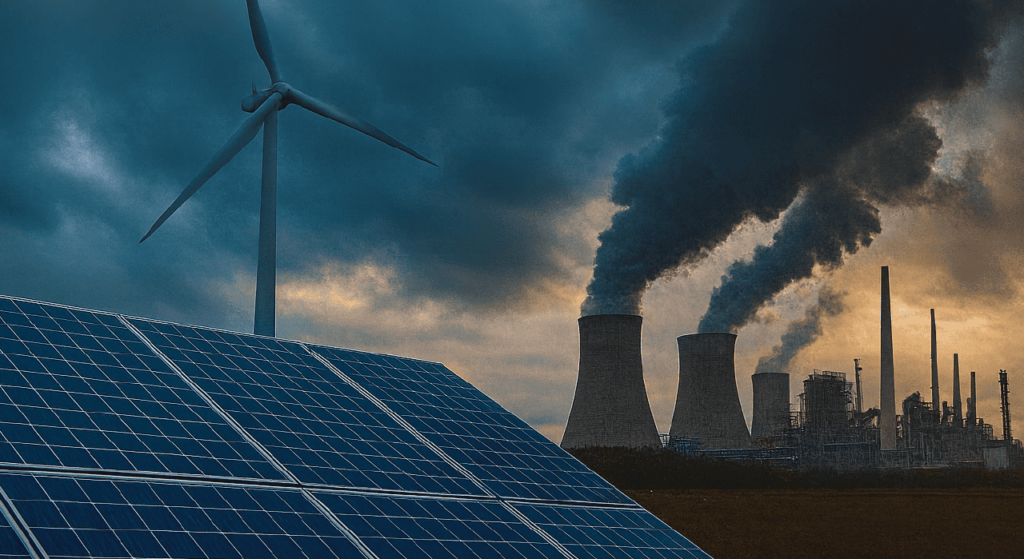
The global energy transition is fundamentally reshaping the hierarchy of power in international relations. For over a century, geopolitical influence has been closely tied to control over fossil fuel resources, particularly oil and gas. States rich in hydrocarbons—such as Saudi Arabia and Russia—have historically wielded disproportionate influence due to their ability to supply energy to industrial economies. However, the gradual shift towards renewable energy sources is altering this long-standing structure.
In a decarbonising world, power is increasingly associated with technological capability rather than resource endowment. Countries that lead in renewable energy innovation—such as China, Germany, and the United States—are positioning themselves at the forefront of a new energy order. These states are investing heavily in solar, wind, battery storage, and electric vehicle infrastructure, thereby shaping the future architecture of global energy systems.
Control over critical minerals has emerged as a new axis of geopolitical influence. Materials such as lithium, cobalt, and rare earth elements are essential for renewable technologies and energy storage systems. Countries like Chile and Democratic Republic of the Congo, which possess significant reserves of these minerals, are gaining strategic importance. At the same time, China’s dominance in processing and refining these materials enhances its leverage within global supply chains.
The decentralised nature of renewable energy also redistributes power more broadly. Unlike oil and gas, which are geographically concentrated, renewable resources such as sunlight and wind are more widely available. This enables a greater number of countries to achieve a degree of energy independence, reducing reliance on traditional exporters and weakening the geopolitical leverage of fossil fuel producers.
Nevertheless, the transition does not eliminate inequality; rather, it transforms it. States lacking technological capacity, capital investment, or access to critical minerals risk being marginalised in the new energy order. Developing countries, in particular, may struggle to compete in a system that rewards innovation and industrial capability over natural resource wealth.
Energy infrastructure is another domain where power dynamics are shifting. Investments in smart grids, interconnectors, and digital energy systems are becoming crucial for managing renewable energy flows. Countries that control these systems or set global standards may gain influence analogous to that once held by oil-exporting states.
The transition also introduces new forms of interdependence. While dependence on oil shipments may decline, reliance on global supply chains for renewable technologies and minerals increases. This creates complex networks of dependency that are less visible but equally significant in shaping geopolitical relations.
The energy transition is not simply a technological shift but a geopolitical transformation. It is redefining who holds power in the international system, moving influence away from traditional hydrocarbon exporters towards technologically advanced and resource-diverse states, thereby creating a more complex and multipolar global energy landscape.
2) Decarbonization Diplomacy
Decarbonisation diplomacy has emerged as a central feature of international relations in the era of the energy transition. As countries seek to reduce greenhouse gas emissions and meet climate targets, diplomacy is increasingly oriented around energy transformation rather than traditional resource competition. Agreements, partnerships, and multilateral frameworks now focus on facilitating the shift from fossil fuels to cleaner energy systems, making climate policy a core element of foreign policy.
A key pillar of this diplomatic landscape is the Paris Agreement, which provides a framework for collective action on climate change. Under its provisions, countries commit to nationally determined contributions (NDCs) aimed at limiting global warming. This agreement has created a shared diplomatic language around decarbonisation, encouraging cooperation while also introducing elements of competition, as states seek to demonstrate leadership in climate action.
Major powers are leveraging decarbonisation diplomacy to expand their global influence. The European Union has positioned itself as a normative leader by promoting regulatory standards such as carbon pricing and environmental benchmarks. Similarly, China has used its dominance in renewable manufacturing to build partnerships across Asia, Africa, and Latin America, often linking clean energy projects to broader infrastructure initiatives.
The United States has also re-engaged in climate diplomacy, emphasising alliances and technological collaboration. Through initiatives that support clean energy investment and innovation, Washington seeks to counterbalance China’s influence while reinforcing its own leadership in emerging energy technologies. This dynamic illustrates how decarbonisation diplomacy is intertwined with broader geopolitical competition.
Developing countries play a crucial role in this diplomatic arena, as they are both vulnerable to climate change and essential to global emissions reduction. Nations in Africa, South Asia, and Southeast Asia often seek financial and technological support from wealthier states to pursue low-carbon development pathways. This has led to negotiations over climate finance, technology transfer, and equitable burden-sharing, which remain contentious issues in international forums.
Energy partnerships are increasingly structured around renewable projects rather than fossil fuel investments. Cross-border initiatives in solar, wind, and hydrogen are becoming common, fostering new forms of interdependence. For instance, agreements between European and North African countries aim to harness solar energy in the Sahara for export to Europe, illustrating how geography continues to shape energy diplomacy, albeit in new ways.
Trade policy has also become a tool of decarbonisation diplomacy. Mechanisms such as carbon border adjustment measures are designed to prevent “carbon leakage” by imposing costs on imports from countries with less stringent climate policies. While intended to support global emissions reduction, such measures can create friction, particularly with developing economies that view them as barriers to trade.
Decarbonisation diplomacy reflects a shift in how states pursue their interests on the global stage. It blends cooperation and competition, aligning environmental goals with strategic objectives. As countries navigate this transition, diplomacy will play a निर्ण role in determining whether the move towards a low-carbon future is inclusive and stable or fragmented and conflict-prone.
3) The Future of OPEC and Petrostates
3) The Future of OPEC and Petrostates
The energy transition poses profound challenges to the traditional dominance of oil-exporting states and organisations such as OPEC. For decades, OPEC has exercised considerable influence over global oil markets by coordinating production levels among its members. This influence has translated into geopolitical leverage, particularly for key producers like Saudi Arabia. However, as the world gradually reduces its reliance on fossil fuels, the long-term relevance of such organisations is increasingly uncertain.
Petrostates—countries whose economies are heavily dependent on oil and gas revenues—face structural vulnerabilities in a decarbonising world. Nations such as Russia, Iraq, and Kuwait derive a significant portion of their government income from hydrocarbon exports. As global demand for oil plateaus or declines, these states may experience reduced revenues, fiscal deficits, and increased economic instability.
In response, many petrostates are pursuing economic diversification strategies. Saudi Arabia’s Vision 2030, for example, seeks to reduce dependence on oil by investing in sectors such as tourism, technology, and renewable energy. Similarly, Gulf countries are expanding into solar power and hydrogen production, aiming to leverage their existing energy expertise while adapting to new market realities.
Despite these efforts, the transition is likely to be uneven and fraught with challenges. Diversification requires substantial investment, institutional reform, and social adaptation. States with limited financial reserves or weaker governance structures may struggle to transition effectively, increasing the risk of domestic unrest and political instability.
OPEC itself may evolve rather than disappear. In the short to medium term, oil will remain a critical component of the global energy mix, ensuring continued relevance for coordinated production strategies. Moreover, OPEC’s expanded cooperation with non-member producers, often referred to as OPEC+, including Russia, demonstrates its ability to adapt to changing market conditions.
Another potential pathway for petrostates lies in leveraging their existing infrastructure for new energy carriers. Countries with extensive experience in hydrocarbon extraction and export may pivot towards hydrogen production, particularly “blue” hydrogen derived from natural gas with carbon capture. This could allow them to maintain a role in global energy markets even as demand for traditional fossil fuels declines.
Geopolitically, the declining centrality of oil could reduce the strategic importance of certain regions, particularly the Persian Gulf. External powers such as the United States may reassess their security commitments in these areas if their energy dependence diminishes. This could lead to a reconfiguration of regional security dynamics, with local powers assuming greater responsibility.
At the same time, the transition may create new forms of competition among petrostates. As demand declines, producers may compete more aggressively for market share, potentially leading to price volatility and economic strain. This could undermine the cohesion of organisations like OPEC, especially if member states prioritise national interests over collective agreements.
The future of OPEC and petrostates will be shaped by their ability to adapt to a rapidly changing energy landscape. While their influence may diminish over time, it is unlikely to disappear entirely. Instead, it will evolve in response to new economic realities, technological developments, and shifting patterns of global energy demand.
4) Energy and the New Cold War
The energy transition is increasingly intertwined with great power rivalry, giving rise to what many analysts describe as a “new Cold War” centred not on ideology alone, but on control over future energy systems. Unlike the 20th-century confrontation between the United States and the Soviet Union, this emerging competition is defined by technological supremacy, supply chain dominance, and influence over global energy governance.
At the heart of this rivalry is the competition between the United States and China. China has established a commanding position in the production of solar panels, batteries, and rare earth processing, giving it significant leverage in the clean energy economy. The United States, in turn, is investing heavily in domestic manufacturing and innovation to reduce dependence on Chinese supply chains, reflecting a broader strategy of economic and technological decoupling.
Energy security remains a central concern, but its meaning is evolving. Rather than focusing solely on access to oil and gas, states are now concerned with securing reliable supplies of critical minerals, advanced technologies, and manufacturing capacity. Countries such as Australia and Canada, which possess abundant mineral resources, are becoming strategically important partners in this new geopolitical landscape.
The role of Russia in the global energy system has also contributed to the emergence of this new rivalry. Its use of natural gas exports as a geopolitical tool—particularly in relation to Europe—has underscored the risks of energy dependence. In response, European states have accelerated their transition to renewable energy, seeking to reduce vulnerability while aligning with broader geopolitical objectives.
Technological competition is a defining feature of this new Cold War. Leadership in areas such as battery storage, hydrogen production, and smart grid systems is seen as critical to future economic and military power. States are therefore investing not only in deployment but also in research and development, intellectual property, and industrial policy.
Energy alliances are also being reshaped along geopolitical lines. The United States and its allies are forming partnerships aimed at securing supply chains and setting standards for clean energy technologies. Meanwhile, China is deepening its ties with countries in the Global South through infrastructure investment and energy cooperation, creating parallel networks of influence.
Trade and economic policies are increasingly weaponised in this context. Export controls, tariffs, and investment restrictions are used to protect domestic industries and limit the strategic capabilities of rivals. This introduces friction into global markets and raises the possibility of fragmentation in the international energy system.
Despite these tensions, the energy transition also creates opportunities for cooperation, particularly in addressing climate change. However, the coexistence of competition and collaboration makes the geopolitical environment more complex and unpredictable. States must balance strategic rivalry with the need for collective action on a global challenge.
The energy transition is not only transforming how energy is produced and consumed but also how power is contested on the global stage. The emerging “new Cold War” reflects a shift from resource-based competition to a broader struggle over technology, supply chains, and influence, signalling a new era in international geopolitics.