
1) About Zbigniew Brzezinski
Zbigniew Brzezinski was one of the most influential geopolitical strategists of the late twentieth and early twenty-first centuries. Born in Warsaw in 1928 to a Polish diplomatic family, Brzezinski’s early life was profoundly shaped by the upheavals of European politics, particularly the rise of totalitarianism and the devastation caused by the Second World War. His family eventually settled in North America, where he pursued an academic and political career that combined intellectual analysis with practical policymaking. These formative experiences deeply influenced his worldview, especially his concern regarding authoritarian empires and the balance of power in Eurasia.
Brzezinski emerged academically as a specialist in Soviet politics and Cold War strategy. He studied at McGill University and later at Harvard University, where he developed expertise in communist systems and geopolitical competition. Unlike purely theoretical scholars, he consistently sought to connect strategic analysis with policymaking. His work blended historical interpretation, geopolitical reasoning, and ideological critique, enabling him to become one of the leading strategic thinkers in American foreign policy circles during the Cold War era.
His national prominence expanded significantly during the 1970s when he became National Security Adviser to Jimmy Carter from 1977 to 1981. In this role, Brzezinski advocated a more assertive approach towards the Soviet Union than some of his contemporaries. He viewed the Cold War as not merely a military contest but a global struggle over political legitimacy, strategic geography, and ideological influence. His tenure coincided with major international developments, including the Iranian Revolution, the Soviet invasion of Afghanistan, and the normalisation of relations between the United States and China.
One of Brzezinski’s defining strategic contributions was his emphasis on Eurasia as the central geopolitical arena of world politics. Influenced by classical geopolitical thinkers such as Halford Mackinder, he argued that control or influence over Eurasia would largely determine global primacy. However, Brzezinski adapted these earlier theories to the conditions of globalisation, nuclear deterrence, and American hegemony. He believed that the United States, as an offshore power, needed to prevent the emergence of a hostile hegemon capable of dominating the Eurasian landmass.
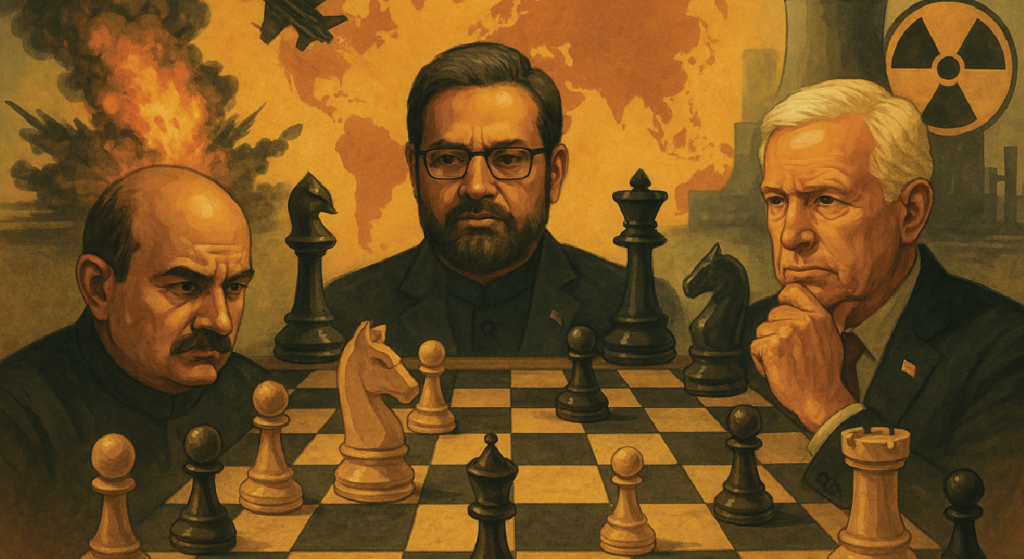
His most famous geopolitical work, The Grand Chessboard, articulated this vision in systematic form. In the book, Brzezinski described Eurasia as the “grand chessboard” upon which the struggle for global power unfolds. He argued that American primacy depended upon skilful management of alliances, regional balances, and strategic relationships across Europe, Central Asia, East Asia, and the Middle East. The work became highly influential in strategic studies because it presented geopolitics as an active process of maintaining equilibrium among competing powers rather than merely reacting to events.
Brzezinski differed from some earlier Cold War strategists in his recognition of the changing nature of power after the collapse of the Soviet Union. He understood that military superiority alone would not sustain American dominance indefinitely. Economic power, technological leadership, alliance systems, and political legitimacy were equally important. He therefore emphasised diplomatic flexibility and coalition-building rather than simple coercion. His strategic vision combined realism with an awareness of global interdependence and ideological dynamics.
Critics of Brzezinski often accused him of endorsing an excessively interventionist or imperial approach to international relations. Some argued that his focus on preventing rival powers from emerging encouraged policies that intensified geopolitical tensions. Others contended that his strategic framework underestimated the long-term consequences of American military and political overextension. Nevertheless, even critics acknowledged the depth of his geopolitical analysis and his ability to connect geography, power, economics, and ideology into a coherent strategic worldview.
Brzezinski’s importance lies in his role as both a theorist and practitioner of grand strategy. He interpreted international politics through the lens of geography and power competition while adapting classical geopolitical ideas to the realities of the post-Cold War era. His writings continue to influence debates concerning Eurasian strategy, American primacy, alliance management, and great-power competition. Whether viewed as a visionary strategist or a controversial architect of American hegemony, Brzezinski remains one of the defining geopolitical thinkers of the modern age.
2) The Geopolitical Pivots
In The Grand Chessboard, Zbigniew Brzezinski introduced the concept of “geopolitical pivots” to describe states whose strategic importance derives less from their own power and more from their geographical position and vulnerability. These states occupy locations that can significantly influence regional balances of power, access routes, alliance structures, or the movement of military and economic influence across Eurasia. Unlike major powers capable of independently shaping global events, pivot states matter because external powers compete to influence or control them.
Brzezinski argued that geography continues to shape international politics despite technological advancement and globalisation. Certain territories act as gateways, buffers, transit corridors, or strategic crossroads linking different regions. Because of this, the political orientation of pivot states may affect the strategic calculations of much larger powers. Their significance lies not necessarily in economic or military strength, but in the consequences that could arise if they fall under the influence of a rival geopolitical actor.
Among the most important pivot states identified by Brzezinski was Ukraine. He regarded Ukraine as strategically essential because its independence constrained the resurgence of a Russian imperial sphere across Eurasia. According to Brzezinski, without Ukraine, Russia would struggle to reconstitute itself as a dominant Eurasian empire, whereas control over Ukraine would significantly strengthen Moscow’s geopolitical position. Ukraine’s location between Europe and Russia, combined with its demographic and industrial importance, made it central to the balance of power in Eastern Europe.
Another significant geopolitical pivot in Brzezinski’s framework was Azerbaijan. Situated between Russia, the Middle East, and Central Asia, Azerbaijan occupied a critical position for energy transportation and regional connectivity. Its importance derived not only from its own hydrocarbon resources but also from its role as a corridor linking the Caspian basin to global markets while bypassing Russian-controlled routes. Control or influence over such transit corridors could alter regional alignments and reduce the dominance of competing powers over energy distribution.
Brzezinski also emphasised the strategic relevance of South Korea as a pivot state in East Asia. Its geographical position near China, Japan, and the Korean Peninsula’s militarised frontier gave it immense strategic value within the regional balance of power. South Korea’s alignment affected the military posture of the United States in Asia and shaped broader dynamics involving China and Japan. The peninsula therefore represented not merely a local security issue but an integral component of the wider Eurasian strategic system.
Turkey occupied another important pivot role because of its location connecting Europe, the Middle East, the Black Sea region, and Central Asia. Brzezinski viewed Turkey as a geopolitical bridge capable of influencing multiple strategic theatres simultaneously. Its orientation could shape energy transit, NATO strategy, regional security, and access between continents. States occupying such crossroads acquire disproportionate strategic significance because they can facilitate or obstruct wider geopolitical projects pursued by major powers.
The concept of geopolitical pivots reflects Brzezinski’s broader belief that international politics depends heavily upon the management of regional balances rather than direct territorial conquest. Pivot states are often vulnerable to external pressure precisely because their geography makes them valuable. Consequently, major powers compete diplomatically, economically, and militarily to draw these states into their respective spheres of influence. Alliance-building, infrastructure investment, military cooperation, and economic integration all become methods of securing influence over strategically positioned regions.
Brzezinski’s theory of geopolitical pivots highlights the enduring relevance of strategic geography in world politics. Even in an age of advanced technology and economic interdependence, the location of states continues to shape global power relations. Pivot states may not dominate the international system themselves, yet their orientation can alter the strategic balance among great powers. In Brzezinski’s grand chessboard, control over key geographical spaces was essential for preserving influence across Eurasia and preventing the emergence of rival hegemonic blocs.
3) The Strategic Players
In The Grand Chessboard, Zbigniew Brzezinski outlined what may be described as a methodology of imperial management, although he rarely used the term “empire” in a traditional colonial sense. Instead, he portrayed the United States as a global power responsible for maintaining equilibrium across Eurasia through alliances, strategic engagement, and political coordination. American primacy, in his view, depended not upon direct territorial conquest but upon the skilful management of relationships among competing powers and regions.
Brzezinski argued that modern hegemony differs fundamentally from earlier empires based on occupation and formal colonial administration. Contemporary global influence is exercised through networks of alliances, economic integration, technological leadership, and institutional dominance. Rather than ruling subject territories directly, the United States maintained influence by shaping the strategic environment in which other states operated. NATO, financial institutions, trade systems, and diplomatic partnerships formed the infrastructure through which American influence could be projected without constant military coercion.
A central element of Brzezinski’s methodology involved preventing the emergence of a hostile coalition capable of dominating Eurasia. He believed that the greatest threat to American primacy would not come from a single isolated rival but from a coordinated alliance among major Eurasian powers. Consequently, American strategy required maintaining divisions among potential challengers while encouraging regional balances favourable to Washington. Diplomatic engagement, selective partnerships, and strategic flexibility were therefore essential instruments of global management.
Alliance maintenance occupied a particularly important role within Brzezinski’s framework. He emphasised that alliances should not be viewed merely as defensive military arrangements but as mechanisms for integrating regions into a broader strategic order. The expansion of NATO into Eastern Europe, for example, was interpreted not only as a security policy but also as a geopolitical strategy designed to stabilise Europe and extend Western influence eastward. Institutional integration reduced the likelihood that unstable regions might fall under the control of rival powers.
Brzezinski also stressed the importance of co-opting rather than alienating secondary powers. Successful global leadership required accommodating the interests of allies and regional actors sufficiently to maintain their cooperation. Excessive coercion or unilateralism could encourage resentment and balancing behaviour among other states. American leadership therefore needed legitimacy as well as strength. Brzezinski recognised that soft power, diplomatic credibility, and economic attractiveness were necessary complements to military capability.
Another component of his strategic methodology involved managing regional crises before they escalated into broader geopolitical realignments. Eurasia contained numerous ethnic conflicts, territorial disputes, and political instabilities that could potentially draw great powers into confrontation. Brzezinski believed that the United States needed to remain actively engaged in these regions to prevent hostile actors from exploiting instability. Strategic involvement in areas such as the Balkans, Central Asia, and the Caucasus reflected this preventive logic.
Economic integration also functioned as a mechanism of imperial management within Brzezinski’s worldview. Expanding global markets, promoting investment networks, and encouraging interconnected economies could reinforce American influence while reducing incentives for direct geopolitical confrontation. Economic globalisation helped bind allies and partners into systems shaped by American-led institutions. In this sense, geoeconomic influence became as important as military deployment in sustaining global leadership.
Brzezinski’s methodology of imperial management rested upon the idea that enduring hegemony requires sophisticated coordination rather than naked domination. Power had to be exercised indirectly through alliances, institutions, economic systems, and geopolitical balancing. The United States could maintain primacy only by remaining deeply engaged in Eurasia while preventing any rival coalition from consolidating control over the continent. His framework therefore described a form of strategic management suited to an interconnected world where influence increasingly flowed through networks and institutions rather than formal imperial conquest alone.
4) The Methodology of Imperial Management
In The Grand Chessboard, Zbigniew Brzezinski outlined what may be described as a methodology of imperial management, although he rarely used the term “empire” in a traditional colonial sense. Instead, he portrayed the United States as a global power responsible for maintaining equilibrium across Eurasia through alliances, strategic engagement, and political coordination. American primacy, in his view, depended not upon direct territorial conquest but upon the skilful management of relationships among competing powers and regions.
Brzezinski argued that modern hegemony differs fundamentally from earlier empires based on occupation and formal colonial administration. Contemporary global influence is exercised through networks of alliances, economic integration, technological leadership, and institutional dominance. Rather than ruling subject territories directly, the United States maintained influence by shaping the strategic environment in which other states operated. NATO, financial institutions, trade systems, and diplomatic partnerships formed the infrastructure through which American influence could be projected without constant military coercion.
A central element of Brzezinski’s methodology involved preventing the emergence of a hostile coalition capable of dominating Eurasia. He believed that the greatest threat to American primacy would not come from a single isolated rival but from a coordinated alliance among major Eurasian powers. Consequently, American strategy required maintaining divisions among potential challengers while encouraging regional balances favourable to Washington. Diplomatic engagement, selective partnerships, and strategic flexibility were therefore essential instruments of global management.
Alliance maintenance occupied a particularly important role within Brzezinski’s framework. He emphasised that alliances should not be viewed merely as defensive military arrangements but as mechanisms for integrating regions into a broader strategic order. The expansion of NATO into Eastern Europe, for example, was interpreted not only as a security policy but also as a geopolitical strategy designed to stabilise Europe and extend Western influence eastward. Institutional integration reduced the likelihood that unstable regions might fall under the control of rival powers.
Brzezinski also stressed the importance of co-opting rather than alienating secondary powers. Successful global leadership required accommodating the interests of allies and regional actors sufficiently to maintain their cooperation. Excessive coercion or unilateralism could encourage resentment and balancing behaviour among other states. American leadership therefore needed legitimacy as well as strength. Brzezinski recognised that soft power, diplomatic credibility, and economic attractiveness were necessary complements to military capability.
Another component of his strategic methodology involved managing regional crises before they escalated into broader geopolitical realignments. Eurasia contained numerous ethnic conflicts, territorial disputes, and political instabilities that could potentially draw great powers into confrontation. Brzezinski believed that the United States needed to remain actively engaged in these regions to prevent hostile actors from exploiting instability. Strategic involvement in areas such as the Balkans, Central Asia, and the Caucasus reflected this preventive logic.
Economic integration also functioned as a mechanism of imperial management within Brzezinski’s worldview. Expanding global markets, promoting investment networks, and encouraging interconnected economies could reinforce American influence while reducing incentives for direct geopolitical confrontation. Economic globalisation helped bind allies and partners into systems shaped by American-led institutions. In this sense, geoeconomic influence became as important as military deployment in sustaining global leadership.
Brzezinski’s methodology of imperial management rested upon the idea that enduring hegemony requires sophisticated coordination rather than naked domination. Power had to be exercised indirectly through alliances, institutions, economic systems, and geopolitical balancing. The United States could maintain primacy only by remaining deeply engaged in Eurasia while preventing any rival coalition from consolidating control over the continent. His framework therefore described a form of strategic management suited to an interconnected world where influence increasingly flowed through networks and institutions rather than formal imperial conquest alone.
5) Russia’s Three Geopolitical Outcomes
In The Grand Chessboard, Zbigniew Brzezinski treated Russia as the single most consequential variable in the post-Cold War Eurasian order. He argued that Russia’s future trajectory would decisively shape whether the Eurasian landmass remained pluralistic or evolved into a consolidated bloc capable of challenging the United States. Rather than assuming a fixed path, Brzezinski outlined multiple plausible geopolitical outcomes based on Russia’s internal evolution, external alignments, and capacity for strategic adaptation.
The first and most favourable outcome, from Brzezinski’s perspective, was Russia’s gradual transformation into a cooperative post-imperial state integrated into broader European and transatlantic structures. In this scenario, Russia would accept the loss of its former imperial sphere and reorient itself towards economic modernisation, institutional reform, and selective partnership with Western institutions. Such a trajectory would reduce the likelihood of Eurasian confrontation by embedding Russia within a cooperative framework that limited its ability or incentive to pursue territorial revisionism.
A second possible outcome involved Russia evolving into a dominant Eurasian power centre capable of reasserting influence over its near abroad. In this scenario, Russia would recover sufficient internal cohesion, military capacity, and economic strength to re-establish a sphere of influence across parts of the former Soviet space. Brzezinski viewed this outcome as strategically problematic because it would likely entail renewed pressure on neighbouring states and increased competition with Western institutions in Eastern Europe, the Caucasus, and Central Asia. This pathway would significantly complicate the maintenance of a stable Eurasian balance.
A third outcome described by Brzezinski was the fragmentation or prolonged weakening of Russia into a decentralised or semi-peripheral state. In this case, internal instability, economic stagnation, or political disintegration could reduce Russia’s ability to act as a coherent geopolitical player. While this might appear to diminish immediate strategic tensions, Brzezinski also recognised that such fragmentation could generate instability across Eurasia, including regional conflicts, nuclear security risks, and power vacuums that other actors might seek to exploit. Therefore, even decline carried geopolitical consequences.
Brzezinski placed considerable emphasis on the strategic importance of Ukraine within all three scenarios. He argued that Ukraine’s independence was a decisive factor in limiting Russia’s imperial potential. Without Ukraine, Russia would be geographically and demographically constrained in its ability to project power westward into Europe. Conversely, reintegration or domination of Ukraine would dramatically enhance Russia’s geopolitical weight. As a result, Ukraine functioned as a key determinant in whether Russia could re-emerge as a continental power.
Energy dependence also played a central role in shaping Russia’s geopolitical options. Russia’s economy relied heavily on hydrocarbon exports, particularly oil and natural gas, which provided both revenue and geopolitical leverage. However, Brzezinski suggested that overreliance on resource exports could limit economic diversification and long-term competitiveness. Energy wealth could therefore simultaneously strengthen Russia’s external influence while constraining its internal development, creating structural tensions within its geopolitical trajectory.
Brzezinski also considered the role of elite political culture in determining Russia’s future direction. He argued that Russia’s strategic identity was shaped by historical experiences of empire, insecurity, and territorial expansion. Whether Russian leadership chose to reinterpret this legacy in cooperative or revisionist terms would significantly influence its foreign policy behaviour. Elite perceptions of national status, security, and historical destiny were therefore as important as material capabilities in determining Russia’s geopolitical path.
The interaction between Russia and neighbouring regions formed another critical dimension of Brzezinski’s analysis. Eastern Europe, the South Caucasus, and Central Asia were all seen as zones where Russian influence could either expand or contract depending on broader geopolitical dynamics. These regions functioned as interfaces between competing spheres of influence, and their alignment would signal the direction of Eurasian balance. Russia’s ability to stabilise or dominate these areas was thus a key indicator of its strategic trajectory.
Brzezinski’s three geopolitical outcomes for Russia reflect a broader concern with maintaining Eurasian equilibrium. Whether Russia integrated into Western-led structures, reasserted imperial influence, or fragmented into weaker units, each scenario carried distinct implications for global stability. His framework emphasised that Russia’s future was not predetermined but contingent upon internal choices and external alignments. In the grand chessboard of Eurasia, Russia remained a pivotal actor whose trajectory would profoundly shape the structure of international power.
6) The Specter of an Anti-Hegemonic Coalition
In The Grand Chessboard, Zbigniew Brzezinski identified the emergence of an anti-hegemonic coalition in Eurasia as the principal long-term threat to the global position of the United States. His concern was not the rise of any single rival state in isolation, but rather the possibility that several major powers might coordinate their strategies in opposition to American influence. Such a coalition, if sustained, could fundamentally alter the balance of power across Eurasia and undermine the structural foundations of US primacy.
Brzezinski’s analysis rested on the assumption that Eurasia is the world’s central geopolitical arena. Because it contains the majority of the world’s population, economic output, and military potential, any consolidation of power within this space could challenge external dominance. An anti-hegemonic coalition would therefore represent the unification of significant Eurasian resources under a shared strategic orientation, enabling coordinated resistance to external influence and potentially reshaping global governance structures.
A key element of this potential coalition was the hypothetical alignment of Russia and China. Brzezinski regarded both states as major civilisational and strategic centres whose cooperation could produce a powerful counterweight to American influence. Russia offered vast territorial depth, military capability, and energy resources, while China contributed demographic scale, industrial capacity, and accelerating technological development. A durable partnership between these two powers would significantly increase the strategic autonomy of Eurasia from Western-led institutions.
Brzezinski also considered the possibility that other regional actors could be drawn into such an alignment depending on shifting geopolitical conditions. States experiencing tension with Western institutions, or those seeking greater strategic autonomy, might be inclined to participate in alternative coalitions. In particular, dissatisfaction with global economic arrangements, military interventions, or perceived imbalances in the international system could encourage alignment among states seeking to diversify their partnerships and reduce dependency on US-led structures.
Energy and resource linkages were another important factor influencing the feasibility of anti-hegemonic coordination. Russia’s role as a major energy exporter, combined with China’s vast industrial demand, created structural complementarities that could underpin closer cooperation. Economic interdependence among Eurasian powers could either reinforce integration into global systems or facilitate the creation of parallel networks. Brzezinski was particularly attentive to how material flows—such as energy, trade, and investment—could translate into strategic alignment over time.
However, Brzezinski also emphasised the inherent difficulties in sustaining such a coalition. Historical mistrust, divergent national interests, territorial disputes, and competing regional ambitions all acted as barriers to long-term unity among Eurasian powers. Even when tactical cooperation was possible, he believed that structural differences would limit the depth of strategic alignment. The absence of a unifying political framework or shared ideological foundation further reduced the likelihood of a cohesive anti-hegemonic bloc emerging.
The role of intermediary states and geopolitical pivots also influenced the prospects of coalition formation. Countries situated between major powers could either facilitate cooperation or act as buffers preventing consolidation. Their alignment decisions, infrastructure connections, and security partnerships would all affect whether Eurasian actors could coordinate effectively. Brzezinski’s broader framework suggested that maintaining the independence and multi-vector orientation of such states was essential to preventing hostile bloc formation.
The concept of an anti-hegemonic coalition reflects Brzezinski’s core strategic concern: the preservation of a balanced Eurasian order that prevents the emergence of a unified challenger to American global primacy. He viewed the fragmentation and managed competition among Eurasian powers as a stabilising condition for the international system. The spectre of coalition-building therefore served as both a warning and a strategic guideline, shaping his recommendations for diplomacy, alliance management, and long-term geopolitical engagement.