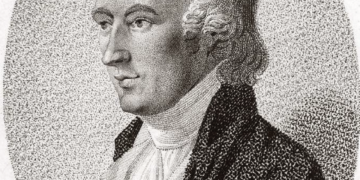
Alexander Braun
1) His Biography
Alexander Carl Heinrich Braun was born on 10 May 1805 in Regensburg, in the Kingdom of Bavaria. He grew up in an intellectually stimulating environment that nurtured his early fascination with the natural world. His father, an artist and educator, encouraged close observation of nature, while his formal schooling exposed him to the natural philosophy and scientific debates of the early nineteenth century. This combination of aesthetic sensitivity and scientific curiosity would later define Braun’s approach to botany, in which he sought to understand not only the structure of plants but also the underlying principles that governed their growth and form.
Braun began his academic studies at the University of Heidelberg, where he studied under the influential botanist Karl Friedrich Schimper. The intellectual partnership between the two young scholars proved decisive, as they collaborated in exploring plant morphology and phyllotaxis — the mathematical arrangement of leaves and other plant organs. Their shared fascination with natural form and pattern marked an important moment in the development of morphological thought in German botany. During these formative years, Braun’s interest shifted from simple plant description to the philosophical and structural principles that shape living organisms, laying the groundwork for his later theoretical contributions.
In the 1820s and 1830s, Braun conducted botanical studies across various regions of Germany and Switzerland. His early fieldwork was characterised by meticulous observation and documentation, as well as an attempt to relate individual plant species to broader structural and developmental laws. In this period, Braun began formulating his lifelong conviction that plant form is not a static feature but a dynamic process governed by inner laws of growth. His publications from this era already displayed his gift for combining empirical research with speculative insight — a hallmark of his later career.
By the mid-nineteenth century, Braun had established himself as one of Germany’s leading botanical thinkers. He held a succession of academic appointments, including professorships at the universities of Freiburg, Giessen, and Karlsruhe. In 1850, he was appointed director of the Royal Botanical Garden in Berlin and professor of botany at the University of Berlin, succeeding Heinrich Friedrich Link. This position gave him not only access to one of Europe’s most extensive botanical collections but also the opportunity to shape the direction of botanical research and education in Germany.
At Berlin, Braun transformed the botanical garden into a centre for both systematic and experimental study. He oversaw the expansion of plant collections, modernised facilities, and encouraged the integration of laboratory work with field observation. Under his leadership, the institution became a model of nineteenth-century scientific organisation, blending the rigour of empirical research with the broader philosophical questions that animated German natural science. Braun’s lectures, widely attended by students and colleagues alike, reflected his belief that the study of plants was not merely a descriptive science but a means of understanding life’s fundamental patterns.
Braun’s scientific reputation extended well beyond Germany. He corresponded with leading botanists across Europe, including Charles Darwin, whose evolutionary theory Braun regarded with both interest and reservation. While he acknowledged the importance of variation and adaptation, Braun remained committed to the idea of an intrinsic, law-governed order in plant development that could not be fully explained by external forces alone. This dialogue between Darwinian and morphological perspectives exemplified the intellectual diversity of mid-nineteenth-century biology and placed Braun at the heart of its most significant debates.
In the final decades of his life, Braun continued to write and teach, refining his ideas about plant structure and development. He published several influential works that articulated a vision of morphology as a bridge between biology and philosophy. His later writings, though less experimental, revealed an enduring concern with the metaphysical dimensions of natural form — a concern rooted in the Romantic natural philosophy that had shaped his youth. Braun died in Berlin on 29 March 1877, leaving behind a legacy that combined scientific precision with a profound sense of the beauty and unity of organic life.
By the time of his death, Alexander Braun had not only contributed significantly to botanical science but had also helped establish morphology as a distinct and respected field of study. His life’s work stands as a testament to the idea that science, when guided by both intellect and imagination, can illuminate the hidden order of the natural world.
2) Main Works
Betrachtungen über die Erscheinung der Verjüngung in der Natur (1827)
This early essay, written when Braun was in his early twenties, explores the phenomenon of renewal and regeneration in nature. It reflects his growing interest in the dynamic processes underlying plant life, rather than static forms. Braun examines how cyclical growth and regeneration reveal the inherent vitality of living organisms. The work anticipates his later morphological theories by proposing that all living forms are governed by inner laws of self-renewal and transformation.
Über die Gesetzmäßigkeit der Anordnung der Glieder in den Pflanzen (1830)
One of Braun’s seminal works, this study investigates the mathematical regularity in the arrangement of plant organs — particularly leaves, petals, and seeds. In collaboration with Karl Friedrich Schimper, Braun developed the early theory of phyllotaxis, identifying recurring numerical patterns in plant structures. The treatise combines observation with geometry, arguing that natural growth follows predictable and harmonious laws. This work laid the foundations for future mathematical studies in plant morphology and continues to be cited in botanical geometry research.
Untersuchungen über die Entwickelung der Pflanzenorgane (1849)
In this major publication, Braun analyses the developmental stages of plant organs from a morphological perspective. He presents the concept that all plant organs are modifications of a fundamental organ — the leaf — transformed through processes of growth and differentiation. This idea, rooted in Goethe’s earlier Metamorphosis of Plants, is refined by Braun through empirical observation and detailed anatomical study. The work deepened scientific understanding of plant organogenesis and remains a cornerstone of nineteenth-century morphological literature.
Verjüngung im Pflanzenreich (1851)
This treatise revisits Braun’s youthful interest in regeneration, extending it into a systematic study of renewal within plant life. He interprets rejuvenation not merely as a biological function but as an expression of the universal principle of life. The text bridges scientific analysis with philosophical speculation, proposing that rejuvenation manifests the continuity of organic development. Verjüngung im Pflanzenreich exemplifies Braun’s characteristic synthesis of empirical precision and Romantic natural philosophy.
Betrachtungen über die Erscheinung der Spiralstellung in den Pflanzenorganen (1854)
In this work, Braun expands his earlier studies on phyllotaxis, providing a more comprehensive account of spiral arrangements in plants. He explores the geometric and physiological bases of spiral growth, arguing that these patterns arise from internal structural forces rather than mere chance. The text demonstrates Braun’s lifelong fascination with order in organic forms and his commitment to understanding nature through both mathematics and morphology.
Morphologische Studien über die Entwickelung der Pflanzen (1862)
This volume represents one of Braun’s mature reflections on plant development and morphology. It synthesises decades of research into a coherent philosophical framework, arguing that the diversity of plant forms results from variations in a single underlying developmental law. The work articulates his belief that form in nature expresses both material and spiritual order, offering a bridge between empirical botany and idealist philosophy.
Über die Natur der Pflanzenformen (1875)
Published near the end of his life, this work distils Braun’s lifelong inquiry into the meaning of plant form. It argues that the morphology of plants reflects a universal principle of organisation, manifesting the unity of natural processes. The text blends scientific observation with speculative reasoning, reflecting Braun’s conviction that natural forms embody metaphysical truths. It stands as a summation of his intellectual journey and remains one of the key texts in nineteenth-century botanical thought.
Beiträge zur Morphologie der Pflanzen (Posthumous, 1878)
Compiled and published after his death, this collection of essays gathers Braun’s unfinished notes and lectures on plant structure and development. It offers insight into his evolving ideas on morphological laws, cellular theory, and the relationship between growth and form. The collection demonstrates the continuity of his intellectual concerns and the consistency of his methodological approach — a balance between rigorous observation and philosophical depth.
3) Main Themes
Morphology and the Unity of Plant Form
A central theme in Alexander Braun’s work is his commitment to morphology — the study of form and structure in living organisms. He viewed plant forms not as arbitrary variations but as expressions of universal developmental laws. Influenced by Goethe’s concept of the Urpflanze, or archetypal plant, Braun sought to demonstrate that all organs in a plant — from roots to flowers — arise from transformations of a single fundamental organ. This view united the diversity of the plant kingdom under a shared principle of organisation. His meticulous anatomical studies and geometric analyses revealed how form results from dynamic growth processes, providing a foundation for later developments in comparative morphology.
Beyond structural description, Braun saw morphology as a philosophical endeavour — a means of understanding the inner logic of life. He believed that plant forms reflected nature’s inherent rationality and harmony, offering insight into the unity of creation. This synthesis of empirical and metaphysical perspectives distinguished his work from purely descriptive botany. By framing morphology as both science and philosophy, Braun positioned the study of plant form as a bridge between biology, mathematics, and natural aesthetics. His emphasis on inner law and organic unity anticipated modern ideas of structuralism and self-organisation in biology.
Phyllotaxis and Mathematical Order in Nature
Braun’s pioneering research into phyllotaxis — the arrangement of leaves and other organs around a stem — expressed his conviction that nature’s beauty arises from mathematical order. Building on earlier work by Schimper and others, he investigated how spiral and alternate patterns followed specific numerical sequences, often corresponding to Fibonacci ratios. These discoveries revealed that plant growth obeys quantifiable regularities, suggesting that geometry and life are intimately connected. Braun saw these patterns as evidence of the deep harmony underlying natural phenomena.
In exploring phyllotaxis, Braun transcended mere classification to examine the generative principles of form. His approach united empirical observation with mathematical reasoning, showing that the arrangement of plant parts could be described by universal laws. This integration of mathematics into botany influenced later researchers in both natural science and biomathematics. Braun’s concept of structural regularity continues to inspire scientific and philosophical discussions about the relationship between form, function, and order in living systems.
Regeneration and the Principle of Rejuvenation
Another recurring theme in Braun’s writings is the phenomenon of regeneration — the capacity of plants to renew and restore themselves. In works such as Verjüngung im Pflanzenreich, he interprets rejuvenation not merely as a biological process but as a universal law of life. For Braun, every act of regeneration symbolised nature’s vitality and continuity. He observed that plants, unlike animals, could perpetually generate new organs, embodying a principle of perpetual youth that he considered central to their existence.
Philosophically, Braun linked regeneration to the broader concept of organic unity and transformation. He argued that the tendency toward renewal reflected a metaphysical order in nature, where life continually reasserts itself against decay. This notion resonated with Romantic ideas of the cyclical nature of existence and the interconnectedness of all life forms. His reflections on rejuvenation bridged biology and metaphysics, influencing later studies on growth dynamics, developmental biology, and ecological resilience.
The Relationship between Form and Function
Braun consistently explored how the structure of plants corresponded to their biological roles. He rejected the reductionist view that form was merely an adaptation to environment, insisting instead that form emerged from intrinsic developmental laws. To him, every plant organ represented both a physical and a functional expression of an inner principle. This idea connected his morphological studies to broader philosophical questions about purpose and design in nature.
In his analysis of plant organs, Braun demonstrated how functional differentiation could arise through structural transformation. He viewed the metamorphosis of leaves into petals, for example, as evidence that function evolved from form rather than the other way around. His insights prefigured later debates in evolutionary biology about the origins of structural diversity. By uniting form and function within a single conceptual framework, Braun elevated morphology from descriptive study to an interpretive science concerned with the meaning and coherence of living systems.
The Interplay of Empiricism and Natural Philosophy
Braun’s work exemplifies the synthesis of empirical research and speculative reasoning characteristic of nineteenth-century German natural philosophy. He was both an experimental botanist and a philosophical thinker, believing that scientific investigation must engage with deeper metaphysical questions. His writings often oscillate between detailed anatomical observation and reflections on the universal order of life. For Braun, understanding plants required both scientific method and philosophical imagination.
This interplay between observation and theory shaped his influence on subsequent generations of scientists. While later biologists would move toward more materialist interpretations, Braun’s holistic perspective continued to inspire those interested in the aesthetic and structural dimensions of life. His belief in the unity of truth across disciplines anticipated later integrative approaches in biology, where physical, mathematical, and philosophical insights converge. In this way, Braun’s legacy extends beyond botany into the philosophy of science itself.
Development and Transformation in Organic Life
Transformation was at the heart of Braun’s conception of living nature. He regarded every plant form as a stage in a continuous developmental sequence, governed by inner necessity rather than external accident. This notion of transformation drew heavily on Goethe’s earlier ideas but was reinterpreted by Braun through systematic observation and comparative anatomy. He traced how organs evolved through successive modifications, reflecting both structural constraints and creative adaptation.
For Braun, transformation was not simply a biological mechanism but a universal principle of becoming — a manifestation of life’s dynamic nature. He believed that by studying developmental patterns in plants, one could glimpse the creative logic underlying all organic processes. This theme of transformation imbued his scientific work with philosophical depth, linking the material and spiritual dimensions of nature. It also positioned Braun as a key transitional figure between Romantic naturalism and the emerging evolutionary sciences of the late nineteenth century.
4) Braun as a Botanist
Alexander Braun’s contributions as a botanist were distinguished by a rare combination of empirical rigour, mathematical insight, and philosophical reflection. Unlike many of his contemporaries who focused primarily on cataloguing species, Braun was deeply concerned with understanding the underlying principles that shaped plant life. He approached botany not merely as a descriptive science but as a discipline capable of revealing the inner laws governing form, growth, and development. This holistic vision allowed him to bridge the gap between observation and theory, making him a central figure in nineteenth-century plant morphology.
A hallmark of Braun’s botanical work was his meticulous study of plant structure and organ development. He was particularly interested in the transformation of plant organs, analysing how leaves, stems, and flowers could be understood as variations of a single fundamental type. This approach, building on Goethe’s Urpflanze concept, enabled him to articulate the idea of morphological unity across the plant kingdom. Through detailed anatomical studies and comparative analysis, Braun demonstrated that apparent diversity often masked underlying structural continuity, a concept that profoundly influenced subsequent morphological research.
Braun’s pioneering work in phyllotaxis exemplifies his integration of mathematics and botany. By investigating the spiral arrangement of leaves, petals, and seeds, he revealed recurring numerical patterns that reflected the inherent order in plant growth. His work demonstrated that organic structures could be described using mathematical principles, bridging the disciplines of geometry and biology. This emphasis on quantifiable regularities in living systems not only enhanced understanding of plant form but also contributed to the broader scientific dialogue on the interplay between law, order, and variation in nature.
In addition to his theoretical contributions, Braun was an accomplished field botanist. He conducted extensive studies across Germany, Switzerland, and other regions, carefully documenting local flora and relating observations to broader structural principles. His fieldwork emphasised the importance of understanding plants in their natural habitats, integrating ecological context into morphological analysis. This combination of laboratory and field research strengthened his insights into plant development and established a methodological precedent for subsequent botanists.
As an educator and institutional leader, Braun exerted considerable influence on botanical research and training. His tenure as professor and director of the Berlin Botanical Garden allowed him to mentor a generation of students, emphasising precision in observation, clarity in description, and the intellectual integration of science and philosophy. He modernised the garden’s collections and research facilities, transforming it into a centre for experimental and morphological study. Through these efforts, Braun ensured that Berlin became a hub for botanical scholarship in Europe.
Braun also engaged with contemporary scientific debates, particularly regarding evolution and species variation. While he appreciated Darwin’s emphasis on adaptation, he remained committed to the idea that plant form is guided by intrinsic laws rather than purely external forces. This nuanced position reflected his broader belief in the interplay of necessity and contingency in nature — that structural patterns arise from both internal principles and environmental interaction. His careful consideration of these issues illustrates his ability to balance empirical evidence with theoretical interpretation.
Braun’s legacy as a botanist is marked by his synthesis of multiple disciplines. He combined anatomy, physiology, mathematics, and philosophy to produce a comprehensive vision of plant life. His work demonstrated that botany could illuminate universal patterns of organisation and transformation, extending its relevance beyond mere description. By integrating observation, experimentation, and conceptual analysis, Braun elevated plant morphology into a rigorous scientific and philosophical enterprise, leaving a lasting influence on both the study of plants and the broader understanding of biological form.
5) His Legacy
Alexander Braun’s legacy in botany is marked by his transformative contributions to plant morphology, his integration of empirical research with philosophical insight, and his influence on generations of scientists. He helped establish morphology as a rigorous scientific discipline, demonstrating that the study of form and structure could reveal universal laws of growth and development. By emphasising the unity and transformation of plant organs, Braun moved beyond mere description to interpretive analysis, inspiring future botanists to seek underlying principles in the diversity of the plant kingdom. His work remains foundational in the study of plant structure, phyllotaxis, and developmental biology.
Braun’s leadership in academic institutions, particularly the Berlin Botanical Garden and the University of Berlin, cemented his influence on scientific education and research infrastructure. He modernised the garden’s collections, promoted systematic study, and fostered a culture of careful observation and analytical rigor. Through his mentorship, many students adopted his integrative approach, extending his methodologies and ideas across Europe. His emphasis on combining fieldwork, laboratory research, and theoretical reflection shaped the way botany was practised and taught, ensuring that his intellectual legacy persisted well beyond his lifetime.
A significant aspect of Braun’s legacy is his contribution to the mathematical understanding of plant form. His work on phyllotaxis and spiral patterns revealed that natural structures often follow predictable, numerical laws. This insight demonstrated that biological systems could be studied quantitatively, foreshadowing the modern integration of mathematics into biological research. By uncovering these hidden patterns, Braun bridged the gap between natural philosophy and empirical science, influencing subsequent generations of morphologists and theoreticians.
Braun’s philosophical approach to botany also left a lasting mark. He viewed plant forms as manifestations of universal principles, blending observation with metaphysical reflection. This perspective resonated with Romantic natural philosophy, emphasising harmony, order, and the continuity of life. His writings encouraged scientists to consider not only the material aspects of organisms but also the organising principles that shape them, fostering a holistic approach to biological study that continues to inspire contemporary research in developmental biology and theoretical morphology.
In addition to his scientific contributions, Braun’s published works set high standards for clarity, precision, and methodological consistency. His treatises, essays, and studies combined detailed empirical data with careful analysis and conceptual insight, establishing a model for scientific writing in botany. These texts influenced both his contemporaries and later generations, shaping the evolution of botanical literature and the dissemination of morphological knowledge.
Braun’s engagement with evolutionary debates also highlights the enduring relevance of his ideas. While he acknowledged adaptation and variation, he emphasised the role of intrinsic laws and organisational principles in shaping plant form. This nuanced perspective provided an alternative to strictly Darwinian interpretations and contributed to a more sophisticated understanding of development, structure, and function in plants. His integrative approach anticipated modern discussions in evolutionary developmental biology, where both genetic and structural constraints are considered in explaining form.
Alexander Braun’s legacy endures in the continued recognition of his name in botanical nomenclature and the enduring relevance of his theories. Numerous plant species and genera bear his name, reflecting the esteem in which he was held by his peers. More importantly, his conceptual contributions to morphology, phyllotaxis, and the philosophy of botany remain influential. Braun exemplifies the ideal of the nineteenth-century naturalist: a scholar who combined meticulous observation, theoretical insight, and philosophical reflection to illuminate the hidden order and unity of the natural world.




Popular Post