Marsilio Ficino
1) His Biography
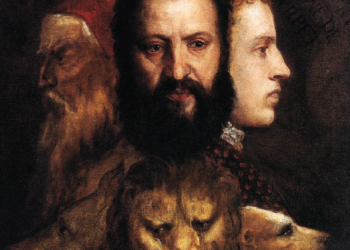
Marsilio Ficino, born on 19 October 1433 in Figline Valdarno, Italy, was a pivotal figure of the Italian Renaissance. As the son of a respected physician, Diotifeci d’Agnolo, who served the influential Medici family, Ficino was positioned within a circle of intellectual and cultural luminaries from a young age. His early education was steeped in the classics, studying Latin and Greek texts that would shape his future scholarly pursuits. The Medici family’s patronage was instrumental in Ficino’s development, particularly that of Cosimo de’ Medici, who recognised the young man’s potential and provided him with the support necessary to explore his intellectual interests.
Ficino’s education extended beyond the typical curriculum of his time. He immersed himself in the works of the ancient Greek philosophers, particularly Plato, whose dialogues became a central focus of his studies. Ficino was not merely a translator of these texts; he was a passionate advocate for the Platonic philosophy, which he believed could reconcile with Christian theology. His translations and commentaries on Plato’s works, commissioned by Cosimo de’ Medici, were instrumental in the revival of Platonism during the Renaissance and established Ficino as a leading scholar in this field.
In 1462, Ficino was granted a villa at Careggi by Cosimo de’ Medici, where he established the Platonic Academy. This institution was not a formal school but rather a gathering place for scholars and thinkers who shared an interest in the Platonic tradition. The Academy became a hub of intellectual activity, attracting prominent figures such as Giovanni Pico della Mirandola and Angelo Poliziano. Ficino’s work at the Academy was groundbreaking; he translated all of Plato’s works into Latin for the first time, making them accessible to Western scholars and significantly influencing Renaissance thought.
Ficino’s contributions were not limited to his translations. He wrote numerous original works, including “Theologia Platonica” and “De Christiana Religione,” which sought to harmonise Platonic philosophy with Christian doctrine. In “Theologia Platonica,” Ficino argued for the immortality of the soul, drawing on both Platonic and Christian sources to support his views. His philosophical writings were characterised by a deep conviction that the truths of ancient philosophy and Christianity were not in conflict but rather complemented each other.
Despite his intellectual pursuits, Ficino was also deeply involved in the religious life of his time. He was ordained as a priest in 1473, and his religious beliefs profoundly influenced his philosophical work. Ficino saw his philosophical endeavours as a form of spiritual practice, a means of drawing closer to the divine. His belief in the unity of truth led him to explore various forms of mysticism and esotericism, including astrology, which he saw as a way to understand the divine order of the cosmos.
Ficino’s influence extended beyond his lifetime, shaping the course of Western philosophy and religious thought. His translations and interpretations of Plato and other ancient philosophers laid the groundwork for the development of Neoplatonism in the Renaissance. Figures such as Giovanni Pico della Mirandola and Giordano Bruno were deeply influenced by Ficino’s work, and his ideas continued to resonate in the philosophical and theological debates of the early modern period.
Marsilio Ficino died on 1 October 1499 in Careggi, Italy, but his legacy endured. His efforts to bridge the gap between ancient philosophy and Christian theology left an indelible mark on Renaissance thought. Today, he is remembered as a key figure in the intellectual history of the Renaissance, a scholar whose work helped to revive the Platonic tradition and integrate it into the fabric of Western thought. His life and work remain a testament to the enduring power of ideas and the ways in which they can transcend time and cultural boundaries.
2) Main Works
Theologia Platonica (Platonic Theology):
Written between 1469 and 1474, “Theologia Platonica” is Ficino’s magnum opus, a comprehensive philosophical treatise aimed at reconciling Platonic philosophy with Christian theology.
The work is divided into eighteen books and addresses the immortality of the soul, which Ficino supports with arguments drawn from both Platonic and Christian traditions. It explores the nature of the soul, its divine origin, and its journey towards reunion with God. Ficino elaborates on the hierarchical structure of the cosmos, influenced by Neoplatonic ideas, where everything emanates from a single divine source.
“Theologia Platonica” played a crucial role in the Renaissance revival of Platonism. It provided a philosophical foundation for integrating ancient Greek philosophy with contemporary Christian thought, influencing subsequent thinkers and establishing Ficino as a central figure in Renaissance intellectual history.
De Christiana Religione (On the Christian Religion):
Published in 1474, “De Christiana Religione” is Ficino’s attempt to present Christianity through a philosophical lens, aimed at demonstrating its compatibility with ancient wisdom.
The work defends the truth of Christianity by drawing on various philosophical arguments, particularly those of Plato and Aristotle. Ficino addresses the nature of God, the creation of the world, and the role of Jesus Christ as the saviour. He seeks to show that Christian teachings are not only rooted in divine revelation but also in rational philosophical principles.
This work highlights Ficino’s belief in the harmony between faith and reason. It was part of his broader effort to elevate the status of Christianity within the intellectual circles of his time by showing that it could withstand rigorous philosophical scrutiny.
Translation of Plato’s Complete Works:
Commissioned by Cosimo de’ Medici and completed between 1463 and 1484, Ficino’s Latin translations of Plato’s dialogues were monumental in making Platonic philosophy accessible to the Western world.
Ficino translated all of Plato’s dialogues, along with several letters, into Latin, providing detailed commentaries to aid understanding. These translations covered key works such as “The Republic,” “The Symposium,” “Phaedrus,” and “Timaeus,” among others.
Ficino’s translations were the first complete version of Plato’s works in Latin and were widely disseminated across Europe. They played a critical role in the Renaissance revival of classical learning and deeply influenced European philosophy, paving the way for the Neoplatonic movement.
De Vita Libri Tres (Three Books on Life):
Written between 1480 and 1489, “De Vita Libri Tres” is a treatise on health, medicine, and astrology, reflecting Ficino’s holistic view of the human condition.
The work is divided into three books: the first deals with maintaining the health of scholars, the second discusses the prolongation of life, and the third explores the influences of celestial bodies on human health. Ficino combines medical knowledge with astrological insights, offering practical advice on diet, exercise, and lifestyle.
“De Vita Libri Tres” showcases Ficino’s interdisciplinary approach, blending philosophy, medicine, and astrology. It was influential in the development of Renaissance medical thought and highlighted the interconnectedness of body, mind, and cosmos.
Commentaries on Plato’s Dialogues:
Ficino’s extensive commentaries on Plato’s dialogues, produced throughout his career, provided detailed interpretations and philosophical analyses of these seminal texts.
These commentaries cover various dialogues, including “Phaedrus,” “Phaedo,” “Symposium,” and “Timaeus.” Ficino not only explicates the philosophical content of these works but also integrates his own Neoplatonic and Christian interpretations. He delves into topics such as the nature of love, the immortality of the soul, and the structure of the cosmos.
Ficino’s commentaries were instrumental in making Platonic philosophy more accessible to Renaissance scholars. His interpretations influenced many contemporary and later thinkers, contributing to the enduring legacy of Platonic ideas in Western philosophy.
3) Main Themes
Platonic Love:
Ficino’s exploration of Platonic love goes beyond mere romantic affection, positioning it as a profound spiritual and intellectual connection that elevates the soul. Influenced by Plato’s “Symposium” and “Phaedrus,” Ficino interprets love as a force that leads individuals towards the divine. He argues that true love is an appreciation of the divine beauty reflected in others, guiding the lover and the beloved towards a higher understanding and unity with God.
Ficino’s concept of Platonic love also carries significant moral and ethical implications. He believes that such love cultivates virtues like temperance, wisdom, and piety, as it encourages individuals to seek goodness and truth rather than mere physical gratification. This idea contrasts with the more carnal views of love prevalent in medieval and early Renaissance literature, offering a more elevated perspective on human relationships.
Ficino’s emphasis on the spiritual and transformative power of love was an original contribution to Renaissance thought. He synthesized Platonic ideas with Christian mysticism, suggesting that love is a divine gift that facilitates the soul’s ascent to God. This interpretation influenced later thinkers such as Giovanni Pico della Mirandola and had a lasting impact on Renaissance and early modern philosophy, laying the groundwork for subsequent discussions on the nature of love and its role in human life.
The Immortality of the Soul:
Ficino’s arguments for the immortality of the soul draw from both Platonic and Christian traditions. In “Theologia Platonica,” he presents detailed philosophical justifications, asserting that the soul’s rational and spiritual nature distinguishes it from the body and aligns it with the eternal realm. He argues that since the soul possesses knowledge of eternal truths, it must itself be eternal.
Ficino integrates Platonic ideas with Christian theology, emphasizing that the soul’s immortality is not merely a philosophical concept but also a theological truth. He aligns his arguments with Christian teachings on the afterlife, resurrection, and divine judgement, suggesting that the soul’s eternal destiny is to return to God. This synthesis of philosophy and theology was innovative, offering a comprehensive framework for understanding the soul’s nature and destiny.
Ficino’s views on the immortality of the soul can be compared to those of other thinkers such as Thomas Aquinas and Aristotle. While Aquinas also argued for the soul’s immortality based on Christian doctrine, his approach was more aligned with Aristotelian philosophy, focusing on the soul’s rational capabilities. Ficino, on the other hand, emphasized the soul’s spiritual and divine qualities, highlighting its intrinsic connection to the eternal realm. This distinction underscores Ficino’s unique contribution to Renaissance thought.
Harmony Between Faith and Reason:
Ficino was a pioneer in advocating for the harmony between faith and reason. He believed that true philosophy and true religion ultimately converge, as both seek to understand the same divine truths. His works, such as “De Christiana Religione,” articulate a vision where rational inquiry and religious faith are mutually reinforcing, rather than opposing forces. This synthesis was a hallmark of Renaissance humanism, which sought to reconcile classical knowledge with contemporary religious beliefs.
Ficino argued that faith should not be blind but supported by rational understanding. He believed that philosophical principles could provide a rational basis for religious beliefs, thus strengthening faith. For instance, his arguments for the immortality of the soul are rooted in both Platonic philosophy and Christian doctrine, providing a rational foundation for a core religious belief.
Ficino’s efforts to harmonise faith and reason influenced later Renaissance thinkers like Pico della Mirandola, who further developed these ideas. In comparison to medieval scholastics such as Aquinas, who also sought to reconcile faith and reason, Ficino’s approach was more integrative of Platonic and mystical elements, offering a distinct perspective within the broader intellectual tradition.
Astrology and the Divine Order:
Ficino viewed astrology as a way to understand the divine order of the cosmos. He believed that the stars and planets influenced earthly events and human lives, reflecting a harmonious and interconnected universe created by God. This perspective is detailed in his work “De Vita Libri Tres,” where he discusses the impact of celestial bodies on health and well-being.
For Ficino, astrology was not merely a predictive tool but a spiritual practice that could bring individuals closer to understanding divine will. He argued that studying the stars helped to reveal God’s plan for humanity, thus enriching one’s spiritual life. This approach contrasted with the more deterministic views of astrology prevalent in medieval times, offering a more nuanced understanding of celestial influences.
Ficino’s integration of astrology with Christian thought was controversial, as it challenged the Church’s official stance on astrology. However, his emphasis on the spiritual and philosophical dimensions of astrology distinguished his approach from more superstitious practices. His work influenced later thinkers such as Johannes Kepler, who also sought to harmonise scientific inquiry with spiritual understanding.
Human Dignity and Potential:
Ficino’s writings often emphasise the inherent dignity and potential of the human being. He believed that humans occupy a unique position in the cosmic hierarchy, endowed with reason, free will, and the capacity for spiritual ascent. This view is rooted in both Platonic and Christian traditions, which he synthesised to argue for the exalted nature of humanity.
Ficino argued that recognising human dignity entails a responsibility to cultivate one’s moral and ethical faculties. He believed that individuals should strive for intellectual and spiritual perfection, aligning their lives with divine principles. This idea is evident in his discussions on Platonic love and the immortality of the soul, where he emphasises the transformative potential of human beings.
Ficino’s views on human dignity and potential influenced Renaissance humanism and thinkers such as Giovanni Pico della Mirandola, who famously articulated the idea of human potential in his “Oration on the Dignity of Man.” While Ficino’s ideas were grounded in a Platonic framework, Pico extended these concepts, emphasising the unlimited potential for self-transformation and intellectual achievement. Together, their works contributed to a broader cultural movement that celebrated human creativity and potential.
4) Platonism in the Renaissance
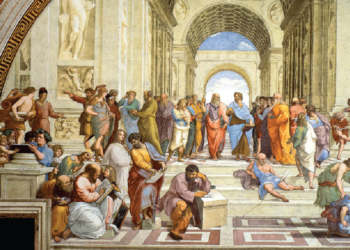
The Renaissance was a period of profound intellectual revival in Europe, spanning the 14th to the 17th centuries. It was marked by a renewed interest in the classical texts and ideas of ancient Greece and Rome, which significantly influenced art, science, literature, and philosophy. Among the various strands of classical thought that were rediscovered and revitalised during this time, Platonism held a particularly influential position. Platonism, based on the teachings of the ancient Greek philosopher Plato, emphasises the existence of abstract, non-material forms or ideas that represent the most accurate reality. This philosophy experienced a renaissance of its own, becoming a cornerstone of Renaissance humanism.
During the Middle Ages, much of Plato’s work had been overshadowed by Aristotelian philosophy, which was more aligned with the scholastic tradition of the time. However, the fall of Constantinople in 1453 brought a wave of Greek scholars to the West, carrying with them manuscripts of Platonic texts. This influx of knowledge sparked a revival of interest in Platonic philosophy. Renaissance thinkers found in Plato a source of inspiration that was compatible with their pursuit of beauty, truth, and the divine. Platonism offered a framework that could be harmonised with Christian theology, providing a philosophical underpinning for the period’s burgeoning humanist ideals.
The rediscovery of Plato’s works catalysed the formation of new intellectual centres, most notably the Platonic Academy in Florence. This was not a formal institution but rather an informal gathering of scholars dedicated to the study and dissemination of Platonic thought. Key figures in this revival included Giovanni Pico della Mirandola, who sought to synthesize various philosophical traditions, and Nicholas of Cusa, whose mystical approach to Platonism influenced later thinkers. These scholars emphasised the potential for human beings to attain higher knowledge and spiritual enlightenment, aligning Platonic philosophy with Christian eschatology and mysticism.
Marsilio Ficino played a pivotal role in this Platonic renaissance. Born in 1433, Ficino was a central figure in the intellectual life of Florence, thanks to the patronage of Cosimo de’ Medici. Ficino’s most significant contribution was his translation of all of Plato’s works from Greek into Latin, a monumental task completed between 1463 and 1484. This translation made Plato’s ideas accessible to a wider European audience, ensuring that his philosophy could be studied and integrated into the broader currents of Renaissance thought.
Ficino’s work went beyond mere translation; he provided extensive commentaries on Plato’s dialogues, interpreting them in ways that harmonised with Christian doctrine. His interpretations were deeply influenced by Neoplatonism, a philosophical system that emerged in the 3rd century AD, which Ficino saw as a bridge between Platonic thought and Christian theology. Neoplatonism posited a single source of all existence, often identified with the divine, from which everything emanates. Ficino adopted this framework to argue that the material world is a reflection of higher, spiritual realities, and that the human soul’s ultimate goal is to reunite with the divine.
In his seminal work, “Theologia Platonica,” Ficino elaborates on the immortality of the soul, synthesising Platonic and Christian ideas to argue that the soul’s eternal destiny is to return to its divine origin. This work was groundbreaking in that it provided a comprehensive philosophical system that integrated Platonic metaphysics with Christian soteriology. Ficino’s emphasis on the soul’s ascent to the divine resonated with the Renaissance humanist belief in the potential for human improvement and perfection.
Ficino also introduced the concept of Platonic love, derived from his readings of Plato’s “Symposium” and “Phaedrus.” He reinterpreted these dialogues to propose that true love is an appreciation of divine beauty reflected in others, which elevates the soul towards a higher understanding and unity with God. This idea was influential in Renaissance culture, shaping notions of romantic and spiritual love in literature, art, and philosophy.
Furthermore, Ficino’s interest in astrology and its relationship to the divine order of the cosmos was another significant aspect of his Platonism. He believed that the stars and planets exerted a profound influence on human affairs, reflecting the divine will. His work “De Vita Libri Tres” integrates astrological insights with medical knowledge, presenting a holistic view of the human condition that aligns with the Platonic idea of a harmonious, interconnected universe.
5) His Legacy
Marsilio Ficino’s impact on the intellectual landscape of the Renaissance and beyond is profound and multifaceted. His legacy is evident in the fields of philosophy, theology, literature, and even science, where his ideas helped shape the course of Western thought for centuries. Ficino’s work was instrumental in reviving interest in Platonism and integrating it into the Christian tradition, thus influencing a broad spectrum of intellectual pursuits.
One of Ficino’s most enduring contributions is his role in the revival of Platonic philosophy during the Renaissance. By translating the complete works of Plato into Latin, Ficino made these texts accessible to scholars throughout Europe. This effort reintroduced Platonic ideas into the Western philosophical canon, providing a crucial alternative to the prevailing Aristotelian framework that had dominated medieval scholasticism. Ficino’s translations were widely read and disseminated, serving as the foundation for subsequent Renaissance and early modern thought. His translations were not merely linguistic feats but also interpretive acts that brought Plato’s ideas into dialogue with contemporary Christian beliefs.
Ficino’s philosophical writings, particularly his “Theologia Platonica,” had a significant impact on the development of Renaissance Neoplatonism. This work, which argued for the immortality of the soul and the existence of a hierarchy of beings culminating in God, offered a synthesis of Platonic and Christian ideas that resonated deeply with Renaissance humanists. His vision of the cosmos as a harmonious, ordered structure, where everything emanates from a single divine source, influenced many thinkers, including Giovanni Pico della Mirandola, who further elaborated on these themes in his own works.
The concept of Platonic love, as reinterpreted by Ficino, also left a lasting mark on Renaissance culture. Ficino’s idea that true love is a means of ascending towards the divine, appreciating the reflection of divine beauty in others, transformed contemporary notions of love and beauty. This concept was influential in the arts and literature, inspiring poets, artists, and writers to explore themes of idealised love and spiritual beauty. Ficino’s influence can be seen in the works of poets like Petrarch and Dante, who also grappled with the relationship between earthly and divine love.
Ficino’s integration of astrology into his philosophical and medical writings contributed to the Renaissance understanding of the cosmos. In “De Vita Libri Tres,” he argued that the stars and planets influence human health and destiny, reflecting a divine cosmic order. This work bridged the gap between science and spirituality, demonstrating Ficino’s holistic approach to knowledge. Although astrology later fell out of favour as a scientific discipline, Ficino’s ideas about the interconnectedness of the cosmos continued to influence thinkers like Johannes Kepler, who sought to understand the mathematical and spiritual harmony of the universe.
Beyond his direct intellectual contributions, Ficino’s establishment of the Platonic Academy in Florence created a vibrant intellectual community that fostered the exchange of ideas and the pursuit of knowledge. The Academy, though informal, became a centre for scholarly activity and discussion, attracting figures such as Pico della Mirandola and Angelo Poliziano. This environment not only facilitated the spread of Platonic and Neoplatonic ideas but also contributed to the broader cultural and intellectual revival of the Renaissance.
Ficino’s influence extended well beyond his lifetime. His works were studied and admired by philosophers and theologians in the centuries following the Renaissance. In the 17th century, his ideas were taken up by figures in the Cambridge Platonists, a group of English philosophers who sought to reconcile Christianity with humanist and Platonic thought. Ficino’s emphasis on the compatibility of faith and reason, and his vision of a harmonious universe governed by divine principles, resonated with these later thinkers.
In modern times, Ficino is recognised as a key figure in the history of Western philosophy and spirituality. His efforts to synthesise ancient philosophy with Christian theology are seen as a pivotal moment in the development of Renaissance humanism. Scholars continue to study his works for their rich insights into the philosophical and religious currents of the Renaissance. Ficino’s legacy endures in the ongoing interest in Neoplatonism and the study of the Renaissance as a period of profound intellectual transformation.