
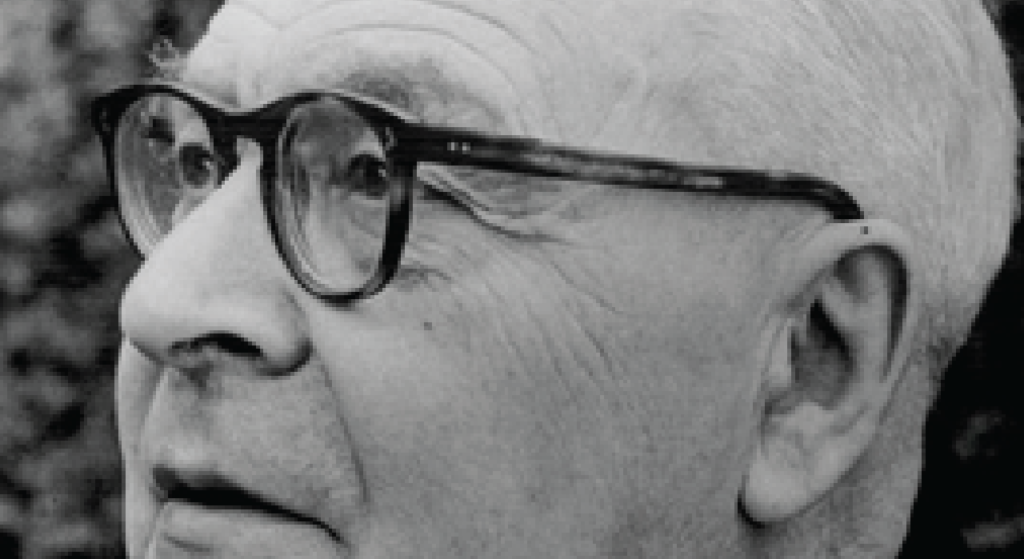
1) His Biography
Georges Dumezil, a distinguished French scholar, was born on March 4, 1898, in Paris. From an early age, Dumezil displayed a keen intellect and a profound interest in linguistics, mythology, and comparative religion. His academic journey began at the prestigious École Normale Supérieure in Paris, where he studied classics and philosophy. It was during this time that Dumezil developed a fascination with the Indo-European linguistic family and its connections to ancient mythologies.
After completing his studies, Dumezil embarked on a remarkable career in academia, marked by groundbreaking research and prolific publications. He served as a professor at various institutions, including the University of Istanbul, where he delved deeper into the study of comparative mythology and folklore. Dumezil’s academic pursuits took him across Europe, from France to Italy, where he continued to unravel the intricate connections between language, culture, and myth.
Dumezil’s scholarly contributions were vast and multifaceted. His early works focused on the linguistic aspects of Indo-European mythology, exploring the common themes and motifs found in the ancient texts of different cultures. One of his seminal works, “The Destiny of the Warrior,” examined the role of the warrior class in Indo-European societies and its symbolic significance in mythology.
In addition to his academic pursuits, Dumezil was also actively involved in the resistance movement during World War II, opposing the Nazi occupation of France. His courage and dedication to the cause earned him admiration and respect from his peers and colleagues. After the war, Dumezil resumed his academic career with renewed vigour, continuing to publish influential works that shaped the field of comparative mythology.
Throughout his career, Dumezil’s scholarship was characterised by its interdisciplinary approach, drawing from fields such as linguistics, anthropology, and archaeology. He pioneered the concept of trifunctionalism, which posited that Indo-European societies were structured around three main social functions: sovereignty, warriors, and producers. This framework provided a new lens through which to interpret ancient mythologies and societal structures.
Despite facing criticism and controversy at times, Dumezil’s influence on the study of mythology and religion was undeniable. His works continue to be studied and debated by scholars around the world, shaping our understanding of the cultural and linguistic roots of human civilisation. Georges Dumezil passed away on October 11, 1986, leaving behind a rich legacy of scholarship and intellectual inquiry that continues to inspire generations of researchers.
2) Main Works
The Destiny of the Warrior (1938):
In this seminal work, Georges Dumezil explores the role of the warrior class in Indo-European societies and its symbolic significance in mythology. Drawing on extensive linguistic and comparative analysis, Dumezil examines the various manifestations of the warrior archetype across different cultures, from the Norse gods to the Roman legions. Through a meticulous study of ancient texts and myths, he uncovers the underlying patterns and themes that characterise the warrior’s journey, shedding light on its importance in shaping societal values and structures.
Mitra-Varuna: An Essay on Two Indo-European Representations of Sovereignty (1940):
This influential essay delves into the symbolic representations of sovereignty in Indo-European mythology, focusing on the deities Mitra and Varuna. Dumezil analyses the contrasting roles and attributes of these two gods, exploring how they embody different aspects of divine authority and cosmic order. Through a comparative study of Vedic, Iranian, and Roman sources, he reveals the underlying conceptual framework that underpins these representations of sovereignty, highlighting their significance in shaping religious and social hierarchies.
Archaic Roman Religion (1956):
In this comprehensive study, Dumezil examines the religious beliefs and practices of ancient Rome, tracing their origins and development from the prehistoric period to the early Republic. Drawing on a wide range of textual and archaeological evidence, he reconstructs the rituals, myths, and cults that formed the foundation of Roman religion. Dumezil’s analysis sheds light on the complex interplay between religious ideology, political power, and social structure in ancient Rome, offering new insights into the spiritual and cultural life of the Roman people.
The Indo-Europeans (1960):
This monumental work provides a sweeping overview of Indo-European society, culture, and language, from its origins in the Eurasian steppes to its expansion and diversification across Europe and Asia. Dumezil traces the linguistic and cultural connections between different branches of the Indo-European family, exploring their shared myths, rituals, and social institutions. Through a comparative analysis of archaeological, linguistic, and ethnographic evidence, he paints a vivid portrait of the Indo-European world and its enduring legacy in modern civilisation.
Myth and Epic (1968):
In this seminal volume, Dumezil explores the relationship between myth and epic poetry in Indo-European traditions, examining how these narrative forms intersect and influence each other. Drawing on a wide range of literary and mythological sources, he analyses the structural and thematic similarities between epic narratives such as the Iliad and the Odyssey and the myths of gods and heroes. Dumezil’s study sheds light on the dynamic interplay between oral tradition, literary composition, and cultural memory in shaping the epic traditions of ancient and medieval societies.
3) Main Themes
Trifunctionalism:
Georges Dumezil’s concept of trifunctionalism proposes that Indo-European societies were structured around three main social functions: sovereignty, warriors, and producers. This framework, first introduced in his seminal work “The Destiny of the Warrior,” represents a significant departure from earlier interpretations of Indo-European society. Dumezil argues that these three functions are not only hierarchical but also interdependent, forming the basis of social order and cultural identity.
One aspect of Dumezil’s trifunctional model is its emphasis on the ideological and symbolic significance of each social function. For example, the function of sovereignty, represented by deities such as Varuna in Vedic mythology, embodies the concept of cosmic order and divine authority. Similarly, the warrior function, associated with gods like Indra and Thor, represents strength, courage, and martial prowess.
Dumezil’s trifunctionalism also highlights the dynamic interactions and tensions between different social groups within Indo-European societies. For instance, the relationship between sovereigns and warriors is characterised by a reciprocal exchange of power and prestige, as seen in rituals such as the Indo-European sacrifice. This aspect of Dumezil’s theory distinguishes it from earlier evolutionary models of social development, which tended to view societies as progressing through fixed stages of development.
Comparative Mythology:
Dumezil’s approach to mythology is deeply rooted in comparative analysis, drawing on a wide range of Indo-European sources to identify common themes, motifs, and archetypes. In works such as “Mitra-Varuna” and “Myth and Epic,” he explores the structural and functional similarities between myths from different cultures, demonstrating their shared cultural heritage and underlying patterns of meaning.
One key aspect of Dumezil’s comparative methodology is his emphasis on linguistic evidence as a primary tool for reconstructing ancient mythological systems. By tracing the etymological connections between gods, heroes, and mythical concepts across Indo-European languages, he uncovers deeper layers of meaning and symbolism. This linguistic approach sets Dumezil apart from earlier mythologists such as Max Müller, who relied more heavily on philological and historical methods.
Dumezil’s comparative approach also highlights the dynamic nature of mythological traditions, which evolve and adapt over time in response to changing social, political, and cultural contexts. For example, he examines how the myths of Indo-European gods and heroes are reshaped and reinterpreted in different cultural settings, reflecting local beliefs and values. This aspect of Dumezil’s methodology enriches our understanding of the fluidity and diversity of mythological traditions across the Indo-European world.
Indo-European Studies:
A central theme in Dumezil’s work is the study of the Indo-European linguistic family and its implications for understanding the cultural and historical development of ancient societies. In “The Indo-Europeans,” he offers a comprehensive overview of Indo-European society, language, and culture, synthesising evidence from linguistic, archaeological, and ethnographic sources.
One aspect of Dumezil’s contribution to Indo-European studies is his emphasis on the unity and diversity of the Indo-European language family. Unlike earlier scholars who focused primarily on linguistic reconstruction, Dumezil explores the broader implications of Indo-European unity for understanding the origins of Indo-European culture and society.
Dumezil’s interdisciplinary approach to Indo-European studies also highlights the interconnectedness of language, myth, and social organisation in ancient societies. By integrating insights from fields such as anthropology, archaeology, and comparative mythology, he offers a more holistic understanding of Indo-European culture and its enduring legacy in modern civilisation. This interdisciplinary approach distinguishes Dumezil’s work from earlier philologists such as Friedrich Max Müller, who tended to focus more narrowly on linguistic and textual analysis.
Structuralism in Mythology:
Georges Dumezil’s work is often associated with structuralist approaches to mythology, which focus on identifying underlying patterns and organizing principles in mythological narratives. Building on the ideas of scholars like Claude Lévi-Strauss, Dumezil argues that myths are structured according to binary oppositions and recurring themes that reflect deep-seated cultural norms and values.
One aspect of Dumezil’s structuralist approach is his exploration of the tripartite structure of Indo-European mythology, as exemplified by his concept of trifunctionalism. By analysing the distribution of gods and heroes into three distinct social functions – sovereignty, warriors, and producers – Dumezil identifies recurring patterns of hierarchy, reciprocity, and conflict in mythological narratives.
Dumezil’s structuralist methodology also highlights the importance of mythological motifs and symbols as vehicles for expressing fundamental cultural concepts and ideologies. For example, he examines how the motif of the divine twins, found in myths across the Indo-European world, represents a symbolic duality between complementary forces such as life and death, order and chaos. This structuralist interpretation enriches our understanding of the deeper meanings encoded in mythological texts and rituals.
Myth and Ritual:
Another central theme in Georges Dumezil’s work is the relationship between myth and ritual in Indo-European societies. Drawing on the ideas of scholars like Émile Durkheim and Mircea Eliade, Dumezil argues that myths and rituals are closely intertwined, serving as complementary expressions of religious and social values.
One aspect of Dumezil’s analysis is his exploration of the performative dimensions of mythological narratives, which often function as scripts or templates for ritual action. By analysing the ritual contexts in which myths are recited or enacted, Dumezil reveals how they shape and reinforce social bonds, communal identities, and religious beliefs.
Dumezil’s emphasis on the functional significance of myth and ritual in Indo-European societies challenges earlier interpretations that viewed them primarily as literary or symbolic phenomena. Instead, he argues that myths and rituals serve practical purposes, such as maintaining social order, legitimising political power, and fostering solidarity among community members. This functionalist approach highlights the dynamic relationship between religious symbolism and social practice in ancient and medieval cultures.
4) Dumezil as Linguist
Georges Dumezil’s contributions to the field of linguistics are profound and multifaceted, encompassing both theoretical insights and practical applications. As a linguist, Dumezil was particularly interested in the study of the Indo-European language family and its implications for understanding the cultural and historical development of ancient societies. His work in this area laid the foundation for new approaches to comparative linguistics and historical phonology.
One aspect of Dumezil’s linguistic scholarship is his pioneering research in etymology, the study of the origins and development of words. Drawing on his extensive knowledge of Indo-European languages, Dumezil conducted detailed analyses of lexical and morphological correspondences across different language branches. By tracing the evolution of words and linguistic features from their Indo-European roots to their modern descendants, he provided valuable insights into the linguistic history of Europe and Asia.
Dumezil’s linguistic expertise also extended to the study of sound changes and phonological patterns in Indo-European languages. In his influential work “The Indo-Europeans,” he explored the systematic phonetic correspondences between different language branches, such as Sanskrit, Latin, Greek, and Celtic. Through meticulous comparative analysis, Dumezil identified recurrent sound shifts and phonetic laws that helped to reconstruct the phonological inventory of Proto-Indo-European, the hypothetical ancestor of all Indo-European languages.
Furthermore, Dumezil’s linguistic insights were instrumental in shaping his comparative approach to mythology and religion. He recognised the close relationship between language, myth, and culture, arguing that linguistic evidence provides valuable clues to the shared cultural heritage of Indo-European peoples. By analysing the linguistic cognates and semantic associations of mythological motifs and divine names, Dumezil revealed deeper layers of meaning and symbolism in Indo-European mythological traditions.
Dumezil’s contributions as a linguist also extended beyond the study of Indo-European languages. He was deeply interested in the linguistic diversity of the world and the principles underlying language structure and change. His interdisciplinary approach to linguistics, drawing on insights from anthropology, psychology, and cognitive science, paved the way for new methodologies and theoretical frameworks in linguistic typology and historical linguistics.
5) His Legacy
Georges Dumezil’s legacy in the fields of comparative mythology, linguistics, and Indo-European studies is enduring and far-reaching, leaving an indelible mark on the academic landscape. Through his groundbreaking research, innovative methodologies, and interdisciplinary approach, Dumezil transformed our understanding of ancient societies, languages, and mythological traditions.
One aspect of Dumezil’s legacy is his conceptual framework of trifunctionalism, which revolutionised the study of Indo-European societies and their mythologies. By proposing that Indo-European cultures were structured around three main social functions – sovereignty, warriors, and producers – Dumezil provided a new lens through which to interpret ancient texts, rituals, and social institutions. This framework continues to inform scholarly debates and research on the ideological and structural dimensions of ancient societies.
Furthermore, Dumezil’s comparative approach to mythology has had a profound impact on the study of world religions and cultural heritage. His emphasis on identifying underlying patterns and motifs in mythological narratives, as well as his meticulous linguistic analysis of mythological texts, laid the foundation for new methodologies in comparative mythology and religious studies. Dumezil’s insights into the symbolic meanings and cultural significance of myths have inspired generations of scholars to explore the rich diversity of human belief systems and spiritual traditions.
In the field of linguistics, Dumezil’s contributions have likewise left an indelible mark, particularly in the study of the Indo-European language family. His pioneering research in historical phonology, etymology, and linguistic typology has shaped our understanding of language evolution, sound change, and language contact. Dumezil’s interdisciplinary approach to linguistics, drawing on insights from anthropology, psychology, and cognitive science, has expanded the horizons of linguistic inquiry and inspired new avenues of research.
Beyond his scholarly achievements, Dumezil’s legacy also includes his role as a public intellectual and cultural commentator. His writings and lectures on mythology, folklore, and the history of religions have reached a wide audience, sparking interest and curiosity in the cultural heritage of humanity. Dumezil’s commitment to intellectual rigour, scholarly integrity, and interdisciplinary dialogue continues to inspire scholars and students alike to pursue knowledge and understanding across disciplinary boundaries.