
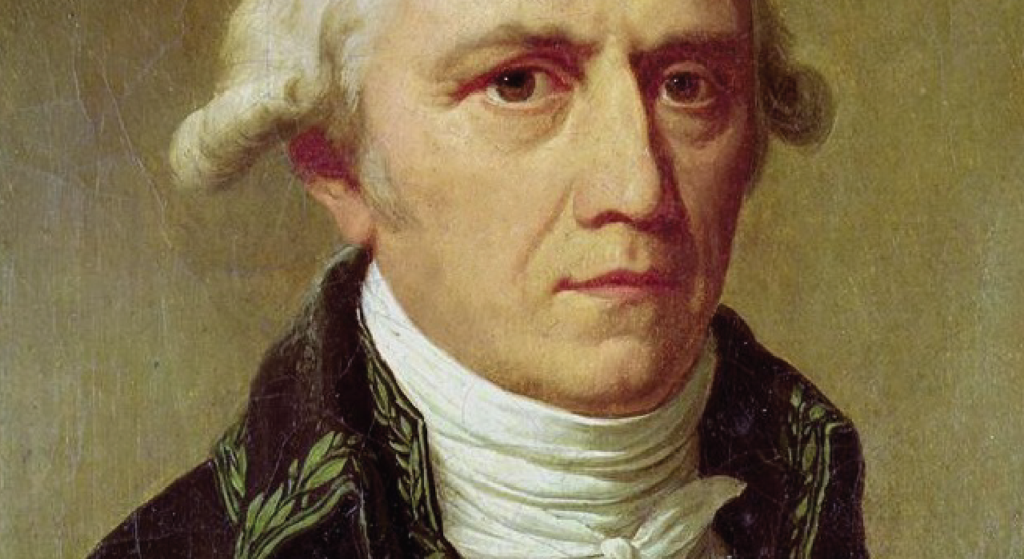
1) His Biography
Jean-Baptiste de Lamarck, born on 1 August 1744 in Bazentin, in the Picardy region of northern France, emerged as one of the most influential figures in the early development of biological thought. Originally destined for a career in the military, Lamarck served as a soldier in his youth, distinguishing himself with bravery during the Seven Years’ War. However, an injury forced him to retire early, prompting a dramatic shift in his life’s direction. He turned to the study of medicine and botany in Paris, where he developed a passion for natural history. This transition marked the beginning of his lifelong devotion to understanding the diversity and organisation of living forms — a pursuit that would ultimately redefine the boundaries of natural science.
Lamarck’s initial scientific achievements were rooted in botany. He became a student of the celebrated naturalist Bernard de Jussieu and devoted himself to the study of French flora. His first major publication, Flore française (1778), was a monumental three-volume work that introduced a new, practical method for identifying plants based on their physical characteristics. The clarity and accessibility of his system drew the attention of prominent figures in science and politics, including Georges-Louis Leclerc, Comte de Buffon, and earned Lamarck admission to the prestigious Académie des Sciences. His botanical reputation secured his appointment as a royal botanist, leading him on numerous expeditions throughout Europe to collect and catalogue plant specimens.
In 1793, following the French Revolution and the reorganisation of scientific institutions, Lamarck was appointed professor of “insects, worms, and microscopic animals” at the newly founded Muséum National d’Histoire Naturelle in Paris. It was here that his intellectual focus expanded from botany to zoology and eventually to the broader philosophical questions of biology. Tasked with studying creatures that were then poorly understood, he coined the term “invertebrates” and produced the first systematic classification of these animals. This period marked a turning point in his career, as he began to explore deeper theoretical questions about the relationships among living beings and their capacity for change over time.
Lamarck’s later work was characterised by his attempts to develop a comprehensive theory of life’s organisation and transformation. His Philosophie zoologique (1809) introduced the revolutionary concept that species are not fixed but evolve through gradual adaptation to their environments. This idea, often summarised by the principle of the inheritance of acquired characteristics, represented one of the earliest coherent evolutionary theories in Western science. Although later overshadowed by Darwin’s theory of natural selection, Lamarck’s insistence on the mutability of species laid critical groundwork for future evolutionary biology and challenged the prevailing belief in the immutability of creation.
Despite his scientific innovations, Lamarck’s career was not without hardship. His evolutionary ideas were controversial, frequently dismissed by contemporaries such as Georges Cuvier, who championed the opposing doctrine of species fixity and catastrophism. Lamarck struggled to gain institutional support and financial stability, particularly in his later years when his eyesight began to fail. Nevertheless, he continued his research and writing, dictating his final works from memory and demonstrating extraordinary perseverance in the face of adversity.
Lamarck’s personal life was marked by modest means and intellectual independence. He married four times and fathered several children, but his financial situation remained precarious throughout his life. Unlike many of his peers, he never achieved wealth or high social standing, relying instead on his teaching position at the museum. His dedication to his work, however, remained unwavering, and his home in Paris became a centre of intellectual exchange where students and naturalists came to discuss the emerging questions of life and its diversity.
He died in Paris on 18 December 1829, nearly blind and largely unrecognised by the scientific establishment of his time. Only later would his name gain the prominence it deserved, as biologists came to understand the historical significance of his evolutionary thought. Though his specific mechanisms of change would later be refuted, Lamarck’s broader vision — that life is dynamic, interconnected, and responsive to its environment — proved foundational for modern biology. His life story, marked by persistence, innovation, and intellectual courage, remains a testament to the enduring spirit of scientific inquiry.
2) Main Works
Flore française (1778)
Lamarck’s first major publication and one of the most important botanical works of eighteenth-century France. This three-volume text offered a systematic description of French flora, organised according to a practical and user-friendly classification system. Unlike earlier botanical works, Flore française allowed identification of plants through easily observable characteristics rather than obscure technical details. It was accompanied by an innovative dichotomous key, which simplified plant identification for amateurs and scholars alike. The book established Lamarck’s reputation as a leading botanist and earned him entry into the Académie des Sciences.
Dictionnaire de botanique (1783–1817)
A comprehensive botanical dictionary that Lamarck began as part of the Encyclopédie méthodique. This monumental undertaking provided detailed descriptions of plant genera, classifications, and botanical terminology. It synthesised existing botanical knowledge while incorporating Lamarck’s original insights into plant physiology and organisation. The dictionary remained an essential reference work for decades and demonstrated Lamarck’s mastery of systematic description and his commitment to making scientific knowledge accessible.
Hydrogéologie (1802)
One of Lamarck’s lesser-known but philosophically significant works, Hydrogéologie addressed geological and cosmological questions rather than botany. In it, Lamarck proposed that the Earth’s features had developed gradually through the slow, continuous action of water and other natural forces, challenging the then-dominant catastrophic explanations of geological change. This work reflected his belief in gradualism and continuity — principles that would later inform his evolutionary theories. It also marked one of the earliest attempts to apply natural law uniformly to both the living and non-living world.
Système des animaux sans vertèbres (1801)
A groundbreaking zoological classification of animals without backbones, in which Lamarck introduced the term “invertebrates.” This work provided the first comprehensive organisation of these species, distinguishing them into coherent taxonomic groups. His classification system, based on anatomical and physiological characteristics, corrected numerous misconceptions and remains a cornerstone in zoological taxonomy. It was during this period that Lamarck began to articulate his broader ideas about the gradual transformation of species and the continuity of life forms.
Philosophie zoologique (1809)
Lamarck’s most famous and controversial work, Philosophie zoologique presented his evolutionary theory in a systematic form. He proposed that organisms evolve through the inheritance of acquired characteristics — that is, traits developed through use or disuse are passed to offspring. This mechanism explained the adaptation of organisms to their environments and the increasing complexity of life over time. The book also outlined Lamarck’s “ladder of life” concept, which arranged living organisms in a progressive hierarchy from simple to complex. Although criticised by contemporaries such as Cuvier, Philosophie zoologique profoundly influenced later thinkers and remains one of the earliest formal articulations of evolutionary theory.
Histoire naturelle des animaux sans vertèbres (1815–1822)
This seven-volume work represented the culmination of Lamarck’s zoological research. It expanded upon his earlier classification of invertebrates, providing detailed descriptions of anatomy, physiology, and ecological behaviour. More than a taxonomy, it was a philosophical reflection on the organisation of life and the relationships between species. Lamarck further refined his evolutionary ideas here, presenting empirical evidence for gradual transformation and the adaptation of organisms to environmental pressures. The work became a foundational reference in zoology and showcased his extraordinary depth of observation and synthesis.
Cours de zoologie (published posthumously, 1830)
Based on Lamarck’s lectures at the Muséum National d’Histoire Naturelle, this work summarised his teaching on the organisation and classification of animals. It served both as a pedagogical manual and as a reflection of his mature scientific thought. The text reinforced his conviction that biological diversity could only be understood through the principles of gradual change and adaptation. Although less known than his major published works, the Cours captures Lamarck’s role as both a scientist and educator who sought to convey the unity of life within a dynamic natural order.
3) Main Themes
Evolution through the Inheritance of Acquired Characteristics
One of the central themes in Lamarck’s thought was the belief that organisms could pass on traits acquired during their lifetimes to their offspring. This principle, often summarised as the inheritance of acquired characteristics, posited that an individual’s interaction with its environment could lead to physical or behavioural changes that were heritable. For instance, Lamarck famously suggested that giraffes developed long necks because generations of their ancestors stretched to reach high leaves, a change gradually transmitted to their descendants. Though later supplanted by Darwinian natural selection and modern genetics, this concept represented an early systematic attempt to explain adaptation and species transformation through natural processes rather than divine intervention.
The Gradual Transformation of Species
Lamarck’s theory rejected the static notion of species fixed since creation, proposing instead that life evolved continuously through gradual modification. He envisioned a natural hierarchy, where simple organisms gave rise to more complex forms through successive generations. This progressive view of life placed emphasis on transformism, the belief that species evolve rather than appear fully formed. Lamarck’s insistence on continuous change laid the groundwork for later evolutionary theories and was one of the first explicit articulations of biological evolution as a natural, law-bound process.
The Role of Environment in Shaping Organisms
Environmental influence was a cornerstone of Lamarck’s biological philosophy. He argued that the environment directly affected organisms by shaping their needs, habits, and physical structures. According to Lamarck, the interaction between an organism and its surroundings led to changes in behaviour, which in turn modified anatomy and physiology over time. This view positioned the environment as an active agent in evolution—a concept that resonates even in modern ecological and evolutionary biology, though understood today through the lens of gene-environment interaction rather than direct inheritance of acquired traits.
Classification and the Organisation of Life
Lamarck made significant contributions to taxonomy by proposing a systematic organisation of life based on complexity. He developed one of the earliest evolutionary trees, arranging living beings from the simplest to the most complex, which he termed the “échelle des êtres” or “chain of being.” In works like Système des Animaux sans Vertèbres, he classified invertebrates into coherent groups and coined the very term “invertebrates.” His classification system was revolutionary for its time, as it reflected both the anatomical relationships and evolutionary connections among species, moving biology towards a more dynamic, relational understanding of life.
Spontaneous Generation and the Origin of Life
Lamarck believed that life could spontaneously arise from non-living matter, particularly in the simplest forms such as microscopic organisms. He posited that this process occurred continually, replenishing the base of the evolutionary hierarchy. For Lamarck, spontaneous generation explained the presence of simple life forms even as evolution drove others towards complexity. Although later disproved, this concept demonstrated his commitment to a fully naturalistic account of life’s origin, devoid of supernatural causes—an idea that advanced the scientific spirit of the Enlightenment.
The Concept of “Use and Disuse”
Closely tied to his evolutionary theory was the notion that organs and traits strengthened through frequent use and weakened through neglect. Lamarck observed that the physical and behavioural activities of organisms shaped their anatomy over time—muscles developed with use, and redundant organs diminished. This principle of “use and disuse” illustrated his broader belief in the plasticity of living organisms and their capacity to adapt to environmental challenges. Though later refined by biomechanics and genetics, the concept introduced a mechanistic explanation for physiological change within species.
The Philosophy of Nature and Vitalism
Underlying Lamarck’s biology was a philosophical conviction that life was governed by a vital force distinct from inert matter. His Philosophie zoologique explored this “vitalism,” suggesting that living beings possessed an intrinsic drive towards greater complexity. For Lamarck, this vital force propelled the continuous creation and development of life forms, infusing nature with purpose and direction. While modern biology has replaced vitalism with biochemical explanations, Lamarck’s vision highlighted the uniqueness of living systems and inspired generations of naturalists to seek underlying principles of organisation and growth.
4) Jean-Baptiste as acBotanist
Jean-Baptiste de Lamarck began his scientific career as a botanist, and it was within this discipline that his systematic and evolutionary thinking first took shape. Initially trained for the priesthood and later serving in the French army, Lamarck’s interest in nature emerged after his military service, leading him to study plants with an intensity that soon gained recognition. His early botanical research was grounded in meticulous observation and classification, reflecting the influence of the Enlightenment’s passion for order and empirical knowledge. In 1778, he published Flore française, a landmark text that established him as one of France’s foremost botanists. The work’s innovative use of dichotomous keys for plant identification made it accessible to amateurs and professionals alike, thereby democratising botanical science in an era when it was often confined to the academic elite.
Lamarck’s botanical work was remarkable for its methodological precision and practical utility. Flore française did not merely describe plants—it introduced a new systematic framework for identifying them based on observable characteristics. His approach encouraged direct engagement with the natural world, urging students and scholars to rely on fieldwork rather than solely on preserved specimens. This field-based approach revolutionised French botany by grounding it in empirical observation rather than inherited authority. It also reflected Lamarck’s broader intellectual philosophy: that nature’s patterns could be discovered through careful, methodical study, and that classification should reflect natural relationships rather than arbitrary human designations.
As the curator of the King’s Garden (later the Jardin des Plantes) in Paris, Lamarck played a pivotal role in reorganising and expanding the nation’s botanical collections. His efforts led to the systematic cataloguing of thousands of plant species, many gathered from France’s growing colonial territories. He sought to integrate these exotic specimens into a coherent taxonomic structure, emphasising their morphological similarities and evolutionary potential. This organisational work demonstrated his belief in a natural order that connected all living beings—a conviction that would later form the foundation of his evolutionary theory.
Lamarck’s botanical thinking also extended beyond taxonomy to the broader philosophical question of plant life. He viewed plants as dynamic organisms capable of responding to environmental stimuli, exhibiting what he described as “movements” and adaptive changes. This idea departed from the dominant mechanistic view of plants as passive entities and instead portrayed them as active participants in the natural order. His reflections on plant physiology anticipated later research in plant adaptation and ecological responsiveness, making him an early forerunner of ecological thought.
Furthermore, Lamarck’s botanical work displayed his growing interest in the relationship between form and function. He observed that a plant’s structure reflected its adaptation to particular environmental conditions—an insight that foreshadowed his later theories of evolution. For instance, he noted how different leaf shapes, root systems, and reproductive mechanisms were suited to specific climates and terrains. This focus on environmental adaptation represented a conceptual shift from static classification to dynamic, functional understanding, highlighting his progression from descriptive natural history to theoretical biology.
His time as a professor of botany at the Jardin du Roi also allowed Lamarck to influence a generation of students and naturalists. He emphasised observation, experimentation, and the interconnection of all living systems. Under his supervision, the Jardin became a centre for botanical innovation, blending teaching, research, and public education. Lamarck’s pedagogical style, which combined clarity with curiosity, encouraged his students to perceive plants not merely as specimens but as vital components of ecological systems.
Lamarck’s botanical career laid the intellectual groundwork for his later contributions to zoology and evolutionary theory. His detailed study of plants taught him to perceive continuity and variation within nature, preparing him to challenge the notion of fixed species. In many ways, his evolutionary thought was an extension of his botanical insights—born from a profound awareness of how living organisms respond to and interact with their environments. Thus, Lamarck’s legacy as a botanist is not confined to his taxonomic achievements but extends to his role as one of the first thinkers to view plant life as part of a continuous, evolving natural order.
5) His Legacy
Jean-Baptiste de Lamarck’s legacy is one of both remarkable innovation and enduring controversy. Although many of his scientific propositions were later superseded by Darwinian and modern genetic theories, Lamarck occupies a foundational place in the history of biology for his pioneering articulation of evolutionary thought. Before Darwin, few dared to suggest that species changed over time, let alone to explain such transformation through natural processes. Lamarck’s theory of the transmutation of species provided a coherent framework that challenged the prevailing notion of fixed creation. By proposing that life evolved progressively from simpler to more complex forms, he transformed biology into a historical science, one concerned not merely with classification but with the origins and development of life itself.
In his own lifetime, Lamarck’s ideas were often met with scepticism or outright dismissal, particularly by his contemporaries at the Muséum National d’Histoire Naturelle in Paris. Scientists such as Georges Cuvier, an advocate of species fixity and catastrophism, fiercely opposed Lamarck’s evolutionary vision. Nevertheless, Lamarck’s perseverance in defending his ideas against dominant orthodoxy demonstrated an intellectual courage that later generations of scientists came to admire. Although his name became associated with discredited concepts such as the inheritance of acquired characteristics, his insistence that life followed natural, law-bound processes marked a crucial step in the emancipation of science from theology.
Beyond his theoretical contributions, Lamarck’s impact was also institutional and educational. At the Muséum, he redefined zoological and botanical teaching, introducing a more analytical and systematic curriculum that integrated fieldwork with philosophical reflection. His publications, particularly Philosophie zoologique, encouraged a generation of naturalists to think critically about adaptation, heredity, and the unity of life. Even those who rejected his conclusions could not ignore his methods—his emphasis on observation, classification, and the search for underlying principles of transformation became integral to the scientific method in biology.
Lamarck’s legacy extended into the nineteenth century through the intellectual movements his work inspired. His ideas influenced early evolutionists such as Étienne Geoffroy Saint-Hilaire and Charles Bonnet, as well as socialist thinkers like Pierre-Joseph Proudhon and Karl Marx, who admired his dialectical vision of nature as dynamic and self-transforming. In Russia, his theories found fertile ground among biologists and philosophers who viewed them as compatible with environmental determinism and progressive development. Even after Darwin’s Origin of Species supplanted Lamarckian theory, aspects of his thought persisted in the cultural imagination, symbolising the human capacity for growth, adaptation, and self-improvement.
The twentieth century brought a reassessment of Lamarck’s reputation. With the rise of epigenetics—the study of how environmental factors can influence gene expression across generations—some scientists revisited Lamarck’s intuitions about environmental inheritance. Though the mechanisms differ radically from those Lamarck proposed, the renewed interest in environmentally induced genetic change demonstrated that his vision of dynamic, responsive life systems had not been entirely misplaced. Thus, Lamarck’s name re-emerged not as a relic of scientific error, but as a symbol of the evolutionary imagination.
In philosophical terms, Lamarck’s legacy endures through his belief in nature’s continuity and self-organisation. He rejected the notion of abrupt creation or divine intervention, insisting instead on gradual transformation guided by internal and external forces. This holistic view anticipated later developments in systems biology, ecology, and evolutionary developmental biology. His conviction that life possessed an intrinsic drive towards complexity may no longer be accepted literally, but it remains a poetic metaphor for the creative vitality of nature—a vision that continues to inspire scientists, philosophers, and environmental thinkers alike.
Lamarck’s enduring importance lies not only in what he got wrong, but in what he dared to imagine. His willingness to propose that life changes through natural means marked a turning point in human understanding of the living world. Though history often remembers him as a precursor to Darwin, Lamarck deserves recognition in his own right—as a thinker who, driven by observation and philosophical daring, helped shift the biological sciences from static description to dynamic explanation. His work, both flawed and visionary, remains a monument to the intellectual courage that drives scientific progress.