
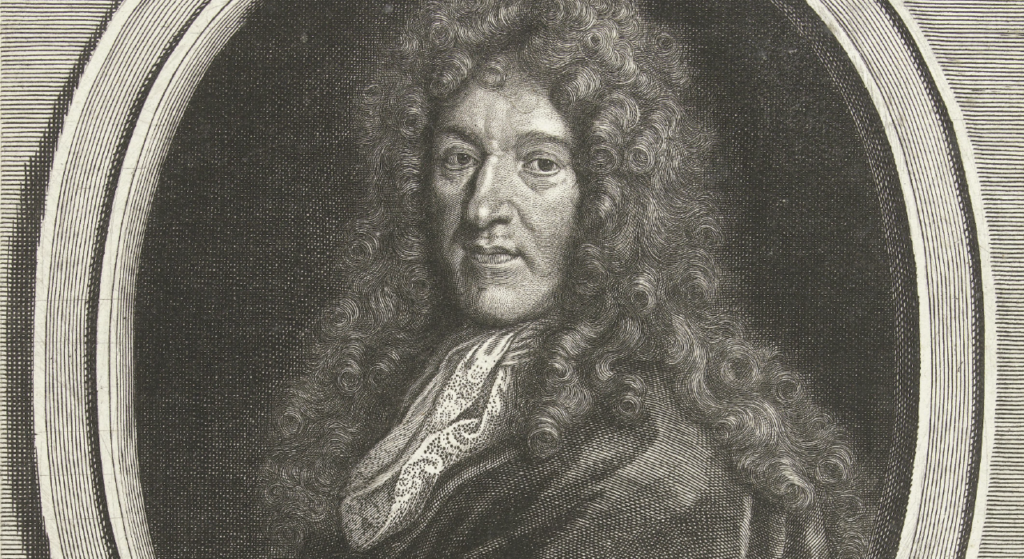
1) His Biography
Jean-Baptiste de La Quintinie was born on 1 March 1626 in Chabanais, a small town in the Charente region of France. Initially, his life seemed destined for a path far removed from horticulture, as his family encouraged him to pursue law. He studied at the Jesuit College of Poitiers and later at the University of Poitiers, where he excelled in legal studies. After earning his law degree, he practised as an advocate in Paris and was quickly recognised for his intelligence, eloquence, and dedication. However, while his legal career was promising, La Quintinie’s true interests lay elsewhere — in the study of nature and the cultivation of plants.
His transition from law to horticulture was gradual but decisive. During his legal practice, La Quintinie frequently visited the estates of French aristocrats, where he became captivated by their gardens and orchards. A visit to Italy in the mid-1650s profoundly influenced his thinking, as he was introduced to the refined art of Italian gardening and the structured elegance of Renaissance horticultural design. Upon returning to France, he devoted himself entirely to gardening, abandoning his legal career to explore the scientific and aesthetic dimensions of plant cultivation. His decision, though unconventional, reflected a growing European fascination with nature and its manipulation through art and science.
La Quintinie’s talents soon caught the attention of the French nobility, who sought his expertise in developing and managing their gardens. His ability to combine scientific precision with artistic sensibility set him apart from other gardeners of his time. He became a sought-after horticultural consultant, designing and maintaining gardens for notable figures such as Jean-Baptiste Colbert, Louis II de Bourbon (the Prince de Condé), and other influential members of the royal court. Through these commissions, La Quintinie gained invaluable experience and refined his methods of fruit tree cultivation and soil management.
The pivotal moment in his career came when King Louis XIV, impressed by his skill and vision, appointed him as the director of the royal fruit and vegetable gardens. Around 1670, La Quintinie was entrusted with creating the Potager du Roi (the King’s Kitchen Garden) at Versailles, a project that would define his legacy. This immense undertaking required both technical ingenuity and organisational brilliance. The garden, designed to supply the royal household with fresh produce year-round, became a marvel of horticultural innovation. La Quintinie’s meticulous approach to soil conditioning, irrigation, and plant protection established new standards for productivity and quality.
Despite the challenges of managing such an ambitious project, La Quintinie’s leadership and deep understanding of plant physiology ensured the garden’s success. His methods were based on careful observation, experimentation, and adaptation to environmental conditions. He introduced techniques for extending growing seasons, perfected pruning methods for fruit trees, and developed ways to cultivate delicate produce even during the winter months. His scientific approach to horticulture placed him at the forefront of agricultural innovation in seventeenth-century France.
Beyond his practical achievements, La Quintinie’s intellectual contributions were equally significant. He documented his findings and reflections in a detailed manuscript that was published posthumously in 1690 as Instruction pour les jardins fruitiers et potagers. This work not only provided practical guidance but also articulated a philosophy of gardening that combined respect for nature with human ingenuity. It became a foundational text for generations of horticulturists, influencing both French and European gardening traditions for decades to come.
Jean-Baptiste de La Quintinie passed away on 11 November 1688 at Versailles, shortly before the publication of his magnum opus. His death marked the end of a remarkable career that bridged science, art, and royal service. Yet his legacy endured, embodied in the enduring splendour of the Potager du Roi and the principles of rational horticulture he helped to establish. La Quintinie transformed gardening from a decorative pastime into a disciplined science, leaving an indelible mark on the cultural and botanical landscape of France.
2) Main Works
Instruction pour les jardins fruitiers et potagers (1690)
This is La Quintinie’s magnum opus, published two years after his death by his son Michel de La Quintinie. It represents the culmination of decades of experience, experimentation, and scientific observation. The book is divided into two main parts: the first dealing with fruit trees and the second with kitchen gardens. In the section on fruit trees, La Quintinie outlines in remarkable detail the proper methods for grafting, pruning, and training various species, including figs, pears, peaches, and apples. His emphasis on timing, soil preparation, and exposure to sunlight revealed a systematic approach unprecedented in his time. The second half of the book covers the cultivation of vegetables, herbs, and salads, describing techniques to ensure year-round harvests. It became an authoritative manual for both professionals and amateurs, shaping horticultural practice throughout the eighteenth century.
Journal du Potager du Roi (unpublished notes, compiled posthumously)
Though not published during his lifetime, La Quintinie’s notebooks and working journals from his tenure at Versailles are invaluable historical documents. They record daily observations, experimental results, and reflections on weather, soil, and crop productivity. These writings illustrate his empirical method, combining scientific reasoning with keen practical insight. The Journal du Potager du Roi also captures his ongoing dialogue with the natural world, demonstrating how he adapted to the unpredictable challenges of climate and environment. Fragments of these notes were later used by horticultural historians to reconstruct his working methods, providing rare insight into seventeenth-century agricultural science in practice.
Conseils pour la culture des arbres fruitiers dans les jardins du Roi (fragments and correspondence)
This work exists primarily through surviving correspondence and memoranda written for the royal household and for noble patrons. These documents contain advice on the selection and care of fruit trees suited to various soils and climates across France. They also include his reflections on the transportation of plants, the prevention of disease, and the art of espalier cultivation — a technique in which trees were trained against walls to optimise light and heat exposure. His recommendations, though modest in scope, were revolutionary for their time, encouraging a scientific approach to fruit growing that emphasised precision, observation, and adaptability.
Mémoires sur le Potager du Roi (compiled c. 1685–1688)
This manuscript was intended as a report for the royal administration and details the organisation, maintenance, and productivity of the King’s Kitchen Garden at Versailles. It includes inventories of crops, planting schedules, and methods for extending harvest seasons. La Quintinie’s meticulous record-keeping highlights the scale of the project and the sophistication of his agricultural planning. His emphasis on soil enrichment, crop rotation, and pest control demonstrates his awareness of ecological balance long before such concepts were formally articulated. The Mémoires stand as a testament to his administrative skill and his ability to integrate science and artistry within the royal estate’s demands.
Traité des espaliers et des arbres en contre-espalier (attributed, c. late 1680s)
Although its attribution remains debated, this treatise is often associated with La Quintinie’s influence and teaching. It focuses on the geometry and aesthetic discipline of espalier cultivation — the precise pruning and shaping of trees to form symmetrical designs. Beyond its technical guidance, the text reveals his conviction that gardening was both a science and an art, a means to bring order and beauty to nature. The treatise contributed significantly to the widespread adoption of espalier techniques in French and English gardens during the eighteenth century, bridging horticultural function and visual harmony.
Notes et Observations sur les Plantes Potagères et les Climats (unpublished fragments)
This collection of fragments, later discovered among his personal papers, shows La Quintinie’s interest in environmental variation and its impact on plant growth. He documented experiments involving different soil types, watering patterns, and temperature conditions, aiming to understand how to adapt plant species to non-native climates. His curiosity about acclimatisation foreshadowed later botanical studies and colonial horticultural experiments. These notes reveal a scientist deeply concerned with the dialogue between human intervention and natural processes, demonstrating how observation and adaptation could enhance agricultural productivity without exhausting the land.
3) Main Themes
The Rationalisation of Gardening
One of the defining themes in La Quintinie’s corpus is the transformation of gardening from a manual craft into a rational, methodical science. He approached horticulture with the mindset of an experimenter, basing his recommendations on repeated observation and controlled trials. This was evident in his Instruction pour les jardins fruitiers et potagers, where he advocated for systematic procedures in soil conditioning, planting, and pruning. His insistence on documentation and empirical testing set him apart from traditional gardeners, who often relied on inherited knowledge or intuition. La Quintinie’s rationalisation of gardening paralleled the broader scientific movement of his time, aligning horticulture with the empirical principles that defined seventeenth-century natural philosophy.
The Harmony Between Art and Nature
Another recurring idea in La Quintinie’s writings is the balance between the aesthetic and the functional. He viewed the gardener’s task as one of collaboration with nature — shaping it without violating its essence. In his discussions of espalier cultivation, he emphasised symmetry, proportion, and beauty as intrinsic to the success of fruit growing. The geometric arrangements of trees in the Potager du Roi were not mere decoration; they embodied an aesthetic order that reflected both natural harmony and human ingenuity. Through this fusion of art and nature, La Quintinie helped establish the garden as a microcosm of rational beauty, a place where natural forces were disciplined into elegance and abundance.
Observation and Experimentation as Foundations of Knowledge
Observation was central to La Quintinie’s philosophy of horticulture. He urged gardeners to study the habits of plants, the qualities of soil, and the effects of weather before making any intervention. This empirical stance placed him within the intellectual lineage of Baconian science, which prioritised careful observation over speculation. His journals from Versailles record countless small experiments — from altering irrigation patterns to testing pruning times — that illustrate his commitment to knowledge gained through practice. For La Quintinie, the garden was both a site of cultivation and a living laboratory, where theory emerged from repeated experience and failure was an essential teacher.
The Management of Time and Seasonality
A prominent theme in his works is the manipulation and management of time within natural cycles. La Quintinie’s mastery lay in his ability to extend growing seasons and make fruits and vegetables available beyond their natural periods of abundance. He developed ingenious methods for protecting plants from frost, forcing early growth, and ensuring continuous harvests. This fascination with seasonality reflected not only his technical innovation but also his philosophical engagement with time as a natural constraint to be studied, respected, and intelligently modified. His techniques represented a disciplined challenge to the rhythms of nature, guided by patience and foresight rather than force.
The Ethics of Cultivation and Stewardship
Underlying La Quintinie’s technical writings is a strong ethical dimension — the belief that to cultivate the earth is an act of moral order and responsibility. He saw gardening as a practice that demanded humility, discipline, and respect for natural processes. In his correspondence and reflections, he often contrasted the gardener’s patience and diligence with the arrogance of those who sought to dominate nature. His ethos of stewardship resonated with a broader seventeenth-century moral view that humanity’s dominion over nature was not absolute but custodial. Cultivation, in his view, required balance — improvement of the land without exhausting or corrupting it.
The Integration of Science with Royal and Social Order
La Quintinie’s position at Versailles placed him at the intersection of science and statecraft. His writings reveal a theme of service — the idea that scientific knowledge should contribute to the prosperity and refinement of society. The Potager du Roi was not merely a practical enterprise but a political symbol of order and abundance under Louis XIV’s reign. Through his careful organisation of the garden’s operations and his rational management of resources, La Quintinie exemplified the Enlightenment notion of useful knowledge — science in the service of governance. His work demonstrated that horticultural mastery could reinforce both natural and social harmony.
Adaptation and Environmental Sensitivity
A final major theme in his writings is adaptation — the understanding that successful cultivation requires sensitivity to local conditions. La Quintinie rejected the notion of universal rules in gardening; instead, he insisted that every plant and every region demanded a tailored approach. His Notes et Observations sur les Plantes Potagères et les Climats revealed an early ecological awareness, recognising the interplay between soil, climate, and plant physiology. This attention to environmental variability foreshadowed modern ecological thinking, positioning him as an early advocate for adaptive agricultural practices that respected the complexity of living systems.
4) La Quintinie as a Botanist
Jean-Baptiste de La Quintinie stands as one of the foremost botanical figures of seventeenth-century France, a pioneer who transformed the art of horticulture into a disciplined branch of botanical science. His approach to plants went far beyond their aesthetic or culinary value; he treated them as living systems governed by observable laws of growth, nutrition, and adaptation. In an age when botany was still developing as a scientific field, La Quintinie’s meticulous experiments and rational methods bridged practical gardening and theoretical plant study. His emphasis on empirical observation, classification, and experimentation reflected the same spirit of inquiry that animated the broader scientific revolution of his era.
As a botanist, La Quintinie was particularly distinguished by his systematic study of plant physiology and environmental response. He sought to understand how different soils, temperatures, and exposures affected the health and productivity of various species. By carefully documenting these interactions, he effectively anticipated modern agricultural science’s emphasis on ecology and microclimate. His experiments at Versailles included the testing of soil compositions, irrigation methods, and fertilisation techniques, revealing an early awareness of plant nutrition. He also recognised the crucial role of pruning, root management, and light exposure in determining fruit quality, approaching these techniques with both scientific curiosity and artistic precision.
His role at the Potager du Roi offered him an unparalleled laboratory for applied botany. Here, he cultivated hundreds of varieties of fruits and vegetables, many of which required acclimatisation to new conditions. Through controlled experimentation, he discovered ways to extend the growing seasons of delicate crops such as strawberries, figs, and asparagus. He also developed innovative means to protect plants from frost, including the use of glass shelters and cold frames. These advancements were not simply matters of technique but of botanical insight: La Quintinie’s observations on plant dormancy, flowering cycles, and root vitality contributed to a more dynamic understanding of plant development.
La Quintinie’s botanical thinking was deeply intertwined with his respect for natural laws. He believed that successful cultivation depended on observing and cooperating with the natural tendencies of each plant species, rather than imposing arbitrary methods upon them. His writings demonstrate a nuanced understanding of plant individuality — the notion that each species, and even each specimen, required specific treatment to reach its full potential. This respect for organic variation contrasted sharply with the mechanistic tendencies of some of his contemporaries, positioning him as a botanist who balanced scientific rigour with ecological sensitivity.
In his study of fruit trees, La Quintinie applied botanical reasoning to the improvement of both yield and quality. His experiments with grafting and pruning were guided by an understanding of sap flow, bud formation, and vegetative reproduction. He classified trees according to their physiological behaviours, distinguishing between those that thrived in shaded, moist soils and those that demanded sunlit, dry conditions. This analytical approach transformed arboriculture from a traditional craft into a systematic discipline. Moreover, his innovations in espalier design demonstrated how botanical knowledge could be translated into practical and aesthetic forms, creating gardens that were as efficient as they were elegant.
La Quintinie also contributed to the dissemination of botanical knowledge through his pedagogical writings. His Instruction pour les jardins fruitiers et potagers combined practical advice with reflections on natural processes, making it one of the earliest works to synthesise horticultural practice with botanical theory. In this text, he articulated principles of plant life that later became foundational to agronomy — such as the relationship between soil fertility and plant health, the importance of crop rotation, and the interdependence between cultivation and climate. By writing in clear, accessible language, he made scientific gardening available to a broader educated public, bridging the gap between learned botanists and working gardeners.
Jean-Baptiste de La Quintinie exemplified the spirit of the natural philosopher who saw no divide between observation and practice. His botanical insight was rooted in a deep respect for the living world, coupled with a desire to refine and perfect its productivity through human reason. He transformed the royal gardens into a site of botanical experimentation that prefigured later scientific institutions. Through his work, botany in France evolved from a descriptive science into an applied discipline, linking natural study with agriculture, design, and ecology. La Quintinie thus stands not only as a royal gardener but as a true botanist — one who understood nature as both a teacher and a collaborator in the pursuit of knowledge and beauty.
5) His Legacy
Jean-Baptiste de La Quintinie’s legacy endures as a cornerstone in the history of horticulture and botanical science, marking a decisive moment when gardening transcended manual skill to become a disciplined and intellectual pursuit. His work at the Potager du Roi at Versailles not only exemplified technical excellence but also redefined the cultural and scientific significance of cultivated landscapes. The garden became a living symbol of rational order, abundance, and innovation under Louis XIV, and La Quintinie’s methods were celebrated as the perfect union of art and science. His influence radiated far beyond the royal court, shaping European gardening traditions for generations and laying the groundwork for the modern scientific approach to agriculture.
The most visible part of his legacy remains the Potager du Roi itself, which still stands as a testament to his genius. Completed under his direction in the 1680s, it was designed not merely as a source of produce for the royal household but as a model of horticultural perfection. Its geometric layout, efficient irrigation, and careful soil management embodied the principles of rational design that La Quintinie espoused. Even today, the garden remains a centre for horticultural education, preserving his methods and spirit of experimentation. Through its enduring existence, his vision continues to inspire gardeners, botanists, and landscape designers who seek to combine practicality with beauty.
La Quintinie’s influence extended across Europe, particularly to England, where his writings were translated and studied by horticulturists in the eighteenth century. His Instruction pour les jardins fruitiers et potagers became a seminal text for those interested in improving orchard management and vegetable cultivation. English gardeners such as Philip Miller and Stephen Switzer drew upon his principles in their own works, integrating his scientific approach into the expanding field of agronomy. His emphasis on experimentation, documentation, and adaptation also resonated with Enlightenment thinkers who saw in his methods an ideal model of empirical reasoning applied to the natural world.
In France, La Quintinie’s legacy helped transform the gardener’s role from a craftsman to a professional scientist. His success at Versailles elevated horticulture to a respected discipline, leading to the creation of specialised schools and professional guilds dedicated to the study and practice of plant cultivation. His name became synonymous with innovation and refinement, representing the ideal of mastery through observation and discipline. The Académie des Sciences, founded in his lifetime, later acknowledged the scientific character of his work, recognising its contribution to agricultural improvement and natural philosophy alike.
La Quintinie’s ethical and philosophical legacy is equally significant. He embodied a form of ecological respect long before such concepts were articulated in modern terms. His writings reveal a belief in working with, rather than against, the rhythms of nature. He advocated for the careful use of resources, the preservation of soil fertility, and the avoidance of destructive excess — ideas that resonate strongly in contemporary discussions of sustainable agriculture. His approach anticipated later ecological thought by framing cultivation as a moral partnership between humanity and the earth, rather than as an act of domination.
His legacy also lives on through his intellectual descendants — the generations of botanists, agronomists, and gardeners who built upon his foundations. From the Enlightenment naturalists who systematised plant taxonomy to nineteenth-century agronomists who developed scientific farming, La Quintinie’s influence persisted in the union of empirical inquiry and practical application. His insistence on observation, precision, and documentation became guiding principles for modern agricultural science. In this sense, his work stands at the intersection between early modern natural philosophy and the birth of applied botany.
In cultural memory, Jean-Baptiste de La Quintinie occupies a unique place as both a servant of the crown and a servant of nature. His achievements at Versailles symbolised the grandeur of Louis XIV’s reign, yet his philosophy transcended royal ambition, appealing instead to universal human curiosity about the workings of the natural world. His name endures not merely as that of a royal gardener but as a reformer who transformed gardening into an art of reason and harmony. Through his writings, his gardens, and his enduring influence, La Quintinie left a legacy that continues to shape the relationship between science, aesthetics, and the cultivation of life itself.