
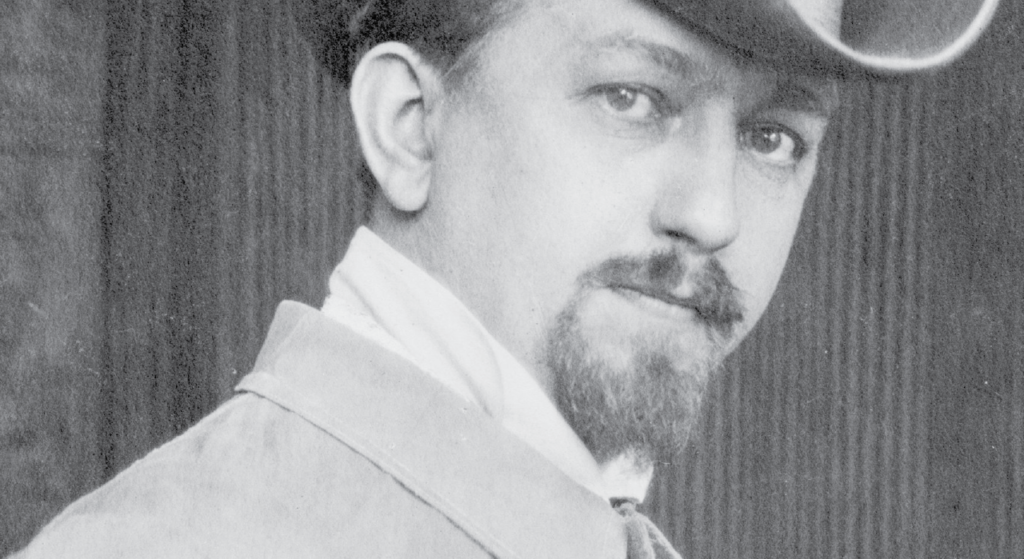
1) His Biography
Leo Frobenius (1873–1938) was a pioneering German ethnologist, archaeologist, and cultural theorist whose work left a lasting impact on the study of African civilisations and world culture. Born in Berlin, he developed an early fascination with the peoples and traditions of Africa, despite having no formal university degree in ethnology. His passion for exploring non-European societies was driven by a belief that Africa possessed deep historical and cultural complexity, a stance that challenged many of the colonial prejudices prevalent during his time. Frobenius was largely self-taught, and his intellectual curiosity led him to pursue independent research that would eventually reshape anthropological understanding of culture and civilisation.
In 1898, Frobenius founded the Afrika Archiv in Munich, which later evolved into the Institute for Cultural Morphology (Institut für Kulturmorphologie). This institution became central to his lifelong mission of documenting and preserving the diverse cultural heritage of Africa. His expeditions, which took place across more than a dozen African regions, produced vast collections of artefacts, oral traditions, and artworks. These expeditions were often financed through public lectures and exhibitions in Europe, which brought African art and culture to audiences that had previously dismissed them as primitive curiosities. Frobenius’s detailed field notes, sketches, and ethnographic observations remain invaluable resources for researchers even today.
Frobenius’s travels were extensive and often arduous. He led over a dozen major expeditions to West and Central Africa between 1904 and 1935, visiting regions such as the Congo, Nigeria, and Ethiopia. His documentation of rock art and ancient relics in the Sahara and West Africa led him to propose that African civilisations had long-standing and complex cultural histories independent of European influence. One of his most notable discoveries occurred during his 1910–1912 expedition to Ife in present-day Nigeria, where he identified remarkable bronze sculptures that he believed demonstrated the existence of a highly sophisticated ancient African culture. His enthusiasm, however, sometimes led to controversial interpretations, such as attributing African achievements to external “Atlantis-like” origins — a reflection of the Eurocentric ideas still shaping scholarly thought in the early twentieth century.
Despite these problematic theories, Frobenius’s work represented a turning point in the perception of African societies. Unlike many of his contemporaries, he viewed African peoples as creators of profound symbolic and artistic traditions. He argued that each culture possessed its own unique paideuma, a kind of spiritual essence or collective soul that defined its worldview and creative expression. This idea laid the groundwork for his theory of cultural morphology, which likened cultures to living organisms that grow, mature, and decline through natural cycles. In this sense, Frobenius’s thinking anticipated later developments in cultural anthropology and philosophy, influencing figures such as Oswald Spengler and Carl Jung.
During the First World War, Frobenius’s research and expeditions were interrupted, but his intellectual output continued. He wrote extensively during this period, refining his cultural theories and reflecting on the evolution of human civilisations. After the war, he resumed his expeditions and published a series of works that blended ethnographic detail with a broader philosophical interpretation of culture. His writings combined scientific observation with poetic expression, reflecting his belief that understanding culture required both empirical and intuitive insight.
Frobenius’s later years were devoted to consolidating his vast collection of African artefacts and ethnographic materials, many of which were exhibited in German museums. In 1925, he was appointed honorary professor at the University of Frankfurt, where his institute was later integrated. His influence extended to a new generation of anthropologists and African scholars, some of whom drew upon his methods of cultural analysis while rejecting his speculative theories. Through his interdisciplinary approach, Frobenius helped to establish ethnology as a serious field of academic study in Germany.
He died in 1938 in Biganzolo, Italy, leaving behind an immense legacy that continued to shape cultural studies long after his death. Although his interpretations were not without controversy, Frobenius’s dedication to documenting and celebrating African culture played a crucial role in challenging the Eurocentric hierarchies of his time. His life’s work combined the spirit of exploration with a profound respect for human creativity and diversity, positioning him as one of the early visionaries in the comparative study of civilisations.
2) Main Works
Und Afrika sprach (“The Voice of Africa”, 1912–1913)
This monumental two-volume work is based on Frobenius’s expeditions across Africa, particularly in Nigeria and the Congo. It presents his ethnographic findings, drawings, and reflections on African art, mythology, and culture. The book was one of the first to portray Africa as a continent rich in spiritual and creative vitality, countering colonial stereotypes of savagery. Through its vivid descriptions and cultural interpretations, Und Afrika sprach helped European audiences appreciate the sophistication of African societies and their symbolic traditions.
Paideuma: Umrisse einer Kultur- und Seelenlehre (“Paideuma: Outlines of a Theory of Culture and Soul”, 1921)
In this seminal theoretical work, Frobenius outlines his concept of paideuma, which he defines as the inner essence or creative spirit that animates each culture. He likens cultures to living organisms that evolve through organic life cycles of growth, maturity, and decay. The book represents Frobenius’s most mature philosophical formulation of cultural morphology — his theory that all human societies share structural similarities in their historical development. Paideuma bridges anthropology, psychology, and philosophy, laying the foundation for later thinkers such as Oswald Spengler and Carl Jung.
Der Ursprung der afrikanischen Kulturen (“The Origin of African Civilisations”, 1898)
This early publication established Frobenius’s reputation as a serious scholar of African history. Drawing on early field data and historical speculation, he argues that African civilisations are products of long indigenous evolution rather than external influence — though at times he entertained diffusionist ideas linking Africa to ancient Mediterranean cultures. The work reflects Frobenius’s attempt to position Africa as an equal participant in world history, a radical notion at the end of the nineteenth century.
Erlebte Erdteile (“Experiences of Continents”, 1911)
This volume collects Frobenius’s personal narratives from his travels through Africa, the Middle East, and parts of Asia. It blends autobiography, ethnographic observation, and philosophical reflection, revealing Frobenius’s humanistic approach to exploration. The book captures his fascination with the shared patterns of myth, ritual, and artistic expression found across different continents, illustrating his belief in the interconnectedness of all human cultures.
Das unbekannte Afrika (“The Unknown Africa”, 1923)
Written after several of his major expeditions, this book was intended for a broader audience. It synthesises Frobenius’s findings into a vivid narrative that describes the artistic, architectural, and social achievements of African peoples. The tone is both descriptive and poetic, emphasising the continent’s cultural richness and complexity. Das unbekannte Afrika played a significant role in changing public perceptions of Africa in Europe, highlighting its diversity rather than reinforcing colonial stereotypes.
Kulturgeschichte Afrikas (“Cultural History of Africa”, 1933)
This later work is one of Frobenius’s most comprehensive studies, providing a sweeping synthesis of African cultural history. Drawing upon decades of fieldwork, he traces the development of major cultural regions and artistic traditions, attempting to map Africa’s internal cultural evolution. While some of his diffusionist hypotheses are outdated today, Kulturgeschichte Afrikas remains a valuable document of early twentieth-century Africanist scholarship.
Atlantis: Volksmärchen und Volksdichtungen Afrikas (“Atlantis: African Folk Tales and Oral Poetry”, 1921–1923)
This collection presents African myths, folk tales, and oral poetry recorded during Frobenius’s expeditions. The title reflects his romantic notion of a lost “Atlantis” of African civilisation — a metaphor for the deep, ancient wisdom embedded in African oral traditions. The work combines ethnographic precision with literary sensitivity, preserving oral narratives that might otherwise have been lost to history. It also underscores Frobenius’s view that Africa’s cultural imagination was as rich and profound as that of Europe or Asia.
Erythräa: Länder und Zeiten des heiligen Königsmordes (“Erythraea: Lands and Times of the Sacred King’s Death”, 1931)
In this ambitious comparative study, Frobenius examines myths and rituals associated with sacred kingship in Africa and the ancient Near East. He explores the symbolic role of the ruler’s death as a renewal of the community’s spiritual life, linking it to his broader theory of cultural morphology. Erythräa demonstrates Frobenius’s continued effort to integrate mythology, anthropology, and philosophy into a unified vision of human culture.
3) Main Themes
The Concept of Paideuma
One of Frobenius’s most influential ideas, paideuma, refers to the inner spiritual force or creative essence that shapes a culture’s worldview, art, and social life. He believed that every civilisation possesses a unique paideuma that determines how it perceives reality and expresses itself through symbolic forms. This concept served as a counterpoint to the then-dominant racial theories, as Frobenius placed emphasis not on biological difference but on spiritual and cultural vitality. His interpretation treated cultures as living organisms animated by an inner soul, giving them agency and individuality within the wider flow of human history.
Through paideuma, Frobenius argued that the arts, myths, and customs of a society were not random or imitative, but the organic expression of its inner life. This theory offered a way to appreciate non-European societies as creators of distinctive cultural worlds rather than as primitive imitators of “higher” civilisations. It profoundly influenced later anthropologists and cultural theorists, including Oswald Spengler, who expanded on similar organic models of history. In Frobenius’s vision, the study of culture became a search for the inner rhythm and essence that united a people’s material and spiritual existence.
Cultural Morphology
Cultural morphology — the idea that cultures grow, mature, and decay in patterns similar to biological life cycles — lies at the core of Frobenius’s philosophical anthropology. He proposed that every culture passes through stages of birth, growth, flowering, and decline, each marked by distinct artistic and spiritual characteristics. This cyclical model of history stood in contrast to the linear and progress-oriented view dominant in European thought. Frobenius saw civilisations not as hierarchically arranged but as equal participants in a universal rhythm of cultural evolution, each possessing its own internal logic and destiny.
By applying morphological analysis to societies across Africa, Europe, and Asia, Frobenius sought to uncover the deep structural patterns connecting human creativity across time and space. His comparative approach treated myths, symbols, and rituals as the “organs” of a culture’s body, revealing its stage of development. Though later criticised for its generalisations, his theory offered a profound vision of historical interconnectedness. Cultural morphology laid early foundations for structuralist and symbolic anthropology by demonstrating that cultures can be understood as coherent systems of meaning rather than as collections of unrelated facts.
Recognition of African Civilisation and Art
Frobenius was among the first European scholars to argue that Africa possessed ancient and sophisticated civilisations long before European contact. His expeditions across West and Central Africa revealed intricate art forms, political systems, and religious traditions that he considered equal in complexity to those of Europe or Asia. In works such as The Voice of Africa and The Unknown Africa, he celebrated African creativity and spirituality, countering the colonial view of Africa as culturally barren. His recognition of African art as an expression of deep symbolic intelligence helped lay the groundwork for the eventual acceptance of African art in European museums and galleries.
However, Frobenius’s enthusiasm sometimes led him to romantic or speculative interpretations. He occasionally attributed African cultural achievements to hypothetical “lost” civilisations, such as Atlantis, reflecting the Eurocentric assumptions of his era. Despite this, his fieldwork and advocacy had a transformative effect on how Africa was studied and represented. His insistence that African art and myth deserved serious scholarly attention paved the way for later ethnologists and Africanists, including scholars such as Cheikh Anta Diop and John Mbiti, who further developed his legacy in postcolonial contexts.
Myth and Symbolism as Expressions of Culture
Mythology and symbolism occupied a central place in Frobenius’s thought. He regarded myths not merely as stories but as repositories of a people’s collective experience and worldview. For Frobenius, myth expressed the same cultural paideuma that shaped art, religion, and social organisation. His fieldwork across Africa revealed striking similarities between local myths and those found in ancient civilisations, leading him to explore their shared archetypal structures. In doing so, he anticipated later developments in comparative mythology and analytical psychology, particularly those of Carl Jung and Joseph Campbell.
Frobenius believed that by studying myths and symbols, scholars could access the “soul” of a civilisation more directly than through material artefacts. He documented oral traditions and symbolic rituals with exceptional care, treating them as living expressions of cultural memory. His approach blurred the line between ethnography and philosophy, combining scientific observation with poetic insight. This interpretive method enriched the understanding of myth as a universal language of human experience — one that reveals the emotional and spiritual foundations of culture.
Interconnectedness of Human Cultures
A recurring theme in Frobenius’s works is the belief in the interconnectedness and mutual influence of all world cultures. He rejected the idea that civilisations evolved in isolation, instead viewing them as part of a vast network of cultural exchange and spiritual kinship. His travels convinced him that artistic motifs, myths, and moral ideas travelled across continents through trade, migration, and storytelling. This globalist vision allowed Frobenius to draw parallels between African, Mediterranean, and Asian traditions, often tracing shared cultural archetypes that transcended geography.
While his diffusionist tendencies sometimes led to speculative historical claims, Frobenius’s insistence on cultural interconnectedness was revolutionary for its time. He challenged Eurocentric hierarchies by placing African and non-European cultures within the same universal framework of human creativity. His comparative outlook also influenced later movements in anthropology that emphasised cultural relativity and cross-cultural dialogue. In Frobenius’s vision, humanity’s greatest achievement lay in the collective web of creative expression linking all civilisations through time.
The Organic Nature of Civilisation
Frobenius viewed civilisation not as a product of rational design but as a living organism shaped by unconscious forces and symbolic imagination. He believed that each culture developed organically from its environment and inner essence, much like a plant rooted in the soil of its homeland. This organic metaphor underpinned his entire theory of cultural morphology and distinguished his approach from the mechanical or materialist explanations of history common in early twentieth-century thought. For Frobenius, a culture’s vitality depended on its ability to remain true to its paideuma — its authentic creative rhythm.
This organic perspective also shaped his ethical stance toward cultural preservation. Frobenius warned that modernity and colonialism threatened to uproot traditional cultures by imposing foreign values upon them. He regarded the loss of indigenous traditions as a form of cultural decay, analogous to a living organism’s death. His writings thus carry a tone of both admiration and lamentation — admiration for the richness of traditional societies and sorrow for the destruction wrought by imperial expansion. In viewing civilisation as a living, evolving entity, Frobenius contributed an early ecological and holistic sensibility to cultural theory.
The Spiritual Dimension of Art
For Frobenius, art was not a matter of aesthetic pleasure alone but the visible expression of a culture’s soul. He believed that every line, colour, and form in a society’s artistic production reflected its metaphysical understanding of the world. In African sculpture, masks, and textiles, he saw profound expressions of spiritual vision rather than mere decorative craft. This insight placed him at odds with many European contemporaries who dismissed African art as primitive. Frobenius instead viewed it as evidence of deep intellectual and emotional sophistication.
His analysis of art was inseparable from his philosophy of culture. He saw artistic creation as the moment when the paideuma manifests itself most directly in material form. Art, for Frobenius, was therefore a key to deciphering the inner structure of a civilisation. His interpretive method — combining ethnography, philosophy, and aesthetics — helped elevate non-European art to the status of universal human achievement. Through his work, he argued that true understanding of art requires empathy with the spirit that created it, making aesthetic appreciation a bridge between cultures.
4) Frobenius as an Anthropologist
Leo Frobenius’s role as an anthropologist was both groundbreaking and unconventional. Unlike many of his contemporaries, he entered the field without formal academic training in anthropology or ethnology. His education was largely self-directed, fuelled by an insatiable curiosity about human culture and a deep respect for non-European civilisations. From the very beginning of his career, Frobenius rejected the colonial mindset that viewed African societies as primitive or undeveloped. Instead, he approached them as bearers of profound cultural, artistic, and spiritual traditions. His anthropological work thus represented both a scientific and moral challenge to the prevailing Eurocentric narratives of his time.
Frobenius’s expeditions across the African continent formed the core of his anthropological practice. Between 1904 and 1935, he organised and led over a dozen major field expeditions to regions including Nigeria, the Congo, Ethiopia, and the Sahara. During these journeys, he collected thousands of artefacts, documented oral traditions, and produced detailed ethnographic notes and sketches. His research aimed to reconstruct the cultural history of Africa from within, using local perspectives rather than European interpretations. Frobenius often lived among the communities he studied, observing rituals, social structures, and myths firsthand. This immersive and empathetic approach made him one of the earliest proponents of what would later be recognised as participatory fieldwork in anthropology.
One of Frobenius’s greatest anthropological contributions was his insistence that African civilisations possessed their own internal logic and aesthetic order. He demonstrated that African art and religion were not derivative or primitive but rather highly symbolic expressions of collective identity and philosophy. In his analysis of Yoruba, Benin, and other West African cultures, he discovered complex systems of governance, trade, and spirituality that defied the stereotypes of African “tribalism.” His discovery of the Ife bronzes, which he believed to be evidence of an advanced African civilisation, was particularly significant. Although his interpretation of these artefacts was coloured by some diffusionist ideas, his recognition of their sophistication helped shift European perceptions of Africa’s cultural achievements.
Frobenius’s anthropological vision extended far beyond data collection. He sought to identify the underlying patterns that connected human societies across time and geography. His concept of cultural morphology — the idea that cultures evolve organically like living organisms — positioned him as a theorist of historical anthropology. He interpreted the diversity of human traditions not as random variation but as the outcome of shared archetypal processes. By tracing these patterns, he aimed to construct a unified framework for understanding civilisation itself. This holistic vision made him a precursor to later comparative anthropologists and cultural philosophers who explored universal structures in myth and ritual.
However, Frobenius’s work was not without its controversies. His theories often blended empirical observation with speculative interpretation, sometimes leading to conclusions that modern anthropologists view as overly romantic or unscientific. For instance, his belief in a lost “Atlantis-like” source of African civilisation reflected the mythic imagination that accompanied his scholarship. Yet even these speculative ideas were grounded in a sincere effort to honour the dignity and creativity of African cultures. Frobenius’s combination of scientific inquiry and poetic sensibility gave his anthropology a distinctive character — one that valued intuition and empathy as much as measurement and classification.
As an anthropologist, Frobenius also played a vital role in reshaping the public’s understanding of Africa in Europe. His museum exhibitions, lectures, and publications brought African art and myth to audiences who had never seen them presented with respect and admiration. He challenged the colonial notion of the “exotic other” by portraying African societies as creative equals within the global human story. Through this work, he laid the foundations for later movements in anthropology that emphasised cultural relativism and decolonisation of knowledge.
In his later years, Frobenius became an academic mentor and organiser, establishing the Institute for Cultural Morphology in Frankfurt. There he trained a new generation of ethnologists and collaborated with other scholars who shared his belief in the unity of human experience. His approach combined the rigour of ethnographic documentation with a visionary sense of humanity’s shared destiny. Even though his methods were sometimes criticised for their subjectivity, Frobenius’s legacy endures in the emphasis he placed on empathy, creativity, and respect for cultural diversity.
Frobenius as an anthropologist stands as a bridge between scientific observation and humanistic interpretation. He viewed anthropology not merely as the study of customs and artefacts but as a search for the spiritual and symbolic forces that shape civilisation. His commitment to understanding cultures from within — and to presenting them as vibrant expressions of the human spirit — makes him one of the most original and influential figures in early twentieth-century anthropology.
5) His Legacy
Leo Frobenius’s legacy is vast and complex, spanning anthropology, ethnology, art history, and philosophy. He is remembered as one of the first European scholars to approach African civilisations with genuine respect and intellectual curiosity, countering the dominant colonial attitudes of his time. His fieldwork across Africa, extensive publications, and theoretical contributions fundamentally altered how non-European cultures were studied and represented. Although some of his interpretations were shaped by the biases of his era, Frobenius’s lifelong dedication to uncovering the creative and spiritual depth of African societies paved the way for later anthropologists to treat all cultures as equally meaningful expressions of humanity.
One of Frobenius’s most enduring contributions lies in his documentation and preservation of African oral traditions, art, and mythology. His field notes, drawings, and collected artefacts remain valuable primary sources for ethnographers and historians today. By recording myths, folk tales, and symbolic practices that might otherwise have been lost under colonial disruption, he helped preserve Africa’s intangible heritage for future generations. Institutions such as the Frobenius Institute at the University of Frankfurt, which continues his work, maintain one of the world’s most extensive archives of African ethnographic materials. This commitment to preservation and understanding established Frobenius as a founding figure in the modern study of African culture.
Frobenius’s theoretical contributions also had a lasting impact. His concepts of paideuma and cultural morphology influenced not only anthropology but also philosophy, psychology, and the study of civilisations. The idea that each culture possesses its own inner spirit or life rhythm resonated deeply with thinkers such as Oswald Spengler, who expanded it in The Decline of the West, and Carl Jung, whose work on archetypes and the collective unconscious parallels Frobenius’s cultural psychology. These cross-disciplinary influences ensured that his ideas reached far beyond ethnology, shaping early twentieth-century thought on the nature of culture and human creativity.
However, Frobenius’s legacy is not without controversy. His occasional tendency to attribute African achievements to lost or external civilisations, such as his theories linking Africa to Atlantis or ancient Mediterranean cultures, has been criticised for perpetuating subtle forms of Eurocentrism. Yet even these speculative theories must be seen in the context of his broader mission — to demonstrate that Africa’s cultural heritage deserved the same scholarly respect accorded to Europe’s. In contrast to the overtly racist theories of his contemporaries, Frobenius’s writings consistently emphasised the creativity, spirituality, and intelligence of African peoples, a radical stance for his time.
In the realm of art and aesthetics, Frobenius helped transform European appreciation of African art. Through his exhibitions and writings, he presented African sculpture, masks, and textiles as expressions of profound artistic vision rather than as curiosities or ethnographic specimens. This revaluation of African art influenced avant-garde artists and intellectuals in early twentieth-century Europe, including figures associated with Expressionism and Modernism. The recognition of African forms as legitimate sources of aesthetic inspiration owes much to the groundwork laid by Frobenius’s passionate advocacy.
Frobenius also left a pedagogical legacy through his establishment of the Institute for Cultural Morphology, which became a centre for interdisciplinary research and training. His students and successors, among them notable German ethnologists such as Adolf E. Jensen, carried forward his holistic approach to cultural study. The institute’s continuation as the Frobenius Institute ensures that his methodologies, archival materials, and intellectual heritage remain integral to modern anthropology. In this way, Frobenius’s vision of culture as an organic and interconnected phenomenon continues to inspire contemporary research.
In Africa itself, Frobenius is remembered with a mixture of respect and ambivalence. While his writings demonstrated rare admiration for African civilisations, his collecting practices — which involved the removal of artefacts to European museums — are now viewed through the critical lens of postcolonial ethics. Nonetheless, African scholars acknowledge his contributions to documenting traditions that might have vanished without his intervention. His work sparked an enduring dialogue about cultural ownership, representation, and the ethics of ethnography, debates that remain vital in today’s anthropology.
Frobenius’s legacy is that of a visionary who sought to restore the dignity of cultural diversity to its rightful place in human history. He challenged the intellectual boundaries of his age and proposed that every civilisation, regardless of geography or race, embodies a unique expression of the human spirit. His life’s work stands as both a monument to early anthropological discovery and a reminder of the need for humility and empathy in studying others. Through his writings, institutions, and ideas, Leo Frobenius continues to shape how we understand culture — not as a hierarchy of development, but as a shared, evolving expression of what it means to be human.