
1) Marxist Criminology
Marxist criminology is a foundational strand of Critical Criminology that explains crime and law through the lens of class relations and economic power. It is rooted in the works of Karl Marx and later developed by sociologists and criminologists who argued that criminal law is not neutral, but reflects the interests of the dominant economic class. From this perspective, crime cannot be understood purely as individual wrongdoing; it must be situated within the broader structure of capitalist society.
At its core, Marxist criminology argues that capitalist systems generate inequality, exploitation, and deprivation, which in turn create conditions conducive to crime. The concentration of wealth in the hands of a minority produces relative deprivation among the working classes. This inequality is not incidental but structural, meaning that crime is viewed as a predictable outcome of capitalist organisation rather than a moral failure of individuals.
A central claim of Marxist criminology is that the law is shaped by ruling-class interests. Legislation tends to protect private property, commercial stability, and state authority, while giving comparatively less attention to harms committed by powerful actors such as corporations. As a result, behaviours associated with poverty are more likely to be criminalised, whereas harmful activities of elites may be regulated through civil or administrative frameworks rather than criminal law.
Marxist theorists also emphasise the concept of ideological control. The criminal justice system is seen not only as a mechanism of enforcement but also as a means of maintaining legitimacy for the existing social order. By defining certain behaviours as criminal and others as acceptable, the state reinforces the idea that inequality is natural or deserved, thereby discouraging resistance from subordinate groups.
The state, in Marxist criminology, is not viewed as an impartial arbiter but as an instrument that ultimately serves the preservation of capitalist relations. Police, courts, and prisons are interpreted as institutions that manage and contain populations most affected by economic marginalisation. This does not mean that every individual within these institutions acts with conscious bias, but rather that the overall structure reflects systemic class interests.
Marxist criminologists also highlight the phenomenon of selective enforcement. Crimes associated with the working class, such as theft or street-level offences, are more visible and more likely to be prosecuted than corporate or state crimes. This selective focus contributes to the over-representation of lower socio-economic groups within the criminal justice system, reinforcing cycles of disadvantage and marginalisation.
Another important dimension is the idea of resistance. Some Marxist approaches interpret certain forms of crime as expressions of political or economic resistance against structural inequality. While not all criminal behaviour is seen in this way, offences committed by disadvantaged groups may be understood as responses to exploitation, exclusion, or lack of legitimate opportunities.
Marxist criminology reframes crime as a product of structural inequality rather than individual pathology. It challenges traditional criminological approaches by shifting attention away from offenders and towards the economic and political systems that shape law, punishment, and social order.
2) Feminist Criminology
Feminist criminology emerged as a critical response to the male-centred assumptions that dominated traditional criminological theory and research. It argues that mainstream criminology historically ignored or misrepresented women’s experiences, both as offenders and as victims. Rather than treating gender as a secondary factor, feminist criminologists place it at the centre of analysis, examining how crime, law, and justice are shaped by gendered power relations.
A key influence in this field is Carol Smart, who challenged the idea that existing criminological theories could adequately explain women’s offending. She argued that much of criminology had been constructed through a male perspective, meaning that women were either overlooked or measured against male norms. This led to distorted interpretations of female criminality and reinforced stereotypes about femininity and deviance.
Feminist criminology examines how patriarchal structures influence both the causes of crime and the operation of the criminal justice system. Patriarchy refers to a system in which men hold disproportionate power in social, political, and economic institutions. Within this framework, women are often positioned in subordinate roles, which shapes their opportunities, vulnerabilities, and interactions with the law.
One major focus is the criminalisation of women’s behaviour that deviates from traditional gender expectations. Women who act outside prescribed norms of femininity may be judged more harshly by legal and social institutions. For example, behaviours linked to sexuality, substance use, or aggression are often interpreted differently when committed by women compared to men, reflecting underlying gender biases in social control mechanisms.
Feminist criminologists also emphasise the importance of understanding women’s pathways into crime. Many argue that women’s offending is frequently connected to experiences of abuse, poverty, coercion, or survival strategies within constrained social conditions. This perspective shifts attention away from individual pathology and towards structural inequalities and lived experiences.
Another significant area of study is victimisation, particularly violence against women. Feminist criminology has played a crucial role in highlighting domestic violence, sexual assault, and coercive control as serious social problems that were historically minimised or ignored by legal systems. It argues that such harms are not isolated incidents but are embedded within broader patterns of gendered power relations.
The feminist perspective also critiques the criminal justice system’s response to female offenders. Women in the system are often treated in ways that reflect moral judgement as well as legal sanction, and their roles as mothers or caregivers may be used to assess their culpability. In some cases, this leads to contradictory practices where women are simultaneously punished for deviance and judged against idealised standards of femininity.
Feminist criminology seeks to transform the study of crime by integrating gender as a central analytical category. It challenges assumptions of neutrality within law and criminological theory, exposing how gendered power relations shape both criminal behaviour and institutional responses. By doing so, it broadens the scope of criminology to include experiences that were previously marginalised or excluded.
3) Left Realism
Left Realism emerged in the 1980s as a corrective to what its proponents saw as the limitations of both traditional left-wing criminology and right-wing law-and-order approaches. It was developed primarily by British criminologists such as Jock Young, who argued that earlier critical perspectives had often neglected the lived reality of crime, particularly its impact on working-class communities. Left Realism sought to take crime seriously while still maintaining a structural critique of inequality.
A central idea in Left Realism is the concept of relative deprivation. This refers to the perception of inequality between what individuals believe they deserve and what they actually have. Crime is seen as arising not simply from poverty, but from awareness of inequality in a society that promotes consumerism and competition. When individuals compare themselves to others and feel excluded from material or social goods, frustration and resentment may develop, increasing the likelihood of offending.
Left Realists argue that crime is a real and significant social problem, particularly for marginalised communities who are disproportionately affected by victimisation. Unlike some radical theories that emphasise structural causes while downplaying harm, Left Realism insists that crime has immediate and tangible consequences for victims. Street crime, burglary, violence, and anti-social behaviour are treated as serious issues that require practical responses rather than theoretical abstraction.
Another key component is the “square of crime”, which highlights the relationship between four elements: the offender, the victim, the state agencies (such as police), and the public. Left Realists argue that criminology must consider all these actors in order to fully understand crime. This framework moves beyond offender-focused explanations and incorporates the role of victims and institutional responses in shaping crime patterns.
Left Realism also emphasises the importance of policing and crime control strategies. However, unlike conservative approaches, it advocates for community-based policing rather than purely punitive enforcement. The idea is that effective crime prevention requires cooperation between law enforcement and local communities, improving trust and encouraging reporting of crime.
Structural inequality remains central to Left Realist analysis, but it is not treated as the sole explanation for crime. Instead, it is combined with situational and individual factors. For example, peer influence, opportunity structures, and immediate social environments are all considered important in shaping criminal behaviour. This multi-factor approach distinguishes Left Realism from more deterministic theories.
Policy recommendations within Left Realism focus on both short-term and long-term solutions. In the short term, improving policing, increasing community engagement, and strengthening victim support services are prioritised. In the long term, reducing inequality, improving education, and expanding legitimate opportunities are seen as necessary to address the underlying causes of crime.
Left Realism positions itself as a practical and empirically grounded form of critical criminology. It accepts the reality of crime as experienced by ordinary people while maintaining that effective responses must also address deeper structural conditions. In doing so, it attempts to bridge the gap between radical theory and practical policy.
4) Cultural Criminology
Cultural criminology is a strand of Critical Criminology that focuses on the relationship between crime, culture, and meaning. Rather than treating crime purely as a legal violation or economic outcome, it explores how criminal behaviour is shaped by symbols, emotions, media representations, and subcultural identities. It draws heavily on sociology, anthropology, and cultural studies to understand crime as a lived and expressive practice.
One of the key influences in this area is Jeff Ferrell, who argued that crime cannot be separated from the cultural contexts in which it occurs. Cultural criminologists emphasise that individuals do not simply commit crimes for material gain; they often engage in acts that carry emotional intensity, rebellion, excitement, or symbolic resistance. Crime is therefore seen as meaningful action embedded in cultural experience.
A central concern of cultural criminology is the role of media in shaping perceptions of crime. News reporting, television, films, and digital platforms all contribute to the construction of “crime narratives” that influence how society understands deviance. These representations can exaggerate certain forms of crime while neglecting others, shaping public fear, policy responses, and even criminal identities.
Cultural criminologists also examine subcultures, particularly those that develop alternative values and styles in response to marginalisation. Youth gangs, graffiti artists, rave cultures, and other groups are studied not only in terms of their illegal activities but also in terms of their expressive styles, rituals, and shared meanings. These subcultures often create identities that challenge mainstream norms and authority.
Emotion plays a central role in cultural criminology. Feelings such as anger, humiliation, excitement, and thrill are seen as important drivers of criminal behaviour. Unlike rational-choice models that emphasise calculation, cultural criminology highlights the spontaneous and affective dimensions of offending. Crime is therefore understood as something that is experienced as well as committed.
The concept of “edgework” is often used to describe voluntary risk-taking activities where individuals test the boundaries of control and danger. Such activities may include extreme sports, illicit drug use, or certain forms of theft and vandalism. These acts are not always motivated by material benefit but by the desire for excitement, identity formation, or resistance to conformity.
Cultural criminology also pays close attention to how power operates through culture. It argues that dominant institutions define certain behaviours as criminal while normalising others. This cultural construction of crime means that legality and illegality are not fixed categories but are shaped by social struggles over meaning, legitimacy, and authority.
Cultural criminology expands the study of crime beyond structures and statistics to include meaning, emotion, and representation. It highlights the symbolic dimensions of deviance and shows how crime is intertwined with everyday cultural life. By doing so, it challenges purely rational or structural explanations and introduces a more interpretive understanding of criminal behaviour.
5) Convict Criminology
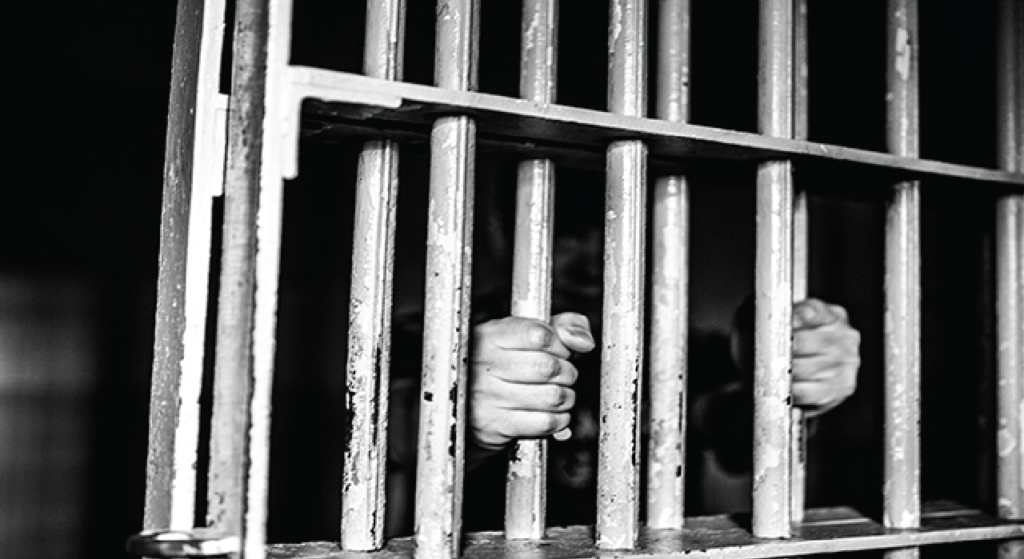
Convict criminology is a distinctive strand of Critical Criminology that is grounded in the lived experiences of people who have been incarcerated. It challenges traditional academic criminology by arguing that insider perspectives of prison life and the criminal justice system are essential for a full understanding of crime and punishment. Rather than treating prisoners as passive subjects of study, it positions them as knowledgeable contributors to criminological theory.
A key development in this field is associated with John Irwin, who drew on his own experience of imprisonment to analyse prison culture and institutional dynamics. Convict criminologists argue that mainstream research often overlooks the realities of incarceration, relying instead on official records or external observations that may fail to capture the complexity of prison life.
One of the central concerns of convict criminology is the critique of the prison system as an institution that often reproduces inequality and social harm. Prisons are seen not merely as sites of punishment but as environments that can intensify marginalisation, limit opportunities for reintegration, and reinforce criminal identities. This perspective challenges the assumption that incarceration automatically leads to rehabilitation.
Convict criminologists place strong emphasis on the concept of “prison knowledge”, which refers to the practical understanding of institutional routines, hierarchies, and survival strategies developed by incarcerated individuals. This knowledge is considered valuable for analysing how prisons actually function, including informal power structures, inmate cultures, and the gap between official rules and everyday practice.
Another important aspect is the critique of academic authority in criminology. Convict criminology argues that traditional scholars often maintain a distance from the subjects they study, which can lead to incomplete or distorted interpretations. By contrast, researchers with incarceration experience can offer insights that bridge the gap between theory and lived reality, challenging assumptions made by external observers.
The field also explores issues of identity transformation after imprisonment. Former prisoners who enter academia often navigate complex transitions between “convict” and “scholar” identities. This dual perspective allows them to critically reflect on both the criminal justice system and the academic institutions that study it, creating a unique form of reflexive scholarship.
Convict criminology further highlights the long-term social consequences of incarceration, including stigma, restricted employment opportunities, and difficulties in reintegration into society. These effects are seen as extending punishment beyond the prison sentence itself, shaping individuals’ life chances and reinforcing cycles of exclusion.
Convict criminology broadens the scope of Critical Criminology by incorporating insider perspectives and challenging traditional hierarchies of knowledge. It emphasises that understanding crime and punishment requires attention not only to abstract theory but also to lived experience within the criminal justice system.