
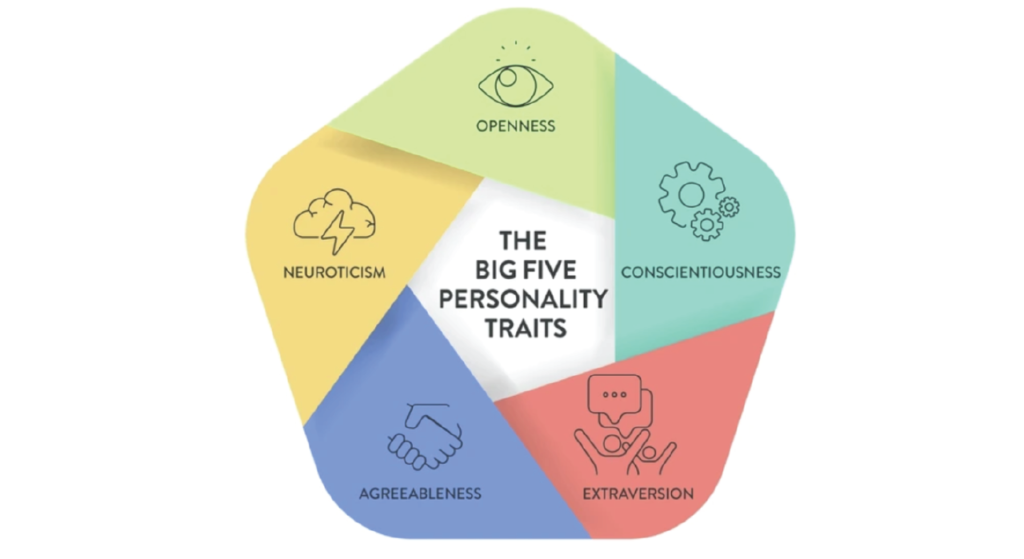
1) Openness to Experience
Openness to Experience is one of the five personality dimensions identified in the Big-Five Model of personality and has become an important factor in leadership research. It refers to an individual’s willingness to embrace new ideas, explore unfamiliar situations, appreciate creativity, and engage in intellectual curiosity. Leaders who score highly on this dimension tend to challenge conventional thinking, encourage innovation, and remain receptive to alternative perspectives. Rather than relying solely on established procedures, they seek opportunities to improve organisations through experimentation and continuous learning. In leadership studies, openness is associated with adaptability, strategic thinking, and the ability to guide organisations through changing environments.
Highly open leaders often possess a strong curiosity about the world and enjoy acquiring knowledge from diverse disciplines. They actively seek information from employees, customers, competitors, and external experts before making strategic decisions. This intellectual curiosity allows them to identify emerging trends and anticipate future challenges before they become immediate problems. Such leaders rarely assume that existing solutions will remain effective indefinitely. Instead, they continually question assumptions and encourage others to do the same, creating an organisational culture where inquiry and thoughtful debate are welcomed rather than discouraged.
Creativity is another defining feature of openness that significantly influences leadership effectiveness. Open leaders are more likely to generate original ideas, promote innovation, and support unconventional approaches to solving complex problems. Rather than viewing failure as evidence of incompetence, they often regard unsuccessful attempts as valuable learning experiences. This perspective encourages experimentation throughout the organisation because employees feel safer proposing new initiatives without fearing excessive criticism. As a result, organisations led by highly open individuals often demonstrate greater flexibility and capacity for innovation in competitive markets.
Openness also contributes to a leader’s ability to manage organisational change. Change initiatives frequently encounter resistance because they disrupt familiar routines and create uncertainty. Leaders high in openness typically approach change with optimism and confidence, recognising it as an opportunity for growth rather than merely a source of risk. Their willingness to consider multiple possibilities enables them to develop creative strategies for implementing transformation while addressing concerns raised by employees. They are generally more comfortable adapting plans as new information emerges, allowing organisations to remain responsive in dynamic environments.
An additional strength associated with openness is the capacity to appreciate diversity of thought. Leaders possessing this characteristic are generally receptive to opinions that differ from their own and actively encourage participation from individuals with varied backgrounds, experiences, and expertise. They understand that innovation often arises through the integration of different perspectives rather than through uniform thinking. Consequently, they foster inclusive discussions where constructive disagreement is viewed as beneficial. This openness to diverse viewpoints enhances decision quality by reducing the likelihood of narrow or biased judgements.
Openness further supports strategic leadership by enabling long-term thinking. Rather than concentrating exclusively on immediate operational concerns, highly open leaders often explore broader social, technological, economic, and political developments that may influence future organisational success. Their interest in learning allows them to recognise patterns across industries and anticipate opportunities that competitors may overlook. This future-oriented mindset contributes to more effective strategic planning because decisions are informed by both present realities and potential future scenarios. Such leaders frequently invest in research, development, and organisational learning to ensure continued competitiveness.
Despite its many advantages, excessive openness may present certain leadership challenges. Leaders who continually pursue new ideas may occasionally struggle to prioritise or implement existing plans effectively. Constant exploration of alternatives can delay decision-making if every possibility receives prolonged consideration. Employees may also become confused if organisational priorities shift too frequently due to the leader’s enthusiasm for innovation. Therefore, openness is most effective when balanced with practical judgement, ensuring that creativity is accompanied by disciplined execution and realistic assessment of organisational capabilities.
Within the Big-Five Model of Leadership, openness to experience represents the leader’s capacity to embrace complexity, encourage innovation, and guide organisations through uncertainty. It equips leaders to recognise emerging opportunities, inspire creative thinking, and adapt effectively to changing circumstances. While openness alone does not guarantee successful leadership, it provides an essential foundation for organisations operating in rapidly evolving environments where flexibility and continuous learning are increasingly valuable. When combined with sound judgement and effective implementation, openness becomes a significant contributor to sustained organisational success.
2) Conscientiousness
Conscientiousness is widely regarded as one of the strongest personality predictors of effective leadership within the Big-Five Model. It refers to an individual’s tendency to be organised, dependable, disciplined, responsible, and achievement-oriented. Leaders who score highly on conscientiousness are generally committed to fulfilling their obligations, maintaining high standards, and ensuring that objectives are accomplished efficiently. Rather than relying on improvisation or chance, they approach leadership with careful planning, persistence, and a strong sense of accountability. These qualities enable them to establish stability within organisations and earn the trust of colleagues, employees, and stakeholders.
A defining characteristic of conscientious leaders is their exceptional self-discipline. They are capable of maintaining focus on long-term goals despite distractions, setbacks, or competing priorities. Instead of seeking immediate rewards, they demonstrate patience and perseverance in pursuing organisational objectives. This consistency enables them to complete complex projects while maintaining quality and meeting deadlines. Employees often perceive such leaders as reliable because they consistently honour commitments and follow through on promises, reinforcing confidence in both the leader and the organisation.
Conscientiousness also influences the way leaders organise work and allocate resources. Highly conscientious leaders typically establish clear objectives, define roles and responsibilities, and implement systematic procedures that promote efficiency. They pay close attention to detail while ensuring that organisational processes remain aligned with strategic goals. Rather than allowing ambiguity to undermine performance, they develop structured systems for monitoring progress, evaluating outcomes, and addressing emerging issues before they escalate. Their organised approach helps reduce uncertainty and enhances coordination across teams and departments.
Another important aspect of conscientious leadership is a strong commitment to ethical responsibility and professional integrity. Conscientious leaders generally recognise the importance of adhering to organisational policies, legal requirements, and moral standards. They are less likely to engage in impulsive or irresponsible behaviour because they carefully consider the consequences of their decisions. By consistently acting with honesty and fairness, they establish credibility among employees and external stakeholders. This reputation for integrity strengthens organisational culture by encouraging accountability and responsible conduct throughout the workforce.
Goal orientation represents another significant contribution of conscientiousness to leadership effectiveness. Leaders with high conscientiousness are motivated by achievement and continuously seek improvements in organisational performance. They establish ambitious yet realistic targets and monitor progress through measurable performance indicators. Rather than accepting mediocre outcomes, they encourage continuous improvement by setting clear expectations and providing constructive feedback. Their determination often inspires employees to adopt similar standards of excellence, creating a culture where diligence and commitment are recognised and rewarded.
Conscientious leaders also tend to perform well during periods requiring operational consistency and disciplined execution. Large organisations often depend upon leaders who can manage budgets, coordinate complex projects, oversee compliance, and maintain quality standards over extended periods. The careful planning associated with conscientiousness reduces the likelihood of costly errors and improves organisational reliability. Employees benefit from working within environments where responsibilities are clearly defined and expectations remain stable, allowing them to concentrate on achieving established objectives without unnecessary confusion.
However, exceptionally high levels of conscientiousness may also create certain leadership limitations. Leaders who place excessive emphasis on rules, precision, or perfection may become overly cautious when making decisions. Their preference for careful planning can sometimes reduce organisational agility, particularly in rapidly changing environments where swift responses are required. Additionally, a strong desire for order may discourage experimentation if innovative ideas appear too uncertain or difficult to control. Consequently, conscientiousness is most beneficial when balanced with flexibility and openness to changing circumstances.
Within the Big-Five Model of Leadership, conscientiousness provides the foundation for dependable, disciplined, and responsible leadership. It supports effective planning, ethical decision-making, operational excellence, and sustained goal achievement. While creativity and charisma may attract attention, conscientiousness ensures that organisational objectives are consistently translated into meaningful results. By combining discipline with accountability and perseverance, conscientious leaders create organisations characterised by reliability, high performance, and long-term stability.
3) Extraversion
Extraversion is one of the most extensively studied personality traits within the Big-Five Model and has consistently been associated with leadership emergence and effectiveness. It refers to an individual’s tendency to be sociable, energetic, confident, assertive, and enthusiastic when interacting with others. Extraverted leaders naturally seek engagement with people, enjoy collaborative environments, and often display a visible presence within organisations. Their willingness to communicate openly and take initiative frequently positions them as influential figures who can mobilise individuals towards shared objectives. Consequently, extraversion is often linked to leaders who are comfortable assuming responsibility and directing collective action.
A central strength of extraverted leaders is their confidence in social situations. They are generally comfortable speaking before groups, leading meetings, negotiating with stakeholders, and representing their organisations publicly. This confidence enables them to communicate organisational goals clearly while inspiring commitment among employees. Rather than avoiding difficult conversations, they tend to address issues directly and encourage open dialogue. Their visible presence often reassures employees during periods of uncertainty because they demonstrate decisiveness and remain actively engaged with organisational challenges.
Communication is another area where extraversion significantly enhances leadership performance. Extraverted leaders typically express ideas with clarity and enthusiasm, making it easier for employees to understand organisational priorities and expectations. They actively participate in discussions, encourage questions, and maintain regular interaction with teams across different levels of the organisation. This continuous exchange of information strengthens coordination and helps prevent misunderstandings. By fostering open communication channels, extraverted leaders promote transparency and ensure that employees remain informed about important developments and strategic objectives.
Extraversion also contributes to a leader’s ability to motivate and energise others. Enthusiasm is often contagious, and leaders who display optimism and positive energy can influence the emotional climate of the workplace. Their encouragement helps sustain employee morale, particularly during demanding projects or periods of organisational change. Through recognition, encouragement, and active involvement, they create an atmosphere in which employees feel valued and motivated to contribute their best efforts. This ability to generate collective enthusiasm can improve team cohesion and strengthen organisational commitment.
Another important characteristic of extraverted leaders is their assertiveness in decision-making and leadership behaviour. Assertiveness enables them to express opinions confidently, defend organisational interests, and make timely decisions when circumstances require decisive action. Rather than hesitating in the face of uncertainty, they are generally willing to assume responsibility for important choices. This quality is particularly valuable during crises, where organisations benefit from leaders who can provide direction quickly and maintain confidence among employees. Assertiveness also assists leaders in negotiating partnerships, resolving conflicts, and advocating for organisational resources.
Extraverted leaders frequently develop extensive professional networks, which can benefit organisational performance. Their sociable nature encourages the formation of relationships with colleagues, industry partners, customers, government officials, and community organisations. These networks provide access to valuable information, resources, and collaborative opportunities that may not be readily available to less socially engaged leaders. Strong external relationships also enhance organisational reputation by increasing visibility and facilitating partnerships that support innovation, market expansion, and long-term growth.
Although extraversion offers numerous leadership advantages, excessive extraversion may also create potential difficulties. Highly extraverted leaders may dominate discussions, leaving insufficient opportunity for quieter employees to contribute valuable ideas. Their confidence may occasionally be interpreted as overconfidence, leading them to underestimate risks or overlook important details presented by others. Furthermore, a strong preference for constant interaction may reduce time available for careful reflection and analysis before making significant decisions. Effective leaders therefore balance social confidence with attentive listening and thoughtful consideration of diverse viewpoints.
Within the Big-Five Model of Leadership, extraversion represents the capacity to influence others through confidence, communication, enthusiasm, and social engagement. It enables leaders to inspire teams, build productive relationships, and maintain a visible organisational presence that encourages trust and cooperation. While extraversion is particularly valuable for motivating people and representing organisations, its effectiveness depends upon being complemented by humility, active listening, and sound judgement. When balanced appropriately, extraversion becomes a powerful resource for fostering organisational cohesion, engagement, and sustained leadership effectiveness.
4) Agreeableness
Agreeableness is a personality dimension within the Big-Five Model that reflects an individual’s tendency to be cooperative, compassionate, trusting, considerate, and supportive in their interactions with others. In leadership research, agreeableness is associated with interpersonal effectiveness and the ability to build positive relationships throughout an organisation. Leaders who score highly on this trait generally prioritise collaboration over confrontation and seek to create harmonious working environments where employees feel respected and valued. Rather than relying on authority alone, they influence others through empathy, fairness, and mutual trust, strengthening commitment to shared organisational goals.
One of the principal strengths of agreeable leaders is their capacity to establish trusting relationships. Trust forms the foundation of effective leadership because employees are more likely to follow leaders whom they perceive as honest, dependable, and genuinely concerned about their welfare. Agreeable leaders invest time in understanding the needs, concerns, and aspirations of their employees, demonstrating that individual contributions are appreciated. This consistent display of respect encourages loyalty and fosters a workplace culture in which employees feel psychologically secure and willing to express their ideas without fear of unfair judgement.
Empathy is another defining characteristic of agreeableness that enhances leadership effectiveness. Highly agreeable leaders attempt to understand situations from the perspectives of others before making decisions or responding to workplace issues. They recognise that employees possess different experiences, motivations, and challenges, and they take these differences into account when providing guidance or resolving concerns. This empathetic approach strengthens interpersonal relationships and enables leaders to offer support that is both practical and sensitive to individual circumstances. Employees often respond positively because they feel their opinions and wellbeing are genuinely considered.
Agreeableness also contributes significantly to effective teamwork. Leaders with this personality trait encourage cooperation rather than unhealthy competition, promoting an organisational environment where knowledge, resources, and responsibilities are shared openly. They recognise that sustainable success often depends upon collective effort rather than individual achievement. Consequently, they facilitate collaboration across departments, encourage mutual assistance among colleagues, and acknowledge contributions from all members of the team. Such behaviour strengthens cohesion and enables organisations to address complex challenges through coordinated action rather than isolated efforts.
Conflict management represents another important area in which agreeableness benefits leadership. Workplace disagreements are inevitable, but agreeable leaders generally seek constructive resolutions that preserve relationships while addressing underlying issues. Instead of escalating disputes through confrontation or assigning blame, they encourage respectful dialogue and compromise where appropriate. Their calm and impartial approach often reduces interpersonal tension and helps conflicting parties identify common interests. By resolving disputes fairly, agreeable leaders maintain organisational stability and prevent conflicts from undermining productivity or employee morale.
Highly agreeable leaders are also recognised for their commitment to employee development and wellbeing. They understand that organisational success depends not only on achieving financial objectives but also on supporting the people responsible for delivering those results. Such leaders frequently provide encouragement, mentorship, and constructive feedback that enables employees to improve their skills and confidence. They celebrate achievements, acknowledge effort, and create opportunities for professional growth. This supportive leadership style contributes to greater job satisfaction, stronger organisational commitment, and lower levels of employee turnover.
Nevertheless, excessive agreeableness may create certain leadership challenges. Leaders who are overly concerned with maintaining harmony may hesitate to make unpopular decisions or address poor performance firmly. They may avoid difficult conversations to prevent conflict, even when corrective action is necessary for organisational success. Similarly, an excessive willingness to accommodate others may result in delayed decisions or compromises that weaken strategic objectives. Effective leadership therefore requires agreeable behaviour to be balanced with decisiveness, accountability, and the willingness to uphold organisational standards even when doing so generates temporary discomfort.
Within the Big-Five Model of Leadership, agreeableness represents the interpersonal dimension of effective leadership. It enables leaders to cultivate trust, strengthen collaboration, resolve conflicts constructively, and support the personal and professional development of employees. While agreeableness alone cannot ensure organisational success, it creates the social conditions that allow teams to function cohesively and remain committed to common objectives. When balanced with firmness and sound judgement, agreeableness becomes a valuable leadership quality that promotes both organisational performance and positive workplace relationships.
5) Neuroticism
Neuroticism is the final personality dimension within the Big-Five Model and refers to an individual’s tendency to experience negative emotional states such as anxiety, insecurity, frustration, self-doubt, and emotional instability. In leadership research, neuroticism is generally viewed as the least desirable of the five traits because high levels can interfere with effective decision-making, interpersonal relationships, and stress management. Unlike the other Big-Five dimensions, leadership effectiveness is often associated with low neuroticism, which is commonly described as emotional stability. Leaders who are emotionally stable are more capable of remaining calm under pressure, maintaining rational judgement, and providing reassurance during periods of uncertainty.
One of the most important aspects of emotional stability in leadership is the ability to regulate emotions during challenging situations. Organisations frequently encounter crises, financial pressures, operational disruptions, and interpersonal conflicts that demand composed leadership. Leaders with low neuroticism are less likely to react impulsively or allow emotions to dominate their decisions. Instead, they evaluate problems objectively, consider available evidence, and respond in a measured manner. Their emotional control enables them to maintain organisational focus even when external circumstances become highly stressful.
Stress resilience is another significant advantage associated with low neuroticism. Leadership positions involve continuous responsibility, demanding workloads, and constant scrutiny from employees, customers, shareholders, and other stakeholders. Emotionally stable leaders are generally better equipped to cope with these pressures without experiencing excessive anxiety or emotional exhaustion. They recover more quickly from setbacks and are less likely to become discouraged by temporary failures. This resilience allows them to sustain performance over extended periods while providing consistent direction for the organisation despite ongoing challenges.
Neuroticism also influences the quality of interpersonal relationships within organisations. Leaders with high levels of neuroticism may become overly sensitive to criticism, interpret neutral situations as personal threats, or react defensively when their decisions are questioned. Such behaviour can create tension between leaders and employees, reducing trust and discouraging open communication. In contrast, emotionally stable leaders accept constructive feedback more readily and encourage honest discussion without perceiving disagreement as a personal attack. This openness strengthens relationships and supports a healthier organisational climate characterised by mutual respect and psychological safety.
Decision-making is closely connected to emotional stability. Leaders experiencing excessive anxiety may become indecisive because they focus heavily on potential risks and negative outcomes. Alternatively, heightened emotional reactions may encourage impulsive decisions driven by frustration or fear rather than careful analysis. Leaders with low neuroticism are better able to separate emotions from objective evaluation, enabling them to assess alternatives more rationally and make balanced judgements. Their composure becomes particularly valuable during crises, where rapid yet thoughtful decisions are essential for organisational success.
The emotional state of leaders often influences the wider organisational environment through a process sometimes described as emotional contagion. Employees frequently observe and respond to the attitudes displayed by senior leaders. Leaders who remain calm, optimistic, and composed during difficult periods help maintain employee confidence and reduce unnecessary panic. Conversely, leaders who display persistent anxiety, irritability, or emotional volatility may unintentionally spread uncertainty throughout the organisation. Emotional stability therefore contributes not only to individual leadership effectiveness but also to maintaining collective morale and confidence within teams.
Although low neuroticism is generally beneficial, it should not be interpreted as emotional detachment or indifference. Effective leaders still experience concern, disappointment, and frustration when organisations face significant challenges. The distinguishing characteristic is that emotionally stable leaders manage these emotions constructively rather than allowing them to dominate their behaviour. At the same time, extremely low emotional responsiveness may occasionally reduce sensitivity to employees’ concerns if leaders become overly detached from the emotional experiences of others. Consequently, emotional stability is most effective when combined with empathy, self-awareness, and strong interpersonal skills.
Within the Big-Five Model of Leadership, neuroticism highlights the importance of emotional regulation as a foundation for effective leadership. While the other personality dimensions primarily describe behaviours that leaders display towards tasks and people, neuroticism focuses on how leaders manage their own emotional responses under pressure. Low neuroticism enables leaders to remain resilient, make sound decisions, sustain productive relationships, and inspire confidence during uncertainty. By maintaining emotional balance while demonstrating empathy and composure, emotionally stable leaders create an environment in which employees feel secure, focused, and capable of responding effectively to organisational challenges.