
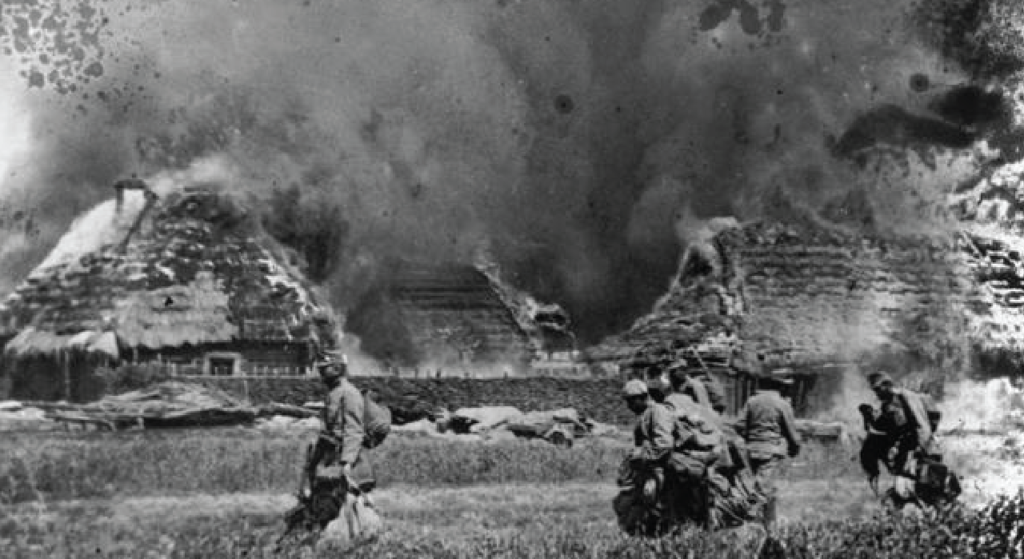
1) Kinetic or Firepower
Kinetic or firepower tactics centre upon the application of destructive force against an adversary. At their core lies the belief that the decisive factor in battle is the ability to inflict damage at range, degrade enemy capability, and compel withdrawal or surrender through material attrition. Historically, this principle has evolved from massed musket volleys to sophisticated artillery barrages and precision-guided munitions.
Firepower functions as both a suppressive and destructive tool. Suppression limits the enemy’s freedom of movement, while destruction aims at eliminating personnel, equipment, or infrastructure. Effective firepower thus shapes the battlefield environment, constraining the opponent’s choices before manoeuvre forces engage more directly.
Technological innovation has continuously altered the balance of firepower. The development of rifled artillery, machine guns, tanks, aircraft, and missile systems has expanded both range and lethality. Modern forces integrate these capabilities through combined arms doctrine, ensuring that different weapon systems complement one another rather than operate in isolation.
Coordination is crucial. Concentrated fire at decisive points magnifies effect, whereas dispersed or poorly timed fire wastes resources. Tactical success often depends on synchronising artillery with infantry advance or air strikes with ground operations, so that destructive energy produces strategic advantage rather than indiscriminate devastation.
Firepower tactics also require careful logistical planning. Ammunition supply, maintenance of weapons systems, and communication networks determine sustainability. A force that cannot replenish munitions quickly loses its operational edge, regardless of initial superiority.
However, reliance on firepower can create vulnerabilities. Excessive dependence may reduce initiative, encourage static warfare, or cause collateral damage that undermines political objectives. In certain environments, such as urban terrain, firepower must be applied with precision to avoid counterproductive outcomes.
Kinetic tactics represent the raw physical dimension of warfare. They demonstrate the capacity to dominate space through force, yet they achieve full effectiveness only when integrated with other tactical principles that guide movement, protection, and psychological impact.
2) Mobility
Mobility refers to the capacity of military forces to move swiftly and effectively across terrain in order to gain positional advantage. Rather than focusing on sheer destructive power, mobility emphasises speed, flexibility, and the ability to exploit openings. It transforms the battlefield from a static contest into a dynamic arena of manoeuvre.
Operational mobility allows commanders to choose where and when to engage. By concentrating force at decisive points, mobile units can outflank or encircle the enemy. This capacity undermines rigid defensive positions and forces adversaries to react rather than dictate the tempo.
Technological developments such as mechanised transport, aviation, and amphibious craft have dramatically expanded mobility. Rapid deployment across land, sea, and air enables forces to bypass obstacles and strike vulnerable sectors. Strategic airlift and naval projection further extend reach beyond immediate theatres.
Mobility also includes logistical agility. Supply chains must keep pace with advancing units. Without fuel, maintenance, and communication, speed collapses into disorder. Successful manoeuvre therefore relies on planning as much as on daring.
Terrain significantly shapes mobility tactics. Open plains favour armoured thrusts, while mountainous or urban areas restrict movement and demand adaptive methods. Commanders must evaluate geography carefully to avoid overextension or entrapment.
Excessive emphasis on speed can produce risk. Rapid advances may outstrip supply lines or expose flanks. A mobile force that neglects coordination may find itself isolated and vulnerable to counter-attack.
Despite these risks, mobility remains a decisive tactical factor. It enables initiative, surprise, and adaptability, ensuring that warfare is not merely a contest of firepower but a contest of movement and positioning.
3) Protection or Security
Protection or security encompasses measures designed to safeguard forces from enemy action. It addresses vulnerability rather than aggression, aiming to preserve combat effectiveness by minimising casualties and damage. Defensive preparation is thus as essential as offensive capacity.
Physical protection includes fortifications, armour, and cover. Trenches, bunkers, and reinforced vehicles shield personnel from direct fire and explosive impact. Modern innovations such as reactive armour and protective gear enhance survivability in increasingly lethal environments.
Security also involves concealment and deception. Camouflage, electronic countermeasures, and operational secrecy prevent the enemy from acquiring accurate intelligence. By obscuring intentions and positions, a force reduces the likelihood of surprise attack.
Air defence systems and missile shields represent another dimension of protection. In contemporary warfare, threats may originate from long distances. Effective security therefore extends vertically as well as horizontally, guarding against aerial or missile assault.
Intelligence and reconnaissance contribute significantly to protective tactics. Early warning enables pre-emptive measures and reduces vulnerability. Situational awareness thus functions as a defensive shield as much as a planning tool.
Overemphasis on protection can, however, encourage passivity. Excessive entrenchment may cede initiative and limit strategic flexibility. A force that focuses solely on defence risks being outmanoeuvred or gradually worn down.
Protection, properly understood, balances caution with readiness. It ensures the endurance of forces so that they may apply other tactical principles effectively, sustaining capability throughout prolonged engagements.
4) Shock Action
Shock action relies upon sudden, concentrated impact designed to break the enemy’s cohesion. Unlike gradual attrition, shock aims at psychological and organisational collapse through rapid, overwhelming assault. Its success depends on surprise, momentum, and intensity.
Historically, cavalry charges exemplified shock tactics, combining speed and physical force to disrupt infantry lines. In modern contexts, armoured spearheads and airborne assaults fulfil similar functions. The objective remains consistent: to penetrate defences and induce disarray.
Psychological effect is central. Shock seeks not merely to inflict casualties but to shatter morale. When defenders perceive themselves as overwhelmed, resistance may crumble even if material losses are limited. Fear and confusion amplify physical impact.
Timing is critical. Shock must strike at a decisive moment, often following preparatory measures such as suppression or deception. If delivered prematurely or without support, it may fail and expose attacking forces to counterattack.
Coordination enhances shock effectiveness. Integrating infantry, armour, and air support multiplies impact, producing a cascading breakdown in enemy structure. Unity of effort ensures that disruption becomes decisive rather than temporary.
Yet shock carries inherent risk. Rapid advances into hostile territory may encounter stiff resistance or logistical strain. If momentum stalls, the psychological advantage dissipates quickly.
When executed effectively, shock action transforms the tempo of battle. It compresses time, forcing the adversary into reactive disorganisation and creating opportunities for decisive exploitation.
5) The Four Tactics
The four tactical principles—firepower, mobility, protection, and shock—form an interconnected framework rather than isolated categories. Each addresses a distinct dimension of combat, yet none operates effectively in isolation. Together, they structure the conduct of operations.
Firepower provides the means to degrade opposition; mobility positions forces advantageously; protection preserves strength; and shock converts opportunity into decisive rupture. Their relationship is sequential and reciprocal. Effective mobility enables shock, while protection sustains firepower over time.
Critics argue that categorising tactics into four elements risks oversimplification. Warfare is influenced by morale, leadership, intelligence, and political context. Reducing complexity to four principles may obscure these subtler dimensions.
Nonetheless, the framework offers analytical clarity. By distinguishing destructive capacity, movement, defence, and psychological impact, commanders can evaluate strengths and weaknesses systematically. It encourages balanced development rather than excessive reliance on a single approach.
Interdependence remains vital. Firepower without mobility becomes static; mobility without protection invites vulnerability; protection without shock yields stalemate; shock without preparation collapses under resistance. The art of tactics lies in harmonising these elements.
Modern doctrines often integrate the four principles within combined arms strategies. Units train to coordinate movement, suppression, defence, and decisive assault as a unified process. Such integration reflects recognition of their complementary nature.
The four tactics represent a structured way of understanding battlefield dynamics. They illuminate how forces project power, preserve integrity, manoeuvre effectively, and achieve decisive effect. Their synthesis, rather than their separation, defines tactical mastery.